WELCOME TO OUR NEW SITE: tomymostalas.wordpress.com

You'll be automatically taken there in a second.. Change your bookmarks, thanks!

Showing posts with label Strait to the Point. Show all posts

Thursday, 28 July 2016

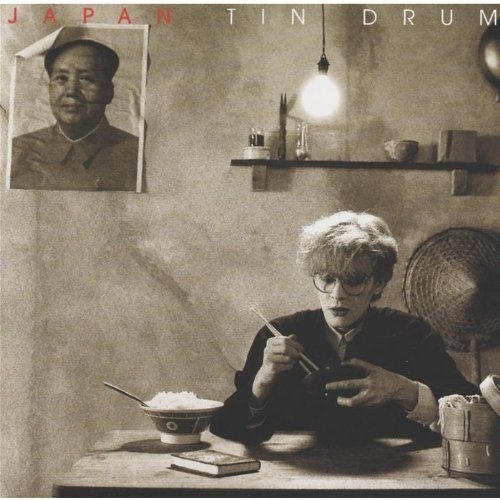
Strait to the Point: JAPAN - Tin Drum (1981)

Review by: Michael Strait


Rated: 5/5
Japan embrace China - didn't expect to read that sentence anytime soon, now did ya?

The idea of a band named after an East Asian country embracing East Asian influences for the title and cover is hardly a far-fetched one. A band called Japan taking influences from China, though? Man, that's just asking fer trouble. Though one could say, of course, that Japan plundering China is really nothing new - but that's opening a can o' worms that could get me into trouble with the Japanese government, and maybe stretching the metaphor too far anyway. Let's get back to the album! It's really good - are you surprised?

If I've a problem with this album, it's that most of the songs follow the same basic formula. You've got a drunken, woozy, fucked-up bassline, some mostly snare-based weirdo drum patterns, a bunch of riffy synth atmospheres and, coursing through all of it like a mountain stream, you've got Sylvian's clear, glistening voice. But that's not really a problem, 'cos this formula is near-guaranteed to result in excellence, and accordingly this album is pretty much perfect. The vaguely gothic darkness of Gentlemen Take Polaroids is mostly gone (even if one of the songs is called "Ghosts"), and the tone that replaces it is much harder to define, but I guess, in a pinch, I'd say the album sounds like it takes place in a white-backdropped world of bizarre right-angled shapes and oddly asymmetric geometries, from which Sylvian observes the world in which we live and attempts to understand our designs.

I've waxed lyrical enough about the godlike genius of Mick Karn on previous reviews, so let's devote a bit of time here to appreciating Steve Jansen. He's not as good on the drums as Karn is on the bass - who is? - but the strange patterns he traces with his kit & machines are essential components in the construction of this album's atmosphere. Take "Talking Drum", for example - the drums don't talk, as such, but pay attention to those little skittering cymbal taps that subtly fill the spaces between the big snare hits and you might be able to imagine that they are at least whispering, tapping at the edge of one's consciousness like pattering rain on a corrugated roof. Then there's "Visions of China", which has all sorts of hand-drum sounds (mayhaps synthesized, mayhaps not) playing the sort of danceable pattern that many a well-meaning liberal journalist has probably described as "influenced by world music", and which go very nicely with the very hip-swayingly funky bassline. Dancing to this would be difficult, but not impossible, and if ye don't feel like getting out of yer chair then there's plenty enough going on to satisfy the inner workings of yer mind. Yer heart, too – Sylvian’s voice is just pure velvet, all seductive and high-class and sophisticated. If he sounded like a dark parody of the average new romantic vocalist on Gentlemen Take Polaroids, here he just sounds like the logical endpoint of the entire style - he is peak new romantic; there will never be a more new romantic singer than him. If you've an aversion to over-enunciated posh vocals, you'll probably find him absolutely insufferable; myself, I can't get enough of it. I'd contract Sylvian to sing me to sleep every night if I had the money.

I might contract Barbieri to back him up on piano, too. After all, it's just him and Sylvian on "Ghosts", and it's great! Sylvian's just being his usual self, of course (and there's nothing wrong with that), but the best part is hearing Barbieri fully exploring what he can do when freed from the rhythmic confines imposed on him by Karn and Jansen. Of course, the boundaries of those confines were always unusually wide and fluid - this is Japan we're talking about, after all - but it's fascinating to hear just how fully Barbieri can fill up a song with nothing but his synths. There's a placid, reserved atmosphere that conjures an art gallery or tranquil old museum, and the tones are all fulsome and glowy like any good futuristic synthpop tones should be, but it's also plenty melodic and quietly riffy. In fact, Barbieri might be an underrated riffster in the synthpop world - he's not obvious about it like Paul Humphreys or Magne Furuholmen, but he's got a real talent for coming up with catchy, melodic riffs. It's easy to forget them with so much else going on, but just look, for example, at "Still Life In Mobile Homes" - there's nary a moment in that song that doesn't contain some memorable synth bits, and the only reason they're not more noticeable is because a good portion of them are buried under even more memorable bass riffs and vocal melodies. The whole song is pretty much just pure melodic bliss from beginning to end; come to think of it, the entire album is pretty much pure melodic bliss from beginning to end. 

The catchiest song on the album is probably the closer, "Cantonese Boy", which is one of the two songs to immediately spring into my head whenever I think of this band (the other one being "Gentlemen Take Polaroids"). It's got Barbieri's most noticeable and immediately memorable riff(s), and the vocal melody in the chorus is gently, incisively perfect, like a surgical device designed specifically to painlessly and smoothly stimulate the relaxation and pleasure centres of the brain. There's also the opener, "The Art Of Parties", which has some of Barbieri's most left-field riffs, some of Jansen's most unusual drum patterns and some of Sylvian's best tunes - especially in the pre-chorus, when the synths drop to this low, dark hum and he croons out perfectly controlled, placid meditations on futility and entropy. Funnily enough, this is also the first Japan song since Quiet Life to contain really substantial guitarwork - there's even a solo! Poor Rob Dean must have felt mighty put upon when he heard this. Mind you, even he couldn't possibly have had any complaints about the instrumental track "Canton", which is awesome - it's basically a Chinese folk song played as if it were a synthpop song, and it turns out that traditional Chinese folk-style melodies make great synth riffs. I'm not sure what the traditional Chinese masters would have made of Karn's jumpy bassline, but as far as I'm concerned it fits just fine.

There ain't a weak track here at all, in fact. Some might be willing to call "Sons Of Pioneers" a bit boring or repetitive, but to them I say phooey - it's patient, steady and comforting, and if there's one man I'd listen to play the same bassline over and over for seven minutes it's gotta be Mick Karn. As far as I'm concerned, this album is flawless, and it's as fitting a sign-off from this group as one could ever have hoped. I guess this much raw creative energy could never have stayed in one place for long without finding some way to dilute itself anyway, so I'm not too upset, and I'm certainly glad the band finished on their highest note rather than steadily descending into bullshit like certain other groups I've reviewed (ahem). As you might expect, this wasn't the end of the road for any of the members: David Sylvian went on to a long and apparently very rewarding solo career in which he collaborated with everyone from Robert Fripp to Sachiko M, creating art-pop double albums and cavorting with the avant-garde in a way that presumably alienated a good deal of his old-school fans; Barbieri eventually decided to pollute himself by joining Porcupine Tree in the nineties, taunting us with an ambient solo album every so often just to keep us on our toes; Steve Jansen briefly formed The Dolphin Brothers with Barbieri and has sporadically collaborated with him and with Sylvian ever since, while recording the occasional solo album whenever he can find the time and/or motivation; and Mick Karn, naturally, almost immediately jumped into the world of jazz fusion, perhaps the only genre in the world truly suited to his phenomenal talents on the bass. All four of them briefly reunited in 1991 for a project called Rain Tree Crow. As for Rob Dean, well, he eventually ended up retiring to Costa Rica and became its leading expert in ornithology, and never had to worry about egotistical singers or disloyal bandmates ever again.

Saturday, 18 June 2016

Strait to the Point: JAPAN - Gentlemen Take Polaroids (1980)

Review by: Michael Strait


Rated: 4.5/5
Aww yeah, this is the shiet! New romantic located firmly in the uncanny valley. Proper good stuff.

Rob Dean left after the release of this album, and it's easy to see why. He's got about as much presence on this record as Jason Newsted got on ...And Justice For All, except that there's more reason to complain here because Dean is, you know, actually good. I always found his solos a tad hit or miss, but he could turn in some really good ones when called for, and his riffs were pretty uniformly awesome. So, I should be bitter - but I'm not, 'cos truth is by now Japan just didn't need the guy anymore. Guitars are nice, but by this point in their career they were getting more artistic mileage out of their synths, and Dean, good as he is, just wasn't all that compatible with the thoroughly non-rock styles explored on this album. So he is, effectively, out, and replacing him is the great Ryuichi Sakamoto of the Yellow Magic Orchestra on additional synths. Say - the band were fuggin' called Japan, how did it take 'em this long to get an actual Japanese person in the band?

His presence is definitely felt, anyway. You can hear bits that are redolent of YMO in a few places, like the burbling generator-synths in the background on the title track and "Methods of Dance", or the big, atmospheric synth riffs on "Burning Bridges" and "Taking Islands in Africa". I'm not too big on the latter two, actually - the former is just kind of a mediocre new age song with a fairly bad smooth jazz sax solo (apparently courtesy of Mick Karn - stick to the bass, friendo!) and the latter is about the only thing on the album that really does sound unpleasantly dated. Some of those synth sounds really wouldn't fly today, even if the riffs they're playing are totally super catchy. Those (aside from an irritating reappearance by the bad sax on "Methods of Dance") are the only weak moments on the album, though - the rest of it's all fucking awesome, and I love it. I love it all so much, in fact, that I'm not sure I can even pick a favourite track outright; instead, I'll just run through my shortlist.

Fer a start, we have the title track, which is a) the first good Japan album opener since their debut and b) one of the best songs they ever made. It's got this crazy-ass, woozy bassline from Karn that sets the whole thing at an edge, and a drawn-out, almost druggy hook that sounds like it was sung with an unsettling rictus grin. That's Sylvian on the whole record, actually - he is a fascinating beast on this album. He's a gentleman, sure, but he's a gentleman who sounds like he might bare fangs and sink into your throat if you waltz with him for too long under the moonlight. His croon is so affected and over-the-top that it ends up sounding like a face-mask that doesn't quite fit right, or a smile that doesn't quite reach the eyes in the right way; it's off, and it's one of the things that makes the album feel so uncanny. Anyway, the title track is also the only song on the album where Dean actually is noticeably present, albeit barely - he gets a bare, soft chiming riff to play with for the first half, and a few rhythm pinpricks in an instrumental break he'd normally be allowed to fill with a guitar solo. Instead, the band let the synths breathe while Sylvian quietly indulges in some wordless vocal noodling - very pleasant stuff, for sure.

Then there's "Nightporter", which has a fair economy of moving parts and is all the more lovely for it. Karn's not present on this one - it's just a lovely classical piano waltz from Richard Barbieri (damn - I think this might be the first time I've mentioned their keyboardist by name this whole series! How'd I get away with that?) over which Sylvian tenderly and softly croons a love song into the ear of a soon-to-be victim, with some light accompaniment from a couple of strings (or, perhaps, string-imitating synths) and a really well-structured, cathartic hook. It's utterly gorgeous, divine stuff, and the seven minutes blow by almost too quickly - I could listen to this forever. Say - didn't progressive rock spend its entire lifespan trying to figure out ways to put classical influences in the pop/rock format? And did Japan just blow 'em all out the water in seven minutes - without even a single showy time signature change? Bloody 'ell, I think they did! I've nothing against prog rock, of course, but it can move aside - synthpop was better.

Anyway, there's also "Ain't That Peculiar", which turns out to be a Marvin Gaye cover. Sylvian sounds positively delighted on this track (uh oh - better start looking for drained bodies!) and the way he draws out the word "PecUUU-lyaaar" is wonderful, as is Karn's unsteadily climbing bassline. Karn's best work, though, is probably on "Swing", where his bassline stumbles and lurches about in an asymmetrical fashion like some blind beast from another plane of existence as Sylvian and Barbieri (and, perhaps, Sakamoto) patiently set about building up to one of the most satisfyingly-structured hooks I think I've ever heard. It doesn't soar or hit catharsis, exactly, but it also doesn't lose any energy - it sort of goes sideways, peppering these (possibly synthesised) saxophone bursts around Sylvian before sliding out into a full-on jazz sax orgasm for a tantalising few seconds, and then landing seamlessly back in the verse like it was nothing! It's about the only time the sax actually, properly works on the album, and does it ever work. This song is gorgeous, velvety twilight joy for six and a half minutes; listening to it is like draping myself in an exquisitely-stitched warm blanket in the English winter. I love it deeply.

There's also "My New Career", in which Karn's bass climbs up the walls like a spider or Thom Yorke while synths suck away all the light and Sylvian sadistically, sensuously sings sweet nothings into the dark. "I could never hurt anyone/ Least of all you", he assures us as he beckons us towards him, and I don't believe a word of it - but I follow like a lamb. It's a spiderweb, and Sylvian is the widow sitting patiently in the middle; it's a dark, alluring, opalescent stone cathedral containing a grinning devil. Man, this album is amazing - couple of not-so-hot tracks, sure, but when the rest is this good what does it matter? Listen to it, I urge ya - just stay in the lit areas! 'Cos if you give those pale white jaws the chance to close 'round your hot flesh, they ain't never opening again. New romantic had barely begun, and already Japan were madly deconstructing and reconstructing it into gothic and otherworldly shapes; their appetite for the new and unusual was insatiable, it seems, and that is the truest indicator of artistic excellence I think you're ever likely to find. Japan were restless and relentless innovators, true carriers of the avant-garde flame within the realm of pop music, and if I had my way they'd all be canonised national treasures by now. 

Well, maybe all except Rob. Poor guy!

Saturday, 11 June 2016

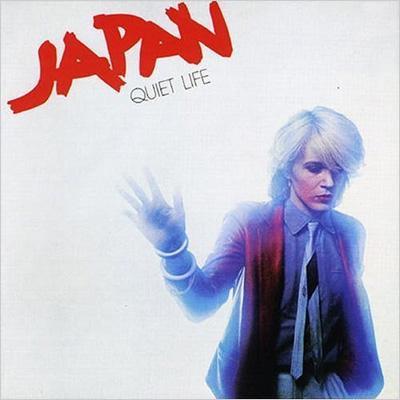
Strait to the Point: JAPAN - Quiet Life (1979)

Review by: Michael Strait


Rated: 3.5/5
A transitional album, for sure, but not a bad one - once you get past the first couple of tracks, at least.

I used to think there was nothing worse than a great album opening with a bad track, but of course I was mistaken: there is something worse, and that's a great album opening with two bad tracks. I really couldn't blame anyone who switched off and put on some Roxy Music after the first two tracks here; the first one - the title track - is utterly by-the-numbers new romanticism with absolutely no particularly memorable or unusual features, and the second - "Fall in Love With Me" - is set apart only by a brief ambient bridge (predicting things to come) and a kinda weird bassline. I was pretty despondent myself after these two, but I needn't have worried and neither should you; skip these two and what you're left with is a pleasingly weird slice of new romantic goodness, even if the band themselves'll probably deny it. 

The real hero of this piece, for me, is Mick Karn; that guy was always a great bassist, but here he finally ascends to another plane of existence and becomes some sort of insane God, delightedly ripping up the funk rulebook and playing some maddeningly brilliant stuff. My favourite moment of his is probably the intro to "Alien", where he draws one note out into a second-long peal before collapsing into a dense cluster of little notes, but he's just as fantastic on the rest of the song - especially the quiet break in the middle, where all the instrumentation restrains itself and Karn transforms his bass into something resembling a textural instrument to fill the space. He's really good on the cover of "All Tomorrow's Parties", too, which is actually one of the album's highlights: aside from Karn's bizarrely-structured bassline, we've got some lovely guitar textures running through the whole thing, a pleasantly metronomic drumbeat courtesy of Steve Jansen and a really lovely performance from Sylvian. 

Sylvian's soft, affected crooning on this album is a strange thing - it sounds almost like an exaggerated parody of the average new romantic vocalist, and is accordingly insufferable on the first two songs. Starting from "Despair", though, he sounds divine, indicating that the problem earlier was that he simply doesn't fit with the atmosphere of the average new romantic record. The rest of the album, though, spends its time exploring rather more fantastical and less optimistic worlds than, say, The Lexicon Of Love, and Sylvian's oddly plastic affectations slide as perfectly into the piano noir of "Despair" (which feels like a tonal bridge between Depeche Mode's Black Celebration and Bohren & Der Club Of Gore's Sunset Mission) as they do into the wondrous, awestruck "Halloween". That last one has a really nice atmospheric synth riff, and a really nice hook to match - see? I KNEW he'd get better at those! He's writing good hooks fairly regularly now, and that's a welcome development for any pop group, even such a bloody weird one as Japan. 

Anyway, as usual there's two longer songs here. Also as usual, they're both pretty good: "In Vogue" has these watery atmospheric synths running in the background the whole time and a really long, understated, contemplative guitar solo that manages to completely avoid sounding like masturbation and instead sounds like perfectly natural musical exploration, and "Other Side Of Life" is a ballad that sacrifices deep emotional feeling (which Sylvian, in this mode, is incapable of conveying) for a more otherworldly atmosphere and a lengthy instrumental coda with synths that sound rather like they belong in the Age Of Empires II soundtrack (totally a compliment, by the way). So, what're we left with? A couple generic, mediocre synthpop songs and then six pieces of excellent experimental pop - which means I can't give this too high a rating (two out of eight is a pretty significant number, after all, especially when they're the first fuckin' things you hear on the album) but can nonetheless recommend it. And for the love of God, never listen to this in an aeroplane, or anywhere else that blocks out the bass frequencies! If there were any justice in the world, Mick Karn would be one of the great white bass heroes, but alas the world chooses instead to idolise such mediocrities as Cliff Burton and Geddy fuckin' Lee... oh, deary me, am I turning into LimedIBagels? Bah - ignore my bitterness and listen to Japan. The late 70s and early 80s wouldn't have been quite so fascinating without 'em.

Monday, 6 June 2016

Strait to the Point: JAPAN - Obscure Alternatives (1978)

Review by: Michael Strait


Rated: 4/5
Slower, weirder and with deconstructionist ambitions - yeah, this is the Japan I know and love.

"Sylvian has gone on record saying that Obscure Alternatives should have been their debut album.[citation needed]"

Citation or no citation, I'm willing to believe the veracity of this quote I found on Wikipedia. There's a sense of artistic dissatisfaction permeating this record, made manifest in a stylistic diversity which some might call incoherent and which I will call delightful. The various styles here are all in service of a coherent enough mood that their presence feels natural, and anyway, the lines between post-punk, funk and dub have always been vague enough that the shifts here are scarcely noticeable. So don't complain - this record is by and large an excellent, ambitious effort that deserves your attention. Don't listen to anyone (and that includes Allmusic!) who tries to tell you that this is inferior to their debut - it's better, and it only hints at better things to come.

See, this is where Japan acquire the weirdness that has characterised them in my mind since I first heard Tin Drum. Clearly being dissatisfied with the conventionality of their debut, here Japan sets about deconstructing it, rebuilding it with half the parts in the wrong places and with all sorts of sharp edges left where they shouldn't be. Take the song "Deviation", for instance; it's this weird, jittery-jumpy funk-rock song that sounds kinda like it could be the evil twin of any of the songs off Adolescent Sex, with its sandpapery rhythm guitar strokes and its spiky four-note lead riff. Sylvian's smooth, silken croon (the style that'd end up becoming his primary method of vocal delivery from their next album onwards) only adds to the general sense that something is off somehow, even if the corny spaceship-taking-off synths at the end kinda spoil the atmosphere. And then there's the immediately preceding song, the title track, which veers into outright creepy territory with its woozy, drugged-out chorus; a bunch of syrupy, vaguely unnatural-sounding vocals all harmonize in this drawn-out drawl, and I'm checking my drink to see if I've accidentally been consuming sizzurp this whole time by mistake. The song goes on for seven hazy minutes, with soft rhythm guitars jangling and crackling in the foreground as Sylvian presides over the whole scene from the shadows like a particularly sexually frustrated Sith lord, and I love pretty much all of it. 

I'm also a big fan of "Love Is Infectious", a post-punk number that sounds oddly slanted somehow, like some song from their debut viewed through a distorting prism. It's got an angular, loud riff worthy of Gang of Four and a steady, creeping bassline worthy of Joy Division (though, naturally, better played and more complex than anything Peter Hook could come up with), and a pleasingly skeezy set of lyrics about female masturbation from a way-too-interested Sylvian. There's also a guitar solo that's accompanied by a lot of cacophonous rhythm guitar stabbing and drum smashing, the end result being that the solo sounds good even though, for all I know, it may not be - context is everything, after all, and these guys have learned how to apply themselves just right. Just take a look at "...Rhodesia", which has a formula that for many other bands would spell disaster. I don't need to tell you just how low the success rate is for white reggae, let alone white rock bands taking brief excursions into reggae in the midst of otherwise fully rockin' albums, but this song actually works pretty well. That might be because it is, specifically, dub rather than straight-up reggae, and the jump from funk to dub really isn't such an intimidating one, but truth be told I think it might just be that all the other white rock bands to try their hands at reggae (outside of the post-punk sphere, mind you) were idiots who didn't understand it; Japan are most assuredly not idiots, and they understand that there's more to reggae than a repeated rhythm guitar pluck and a positive set of lyrics. What we get this time is, instead, nearly seven minutes of reserved disaffection, with Sylvian drawling out lyrics about Nazis "burning niggers in a cotton field" while a downbeat, celestial atmosphere develops behind him, aided at one point by a fantastically-produced solo from Rob Dean that really does sound like a comet hurtling across the sun's magnetic field. It's not the best song on the album, but it's lovely and welcome. I've just been going through a dub phase lately, too - imagine my surprise to discover a dub song on the new wave album I'd been planning to review this week, and imagine my further surprise when it turned out to be good!

In fact, this album is nicely consistent. Of the four remaining tracks, only one - the opener, "Automatic Gun" - is mediocre; it's a decent enough new wave song with a fairly good (if very conservative) rock n' roll riff, but it's not at all memorable and it opens the album on a dull note. But we've also got "Sometimes I Feel So Low", a title to which Sylvian fully commits by agonizingly drawing out every syllable in what sounds worrisomely like real desperation, and "Suburban Berlin", which is just gorgeous. It's got this reserved, effortlessly cool electric piano line for a main motif, with some scratchy rhythm guitars half-mimicking it, and there's this wonderful early instrumental break where the keys fade and the guitars louden into punkish monsters as they take over fully. I mistook it for an instrumental hook at first, but then after a minutes' more buildup the actual hook arrives and the song beautifully ascends into the realm of grandiosity, complete with string section synths and soaring arrogance from Sylvian. It's a contender for my favourite track on the album, and it's certainly the best hook he's written up to this point. 

Appropriately enough, he doesn't try to top it - the next and final track is an instrumental called "The Tenant", and it's a pretty good tone poem even if it ain't the best one I ever heard. There are plinky synths, quiet rainy-day pianos, and a really good, contemplative, vaguely metallic guitar solo that sounds a lot like something Wata'd come up with for one of Boris' more conventional rock songs, particularly in the way it settles on a lengthy one-note drone towards the end. It's a nice foreshadow of the stuff the band would end up doing later in their career, albeit not as good as some of the highs they'd eventually reach, and I hear tell Sylvian spent a lot of time exploring the sort of ideas covered in this song more fully in his solo career. All that may be true, but let's not let it lessen this album, which is a great slice of weirdo new wave of the sort I haven't really heard anywhere else. It's no wonder Sylvian thought this should have been their debut, considering that their actual debut merely sounded like a pretty good pastiche of Bowie, Roxy and Television. This thing, by contrast, has an identity and suggests a future - a future I'll be pleased to investigate myself in the coming weeks.

Friday, 27 May 2016

Strait to the Point: JAPAN - Adolescent Sex (1978)

Review by: Michael Strait


Rated: 3.5/5
As if ye needed any more proof that the 80s started in '78...

Japan may have never associated themselves with the New Romantics, but you can certainly see why they were lumped in with the movement. The New Romantic bands were a twinkle in Steve Strange's eye in 1978, but Japan bore many of the style's hallmarks already, and I'm not just referring to the makeup. Basslines borrowed from funk and disco? Check. Spacey, futuristic synths? Check. An effeminate, silken set of lead vocals? Well, OK - not yet. That'd come later. David Sylvian, at this point, sounded as if he'd just eaten a bowl of small round pebbles for breakfast. He doesn't sound macho, but he certainly does sound rough, and he's got one volume: loud. It gets a little grating after a while, I guess - would it kill him to stop shouting for one minute? Then again, it's not as if the music here ever quietens down much either. No ballads here, that's for sure - just a bunch of blazin' loud funk-rockers.

The monotony is a bit of a flaw, and it's not the only one. Sylvian's not a great hookster, either; most of his hooks on this album are fairly anemic and underwritten, although he manages to pull a couple of them off anyway thanks to sheer vocal charisma. "Lovers On Main Street"'s hook barely counts as a hook at all - it's just the titular phrase being near-tunelessly sung once - but the way Sylvian sardonically transforms the word "Street" into "Strrrrrrraaaaaaaaeeeeeeeeeeet" salvages the whole thing. Then there's "Wish You Were Black", which has this pre-chorus segment that feels like it's building up to a hook before suddenly diving away at the last moment, and it sounds cool enough to make up for the fact that, really, it's the sound of Sylvian himself diving away from having to write a proper hook at all. S'all good, though, and there are a couple of legitimately good hooks here too if you look. "Communist China" has the best, with its steadily building hook culminating in a grandiose guitar riff, and the title track's hook isn't bad either (though the little mid-verse mini-hooks in that song are better). Elsewhere, though, the hooks are barely present at all. Is that a problem? Eh, sorta - some more hooks woulda been nice, for sure, but the album's got enough riffs and basslines to get by.

I'm sure you've heard this before, but Mick Karn is a really good bassist. He's not actually at his best on this album, in that he is merely playing really good funk basslines rather than breaking new ground and innovating his own style like he'd do later in Japan's career, but I've no problem with that - all these songs feel super movable and danceable thanks to him. Well, OK, not JUST him - the drumming (courtesy of Steve Jansen) is pretty great too, and there's always a great guitar riff (presumably contributed by Rob Dean, though possibly also by Sylvian himself sometimes) to complete the groove. Dean's a pretty good guitarist, but I gotta say most of his solos leave me cold; he gets three big ones here, and two of them - on "Transmission" and "Television" - are fairly boring strings of shredding clichés. The solo he gets on "Suburban Love", though, is full of enough unexpected twists and tonal experiments to hold my interest the whole way through, and it's paired with a couple of great synth & electric piano solos. I mean, you could say the entire track is just one big wank-off, but as far as I'm concerned it's a pretty great wank-off, so who cares? 

I've got less to say about the rest, though. "Don't Rain On My Parade" is a cover (you can tell because it's got a better hook than Sylvian was capable of writing at this time!), and it sounds pretty much like the rest of the stuff here except with some cool, future-computer synth sounds bubbling away underneath; "Performance" is kinda fun, in that it's basically a straight-up funk song with 90s alt-rock vocals; "Transmission" has a very nice riff and a nice sense of bitterness... y'know, it's all pretty good, but at the same time none of it strikes me as remotely essential. Still, I shouldn't complain too hard. It's good fun, the guitar tone is pretty consistently nice, and none of the songs are bad; the fact that none of them are really all that good isn't enough to rain on my parade. I gotta say one thing, though: what was it with the late 70s/early 80s and fascism? Sylvian here sing about "Fascist graffiti" on "Performance", ABC sang about democracy and fascism on "Many Happy Returns", Heaven 17 had "Fascist Groove Thang"... I mean, I approve of the sentiment, but why then? It'd been a full 30 years since the vanquishing of fascism in Europe and another full 30 until it'd reappear in bulk. Why can't we have this sort of anti-fascist music now? Lawd knows we need it...

Saturday, 14 May 2016

Strait to the Point: THE WHO - Eminence Front (single, 1982)

Review by: Michael Strait


Rated: 4/5
Awesome single, honestly. Makes me nostalgic...

I was being serious at the end of my last review - I'm fuckin' done with The Who's albums. I am not George Starostin, and I've no interest in subjecting myself to albums made by bands that have passed their sell-by date. I had, however, heard great things about "Eminence Front", so I decided to check it out. And y'know what? I love it.

It's a cool song, and I don't just mean "cool" as synonym for "good". I mean cool, as in radical, as in lethal, as in badass, or whatever ya prefer. It's totally self-confident without being overbearing about it, partly because Townshend sings it instead of Daltrey (thus dropping all the manliness) and partly because it's just so groovy. RYM calls it "Funk Rock", which I guess it is, but it incorporates the funk in a way much more seamless and much less token than, say, anything the Red Hot Chilli Peppers ever did. The bassline only becomes really noticeable in the chorus (and man, that tone is monstrous), and it is, delightfully, accompanied by some psychedelic electric pianos of the sort you can imagine Herbie Hancock playing; that's the sort of intelligent, respectful treatment I never expected ageing, past-their-prime rockers to give funk, and I'm so happy they did it. I'm also happy that they finally found some good synth tones again, though there are some iffy, kinda corny ones whizzling away in the distance in the second iteration of the chorus. They're endearing, though, like some soundtrack for an old arcade game, and when was the last time I found a Who song endearing? Man, I might have to go back to The Who Sell Out for that...

Anyway, yeah - the general consensus is right on this one. Moon or no Moon, this song's worth a listen or four, and maybe even a dance or two if you're in the mood for something slow. It's a pleasant reminder of all the talent, creativity, and good taste The Who have always possessed, even if they lose track of it sometimes. I feel like it's a great way to end my Who series on a positive note, so I'm cutting it off here. No more Who reviews - and I'm skipping next week, too (got an exam). I'll be back the week after that reviewing God-knows-who. Ah, what's a snappy way of ending this series? Oh, I know! A modified lyric:

I was going to give this band a full review
But my enthusiasm waned, and I can't bear the pain
Of doing what I don't wanna do

That sounded a bit more mean-spirited than I intended, didn't it? Nah - love ya, Townshend. You were a real fascinating artist to follow, y'know that? I may not always have agreed with the decisions you made or the way you went, but I can't deny your band had one of the most intriguing career trajectories ever and reviewing it was a rollercoaster. I'm gonna miss this. Still, onto the next...

Saturday, 7 May 2016

Strait to the Point: THE WHO - Who Are You (1978)

Review by: Michael Strait


Rated: 1/5
Who cares?


Yeah, don't listen to anybody who tries to tell you this is some sort of underrated gem. Thrice have I subjected myself to this abomination, and it only got worse each time. There's a reservoir of awful badness hidden here under the unassuming mask of bland, dreary dullness, and the more attention you pay, the worse it gets. There are good moments here, but they are exceedingly few, invariably brief, and easy to lose sight of amid the swirling oily fluids that lap at their shores. If you wanna brave this toxic swamp, then you've got my condolences and my best wishes, but I'd advise you to just go listen to Who's Next instead. There is nothing here worth dying for.

Still, if you insist on making the voyage, here's a hazard briefing. You'll have to prepare yourself for the sucking, suffocating plastic synths that cling to every part of the record like some horrid noxious gas; you'll have to fight your way through legions of phoned-in anti-riffs, generic chords, weak guitar tones and totally unimpressive solos churned out by what sounds like a thoroughly distracted Pete Townshend; you'll have to put up with Roger Daltrey devolving from an inferior Mick Jagger to what sounds rather horrifyingly like an attempt to imitate Bon Scott; and, most dangerous of all, you'll have to cope with the existentially terrifying notion that The Who are never gonna be capable of writing anything as good as "The Real Me", or "Bargain", or "Pinball Wizard", or "Sunrise", or "Boris the Spider", or "My Generation" or even fucking "I'm The Face" (yeah, yeah, so Peter Meaden technically wrote that - whatever, you get what I mean) ever again. This is it, folks - it's all downhill from here. The Who, as a creative force, are over.

It's sad, too, because the aforementioned brief moments are so tantalizing! The first song on here, "New Song", has a legitimately great hook, and I'm not ashamed to say I've found myself unconsciously singing it idly to myself quite often since I started listening to this album. It's got Daltrey delivering this insanely catchy, really triumphant-sounding melody in a way that actually suits his by-now overwhelming machismo, while some synths valiantly do their best to make up for the terrible sounds they're making by applying themselves sparsely and emphatically around him like royal horns heralding his arrival. Entwistle's proudly strutting bassline doesn't hurt either, and for a few glorious moments you suspect that The Who have still got it; alas, whenever the hook fades you are forced to put up with the rest of the song, and that's a decidedly less heartening experience. It also proves to be far more predictive for the album as a whole, and that really is tragic. Lawd knows I have an iffy history with The Who, but this? This is something fuckin' else.

Entwistle has a record number of songs here, and all three of them are awful. I don't blame him - Townshend's songs on this are also mostly awful - but nonetheless their suckitude is mind-boggling. "Had Enough" contains some of the most totally intolerable singing in Daltrey's career and a bunch of horribly-arranged strings which are, together with the near-nonexistent guitar parts, pushed into the background by the mastering job so as not to get in the way of the horrendous synths. "905", meanwhile, is laden with one of those rare hooks so poorly-written as to actually deprive the song of energy, and considering how fucking dreary the song is that's a perversely admirable achievement. Both of those songs at least have decent vocal melodies, though, which places them head-and-shoulders above "Trick Of The Light"; that song barely even has a melody at all, though it does have a whole lotta drawn out moans from Daltrey and one of the most thoroughly unimpressive riffs ever to emerge from the axe of a once-great guitarist, as well as a completely unsatisfying, thin guitar tone and an exceedingly annoying melodramatic bridge... damn, was Entwistle actually trying to suck this hard or did he somehow manage it by accident? This is the man who gave us "Whiskey Man"? Yeesh...

Aw, but Townshend - don't think I've forgotten about you, m8! You actually managed to piss me off here, 'cos you wrote "Sister Disco", and that song is completely insufferable. It sounds kinda like it's going for the monolithic immensity of Who's Next, but instead of building a mountain it ends up faceplanting into a shit-encrusted molehill and floundering constantly as it suffocates, wildly throwing around some truly, completely abominable synth lines and utterly token guitar chords in the process. The attempted hook is incapable of hooking a fuckin' goldfish, and the entire thing languishes at the same dreary tempo as everything else on the album. It's complete, utter, astounding, unlistenable shit - and then, to top it off, the lyrics appear to be some sorta smug condemnation of disco music! Are ye mad, ya wanker? Chic were beating the shit out of this album every time they did anything in the late 70s, and you wanna start a fight? And to top it all off, the song you choose to start that fight with is this atrocity!? This isn't just the worst song The Who ever made, it's one of the worst songs I've ever heard in my life! Do you want me to hate you, Townshend? Is this masochism?

Townshend is also responsible for "Guitar and Pen", which tries to land somewhere between a ballad and a rocker and ends up melding the absolute worst of both worlds. The ballad segments sound like airy-fairy, repulsively corny latter-day-Yes shit, and the attempted rock segments are rather let down by the near-total rejection of the guitar in favour of a toxic synth mush that sounds like it might have leaked out of some tube on a processing plant for molten plastic. It's six miserable, horrifying minutes long, and by the end you may feel the urge to curl up into a fetal position and cry softly in the corner of your room while therapeutically blasting Vomir to purge the entire concept of music from your body - because if this is music, then music as traditionally defined is worthless, surely? Every single member of the band is at their uttermost nadir on this song - Daltrey, Moon, Townshend and Entwistle are all performing pretty much unlistenably on their instruments, due to what I think is a haphazard combination of misbegotten songwriting decisions and general stylistic incompetence. This song doesn't just need to be destroyed - it needs to be exorcised back into the demon realm from which it came.

Erm, anything else? Well, there's "Music Must Change" (my fuckin' thoughts exactly, Townshend), which has a chorus and pre-chorus that might actually be good if Daltrey wasn't doing his best to ruin them, and "Love Is Coming Down", which manages to sound like a reject piece from the soundtrack of some godawful too-highly-budgeted flop of a romance movie (in no small part thanks to a return of the hackneyed string section from "Had Enough" - thanks, Ted Astley! I dunno who the fuck you are, but I hope you're dead by now!). That leaves us with only the title track, which closes the album out and which is generally considered the only gem to emerge from this misbegotten sulfur mine. It's certainly better than most of the shit on here, but I ejaculate better music than half of these supposed songs every day, so that's no high praise. Truth be told, it actually ain't bad; I like how the chorus manages to maintain a simmering energy despite being the quietest, subtlest part of the song, and I guess I can't deny that Daltrey's chest-beating Gorilla impressions actually sound pretty cool here. It's still not great, though - the structure feels a tad too loose to me (nothing wrong with an unusual structure, mind, but it doesn't feel like they really put much thought into this one) and the sonics are still pretty shit. The first time I heard that squelching synth that opens the song, my face contorted into this memorable rictus of disgust, and the guitar is still mixed too far back and laden with too weak a tone. It's decent, but to argue that it's on par with their earlier masterpieces just seems disingenuous to me; do y'all really think this is on the level of, I dunno, basically any of the songs on Who's Next? Nah - it made a good CSI intro, but not as good a one as "Won't Get Fooled Again", and that's all ya really need to know about it. As for this album, well, all ya need to know is to avoid it like you'd avoid a leper, or a right-wing tabloid, or eye contact with Ted Cruz - whatever simile works best for you, man. Myself, I think I'm done with The Who now. I've no desire to follow their apparently steadily-worsening debasements of their own legacy any further, especially considering all the other great shit I could be reviewing. I might check out "Eminence Front", though...

Saturday, 30 April 2016

Strait to the Point: THE WHO - The Who by Numbers (1975)

Review by: Michael Strait


Rated: 2.5/5

This might be the first time I've been able to call an album by these dudes "humble". It ain't bad, I guess, but it's not a patch on their best.

On first listen, I hated this. I listen to these things three times, though, and the subsequent two did admittedly reveal a small reservoir of quality I'd not noticed at first. After a string of increasingly grandiose albums culminating in the leaning tower of hubris that was Quadrophenia, it's nice to hear Townshend finally slowing down, taking a breather and allowing his vulnerabilities to show through a little bit. No characters here, and no social commentary either - just a bunch of fairly mellow acoustic rockers, ballads and musings on the flawed self. Sounds great, right?

Well, not quite. It's alright, sure, but it's a fairly unassuming, unremarkable sorta alright. Most of the tracks just kinda breeze by, doing just enough to avoid being outright boring without doing enough to be riveting. Listening to this album is a mildly diverting, marginally enjoyable experience, but it won't win any awards and it probably won't change yer life. I can't say there's any tracks I hate, either - there are a couple of failures, sure, but they're the mediocre, boring kind of failure rather than the sort of disastrous collapse you can find in The Who's worst moments. So, in sum, what we have here is The Who's first average album - and that's an epochal moment, that is.

I'm in a positive mood, so let's start with the good stuff. "In a Hand or a Face", the closing track, is a great song! The vocal melody is properly awesome the whole way through, especially in the chorus. That rising repetition - "I am going round and round..." is like a callback to that sense of earnest silliness that used to define The Who, sung like it's being confided mischievously in your ear while the instrumentation steadily builds around it. That instrumentation is pretty great, too - everyone performs pretty well on this song, which is a very nice surprise when ye consider how bloody bland they are on most of this album. Oh, goshdarnit - I've hit the negatives already! I mean, what can I do? There's an elephant in the room, hangin' from the ceiling like an oversized, critically endangered chandelier: Moon's drumming on this album has, appallingly, actually gotten worse than it was on Quadrophenia. There, he at least still sounded as if he were connected to the band; here, half the tracks sound like his beat was recorded in another room with no point of reference, 'cos he can't stop doing these ridiculous fills, flourishes and attempted solos that sound kinda like what the drummer in a third-rate Who tribute band might come up with. What's worse is the horrible, lethargic cymbal stuff he does when he's actually trying to keep time - that stuff actually saps the music of energy, and that's just heartbreaking to have to hear. I've no idea what the timeline was leading up to Moon's death in 1978, but I have a hunch he was a hefty way down the path by the time they recorded this album. What else explains this precipitous drop? Shiet, maybe he'd secretly quit and this was just Townshend drumming in disguise.

Entwistle's also barely a presence on most of these tracks. He gets one of his own, though, and it's the best he's written in years - "Success Story", it's called, and not even a tragic nadir of a performance from Moon can prevent it from being a highlight. Entwistle's got a badass bass tone on it, for one, and it's also got that trademark Entwistle sense of humour I've always found so endearing. Got a nice set of riffs, too. No real complaints here, though it ain't one of the band's greatest achievements. I've mostly the same opinion of the opening track, "Slip Kid"; that thing is built around this super swaggy, catchy piano groove, and I can't say I've got any problems with it, but it's not exactly a work of genius, now, is it? It'd be one of the better tracks on Odds & Sods, but it's hard for me to work up any enthusiasm about it. I mean, this is the band that made Baba O'Riley - and this was the best they could do?

Really, it's remarkable just how easy it is to forget this album when it's done. I can't say that of any of their others up to this point - I didn't like Tommy or Quadrophenia, but I'll be damned if they weren't at least memorable failures. This thing is a reluctant kind of success, I guess, but it's the most forgettable success I've ever heard, and is that really better? "Dreaming From The Waist" is a perfectly competent acoustic rocker and a pleasant enough listening experience, and so is "How Many Friends", but man, they really don't aspire to be anything more. That's kind of nice after all the pretensions of the previous album, I guess, but it also means I feel absolutely no need to retain them in my memory and I'll be damned if they do anything to try and win me over. "However Much I Booze" is basically the same, except worse, seeing as Townshend tries to fit too many words into his melody and ends up ruining it; "Imagine A Man" is a decently pretty and, honestly, entirely ordinary acoustic ballad that I can't really remember anything about; "Squeeze Box" is kind of a countryish tune with a good banjo solo, a decent melody and no particularly great ideas... you get the picture, y'know? The score range for tracks on this album, excepting maybe the finale, is about 4-6/10. It's so thoroughly mediocre that I'm beginning to feel self-doubt at my inability to find anything to say about it - I have to keep reminding myself that it's not me, it's the album that's a hack writer with delusions of grandeur and no futur- ahem, excuse me...

I guess "Red Blue and Grey" is nice. It's this endearing little ballad where Townshend just opens up over a ukulele, and there are some pretty horns in the distance that give the whole thing a kind of mournful air. Strictly speaking it's not any more remarkable than its surroundings, but I find myself fixating on it whenever I listen to the album; I guess it just strikes me as the least pretentious thing Townshend ever wrote, lacking even the conceit of deep emotional resonance (I've always believed you need to be at least a little self-important to want to make people cry) and conveying only a feeling of remarkable contentedness. Being as it cohabits with songs about drink addiction, fake friends and sexual frustration, this is remarkable, and maybe that's why I like it more than the rest. But it's not like it's one of Townshend's best, and it doesn't save this album from total irrelevance. A friend of mine once pointed out that it's been 40 years, and there still isn't anyone willing to try and rehabilitate The Who's post-Quadrophenia work; "it's a safe bet", he said, "that it's as mediocre as everyone says it is". I guess he was right. This is, indeed, The Who By Numbers, and that means it's The Who without any of the things that made them interesting. If the blood still flows, it's been heftily diluted.

Monday, 25 April 2016

Strait to the Point: THE WHO - Odds & Sods

Review by: Michael Strait


Just fanservice. A nice lil bunch of curiosities for the completionist.

A bonus review for a bonus album - fair, wouldn't ya say? This was a collection of outtakes, rarities and other such collectors' items released originally to fill a free year, then re-released in 1998 with more than twice as many tracks for the obsessives and completionists. I don't really feel like there's much point in giving it any sort of rating, so instead I'm just gonna give a quick overview of what's on here.

There's a rough, though not rigid, chronological order here. We start with "I'm The Face" - a pleasant little R&B tune that was one side of the first single The Who ever released, back when they were called The High Numbers - and we end with "Naked Eye", a song that can also be found on the bonus track edition of Who's Next. As far as I can tell, there aren't any outtakes from the Quadrophenia sessions, although "Water" has enough dull musicianship and rawk gawd posturing to sound like one. Aside from that one, though, the Who's Next outtakes are pretty much all totally awesome, and a couple of 'em even sound better than some of the album tracks. What did we do to deserve "Gettin' In Tune" instead of "Put The Money Down"? The latter's great - it's all mountainous and monolithic like the best songs on that album, but it's also got some convincingly macho swagger and a nice sense of humour. "Time Is Passing" ain't bad either, though the country 'n' western parody at the beginning is maybe a leetle too arch for a bunch of middle-class Englishmen. Then again, they don't shy away from self-parody on this thing either - just listen to "Long Live Rock"! Ridiculous tune, but it pretty much entirely eliminates the need for AC/DC's "Rock And Roll Ain't Noise Pollution", and, come to think of it, does a great job parodying just about every single 80s hair metal band before any of them even existed. It's no necessity, but as far as joke songs go it ain't bad at all.

Most of the other stuff is kinda scattered. There are two more joke songs: "Now I'm A Farmer", notable mostly for some lead vocal silliness from Moon, and "Little Billy", which sounds like a silly Entwistle song even though Townshend apparently wrote it. There's also "Cousin Kevin Model Child", which I guess is a joke song of some kind, but which elicited a verbal, audible reaction of "What the fuck is this shit?" from me when I heard it; skip it, and also skip the studio version of "Young Man Blues" (super corny imitation-American accents ruin it), the rock version of "Mary Anne With The Shaky Hand" (no less boring for all the rocking - in fact, possibly more boring for being longer), "Too Much Of Anything" (too much of nothing, more like), and "My Way" (a fairly generic Eddie Cochran cover). There's a bunch of other stuff which is only really interesting from a historical perspective, like "Leaving Here" (Daltrey's first attempt at machismo on the mic), "Faith In Something Bigger" (a perfectly pleasant early pop tune that ultimately lacks identity), and "Under My Thumb" (a cover of the Rolling Stones song that fails because it's one of those songs only Mick Jagger could sing properly). There are, however, some gems buried here: "Baby Don't You Do It", which contains some excellent drunken angst-over-breakup from Daltrey and some more of that destructive guitar feedback Townshend left behind after the debut; "Glow Girl", which is a nice, psychy little pop tune that ends on a genderswapped version of that "it's a boooy, Mrs. Walker, it's a boooy" bit from Tommy (no idea which was written first); "Pure And Easy", which sounds kind of like one of them endearingly corny Yes pop songs from their earlier albums; and "We Close Tonight", which confuses me because it's got elements you tend to find in early Who songs coexisting with the trappings of their later stuff, but which sounds cool anyway. 

The three I haven't commented on - the studio version of "Summertime Blues", the rock version of "Love Ain't For Keeping" and the Entwistle tune "Postcard" - are all unspecial, unremarkable but nonetheless pretty good tracks that wouldn't stink up your collection if you felt the need to have 'em. I'm not a big Who fan, personally, so I doubt I'll be returning to this very often, but it's a nice little gesture to the fans. Also, I can't deny that it's kind of interesting to hear The Who's career trajectory represented here in miniature; in just an hour and 20 minutes you get pretty much the entire story of The Who's existence up to this point, and it's a nice reminder that they were, for all their faults, a supremely interesting and unique band that were never content to remain in one place for very long. Vitality flows through the veins of this record, even on the bad songs - let's just see how long they could keep that up...

Friday, 22 April 2016

Strait to the Point: THE WHO - Quadrophenia (1973)

Review by: Michael Strait


Rated: 2/5

A gigantic monument to the blinding power of self-importance. Has its moments, though.

In my reviews of The Who's discography so far (which can be found here), I've had very little but kind words for Moon. I've a drummer friend who complains about his lack of technical chops, and I understand that, but his drumming is an essential component of The Who's style on their best albums. The job of a drummer, usually, is to keep time and thus keep the band grounded, but Moon was never content with that; instead, he preferred to be the rocket engine that propelled The Who into the sky, lending them an inescapable sense of size and gravitas that helped their best music sound so joyous and expansive. When The Who's early music sounded like it was bursting at the seams with youthful energy, a good portion of it was always him; when they started constructing mountains on Who's Next, he was not just the foundation but a substantial part of the granite centre on which the surrounding landscape was painted. Without him, I firmly believe that The Who's name would be rather more apt than it has turned out to be, and the classic rock world would lack one of its greatest heroes.

So why am I so fucking sick of him?

There's something infuriating about his work on Quadrophenia, see. I had difficulty working out what it was for a while, but then I concentrated and I figured it out. Moon, on this album, spends way too long acting like an ordinary rock drummer. Most of the beats he plays on this album are entirely normal, basic and dreadfully uncreative 4/4 beats with little embellishment or character, and that's annoying; more annoying is his consistent and nearly intolerable habit of announcing his presence with an equally generic and uncreative drum fill, banging loudly and quickly on a few snares before falling in line and playing a dull-ass drumbeat for the remainder of the song. It's so intolerable not only because it's deeply repetitive, but also because it's so unjustifiably arrogant. It's like a superhero arriving at the scene of some supervillainy, pompously saying "I'm here - the day's saved!" while unimpressively attempting to flourish his cape, and then accidentally flying into a wall and knocking himself out - it's all a bunch of big, vaguely depressing pompousness that ultimately heralds the arrival of nothing useful. Moon, on this album, has started to believe his own hype while simultaneously becoming so lazy as to no longer deserve it - and there'll never be a better microcosm for the album than that.

It's better than Tommy, of course. In fact, if I didn't know better, I'd say Townshend had listened to some of my criticisms of that record when he was making this one, because there's none of those old shitty sub-2-minute interludes to be found here. I can't claim that any of the songs are as lazily nonexistent as most of the shit on Tommy, either; they're all perfectly competent rock songs with a decent number of moving parts and, usually, at least one musical idea. Nothing here is anywhere near as bad as "Christmas" or "Underture", and there are more good songs, too. And the story (because this, if you didn't know, is another one of them rock operas) is better, I guess; I still stopped paying attention about halfway through, but I gather it's a fairly simple and relatable story about a young man looking for social acceptance and finding it in a subculture, specifically the mods if I'm not mistaken. That's all nice, but I still have some problems.

For one, it's not just Moon that's lost his mojo - it's everyone! Entwistle's pretty much a non-factor the entire way through this album, and that's just disconcerting, because what's a Who song without a ridiculous Entwistle bassline roiling underneath it? He's not even got any songwriting credits on the album! I've not liked one of his songs in a while, but I still feel like something's amiss here; the dude's had at least one song on every album since the sophomore, and his absence from this album is strange, like losing an old cushion from your sofa. Then there's Daltrey, who has fully completed his transformation into the stereotypical rock vocalist and thus spends the entire album emitting a series of histrionic roars, low growls and showmanly screeches that almost never fail to make me wince, flinch and retch like a bulimic fulmar. I've always had a love/hate relationship with Mick Jagger, insincere demonic jester that he is, but Daltrey's got all of his flaws and none of his endearing qualities here, and I really cannot stand him. Whatever became of that boyish rebel on My Generation? Hell, what became of the deftly creative Townshend on My Generation? His guitarwork here is fine, I guess, but it lacks the muscle a good Townshend riff can carry and it rarely manages any of the chiming soft goodness he can sometimes convey in his gentler moments. All the riffs here are big, like everything else: big concepts, big ambitions, big album (82 minutes!), and big, big hubris. 

It introduces itself pretty well, though. The first track is a fairly pleasant two minutes of sea sounds, with a bunch of faint keyboards in the distance and some wordless vocals, until eventually a bunch of notable lyrics and melodies from the album are distantly sung in succession, and I'm sure you get the idea: it's a prelude, portentously foreshadowing all the developments to come. Sure, that's fine, and the next track is one of the album's highlights; "The Real Me" is a blistering, catchy rocker with possibly the best musicianship on the album, some great horn arrangements and some of Daltrey's least annoying rock showmanship. I'm not entirely sure what it has to do with the story, but the lyrics are general enough that I feel no obligation to care; it's a good song with nice lyrics about teenage disaffection, and that's all I need to know. S'all good, but at the same time it's undeniably all a bit self-important; Daltrey sounds very much like he's excitedly announcing a big event, and the horns do add an air of affected grandiosity. "Here comes somethin' big", it's saying - "this is our masterpiece!"

Still, I'm enjoying myself so far. Then the title track comes in, and it's a 6-minute instrumental that spends its entire runtime trying to sound as portentous, important and epic as possible - and I'm just left rubbing my brow and thinking "Guys, the movie's started! You don't need to show me another bloody trailer!" The damn thing spends a good half its runtime foreshadowing motifs that'll appear later in the album, forgetting to develop any real identity of its own or, really, any well-defined structure; it's all a big mess of cheesy synths, self-impressed guitar solos and melodies that'll be done better later, and I just can't see the point. It'd have been a poor intro anyway, but placing it third on the tracklist is a particularly baffling move. I expect the presence of songs like this one is why some call Quadrophenia "The Who's prog rock album", and I'll confess I was fooled for a bit, too, but then I listened closer and realised that there aren't any interesting time signatures, cleverly unusual riffs or cool structures here. Naw, there's just a load of unimpressive instrumental wanking married to a ton of pretentious self-importance - in other words, it's exactly what prog sounds like to people who don't like prog. P'raps the term was originally applied to Quadrophenia as an insult? 

Problems like this haunt the album at every turn. It's impossible to go anywhere in this thing without bumping into a bunch of massively-played guitar chords, or some huge drum fills, or some giant vocals, and it all ends up becoming utterly numbing. Look, Who's Next worked because the vastness was inextricably married to smallness; those were really big songs that signified really little things, carrying all the more genuine import for it. "Baba O'Riley" felt like a giant Sequoia springing from the heart of a humble young man, and "Bargain" was about the unfathomable depths of one small man's personal faith; even the most unapologetically huge song there, "Won't Get Fooled Again", felt like it was rooted in a very human sense of dissatisfaction. This album, though, is so concerned with telling a big, important story that it forgets its human heart; this thing is a hollow mountain, full of no goblins or Balrogs but pure empty air. The human heart here is meant to be the young boy who propels the story, but this album is just so impressed with the fact that it's telling the story that it never actually shrinks itself down to a level where I can appreciate his emotions; I'm observing him from on high, watching dispassionately as he goes about his business while angels play guitars and blow horns to herald his every move. It's overwhelming and, in the end, impossibly boring.

Aptly enough, I finally realised how much I hated this thing on the track "I've Had Enough", which starts out as the umpteenth tolerable-but-uninspired rocker in a row before transitioning, for what seems like no reason at all, into another prelude to "Love, Reign O'er Me". It's not as jarring as the transitions on "Christmas", from ol' Tommy, but it still doesn't fit and accomplishes nothing. This is what rock operas do, see: they are inherently ruinous concepts, pushing songwriters into making musically nonsensical decisions for the sake of a story that is, inevitably, uninspired-at-best, because if these rockers were any good at writing stories they'd be working in the fuckin' TV industry instead of twanging on guitars. There are some acoustic ballad segments here, too, but they sound as insincere and self-impressed as Moon does when he opens the fucking song with yet another pathetic fill (by this point I wanted to go back in time just so I could kill the motherfucker myself with his own drumsticks), and the entire thing drags on for six vaguely infuriating minutes before finally petering out with an affected scream from Daltrey. All the individual elements of this song are, I guess, competently-done, but they certainly aren't any more than that and they have no business all being jammed together in this mess. When the next song opens with Townshend forlornly singing "Why should I caaare?", all I can do is nod my head in despondent agreement - why should I? What have I got to care about here?

Side three on this album is a particular chore, laden with such an assortment of mediocrity that I have to wonder if Townshend intentionally chose it as the dumping ground for all his worst failures on the album. We've got, in order: "5:15", which tries to have primal rock swagger but is just too fucking grandiose to pull it off; "Sea and Sand", which sounds, at its best, like "Bargain" but worse in every way; "Drowned", which is saved from total nondescript dullness only by some pretty good horn riffs at one point; and "Bell Boy", in which Moon tragically attempts to recapture some of his old genius by playing diet-"The Ox" type solos on a track that is entirely the wrong tempo for them, resulting only in embarrassment for everybody involved. All these tracks are at least five minutes long, too, which means I was about ready to shoot myself by the end. Five minutes is totally the worst length for a rock song, anyway - either go all the way and make an 8-minute mini-epic or shrink it down to three minutes of pop goodness, but for the love of God, don't bombard me with dreary five-minuter after five-minuter like this. Nothing happens in any of these songs! The melodies are average, the riffs are forgettable, the musicianship is bloody dull and the story had long since ceased being of any interest to me. This sorta shit is why people these days are starting to look down on classic rock - to be this impressed with one's own mediocrity is something not even the wackest rapper could manage.

It's a shame, because there are moments of promise everywhere. "Cut My Hair" is, honestly, a pretty good song - it's got a good set of melodies and a strong hook, and it's one of the only tracks in which Moon actually performs pretty well the whole way through, though he still lacks the finesse he can manage in his best moments. Also, Townshend gets a lot of vocals here, and his singing on this album is far less irritating than Daltrey's. That's why many of the best moments here are softer ballad moments, on which he usually sings. "I'm One" kinda reminds me of Townshend's earlier, brilliant "Sunrise" in places, even though the rock segments are merely serviceable. "Is It In My Head", similarly structured, ain't bad either, and I feel no real ill will towards any of it; it doesn't stick in my head, but it's a pleasant enough experience while it lasts. Then there's "Helpless Dancer", which I actually think is pretty great! It kind of sounds like what that "Eyesight to the Blind" on Tommy wanted to sound like: rhythmic lead instrument stabs backing up a fairly excellent vocal melody, with some vaguely intriguing social commentary in the lyrics (though I gotta say, "And bombs are dropped on fighting cats/ And children's dreams are run with rats" is an incredibly corny couplet). The melodramatic melody and vaguely operatic singing also lend this a sort of pop-musical, Les Misérables air, which certainly works in context. The problem is that it ends on a brief, distant snippet of "The Kids Are Alright" from My Generation, which does two things. Firstly, it reminds me of how much better The Who used to be and makes me dislike this album more; secondly, it adds yet more arrogance to the already overflowing pot of it they've concocted on this album. "Ay yo, aren't we writing a musical about the mods? Weren't we a mod band? Well, we're gonna need some period-setting sound effects - why not include ourselves in one of those? That way, children listening to this will get the impression that we were among the most indispensable parts of the subculture, even though we were, if anything, latecomers to the scene and an integral part in its commercialisation and subsequent death! History is written by the victors, after all!"

All that ridiculous arrogance spends most of the album tragically unjustified, but what's more tragic is that the three songs on the final side actually go some way towards justifying it and thus give us a tantalizing glimpse into an alternate universe. What if all the songs on the album had been as good as "Doctor Jimmy"? All the melodrama actually works here, see, and that's mostly down to Daltrey. This is the first time he's actually conveying some of the emotional complexity that typified his best moments on Who's Next; he's not just a generic, strutting rockstar but a regretful, lost youth lain low by his own excessive machismo. Just listen to him in the chorus, falling victim to his own primality and descending helplessly into barbarism: "What is it!?/ I'll take it!/ Who is she?/ I'll rrrrape it!" The grandiosity here is actually earned, since those big, mournful horns are accompanying a moment of genuinely catastrophic emotion. And that moment when the melody resolves itself into "He only comes out when I drink my giiiiin"... well, it's just gorgeous, and possibly the only moment of real, total melodic bliss on the entire album. I love it, and it always gets stuck in my head - it's just a shame I stopped caring about the story about seven songs ago...

"The Rock" is pretty good, too, actually. It's just a reprise of the title track, but it's better, partly because Moon is being pretty inventive in parts (he plays these little dense beat clusters that are actually really cool) and partly just because the riff they stick with from about 2:45 to 4:40 is great. Then it transitions into a buildup to "Love Reign O'er Me", a song that by now has been foreshadowed, hinted at and built up to so much you're almost sick of it when it actually arrives. When it finally starts, though, it's with a moment of shocking humility for this album - the piano notes are actually quiet, reflective, and deeply human, so that when the vast chorus finally does arrive - the anguished, justly famous scream of "LOOOOOOVE, REIGN OOOOO'ER MEEEEEE!" from a Daltrey that finally sounds like he really, totally cares - it feels completely and wholly justified. It all gives me goosebumps, actually, especially that tearfully descending guitar line. In recognising its own humanity and humility, the album finally grounds itself well enough to reach into the heavens it has been aiming for the entire time, and achieves its lofty goals. The result is one of the finest things Townshend ever wrote, and one of The Who's truest highlights. It's beautiful, brilliant and utterly fantastic - I just wish I hadn't had to sit through seventy five minutes of intermittent quality, overwhelming arrogance and mediocre musicianship to get there. 

Why do The Who always do this to me? Except for their first album, all their albums have fallen at least some way short of their potential. They're capable of making some of the best music anyone's ever made, but so often they just, I dunno, don't. Sometimes they're too cautious and safe, writing a bunch of good songs instead of great ones, like on The Who Sell Out; sometimes they're overambitious, shooting too high and collapsing in the atmosphere, like here. I'd love to love them dearly, to hold them close to my heart as one of my favourite bands in the world, because they've certainly got the chops for it - but one thing you gotta have in your relationships is consistency, and The Who just offer moments. Beautiful, perfect, ascendant moments - but always, it seems, just moments. So I'm sorry, Townshend, but I'm done - we're through. I need a man I can rely on. Oh, love, reign o'er me...
Friday, 15 April 2016

Strait to the Point: THE WHO - Who's Next (1971)

Review by: Michael Strait


Rated: 4/5

If My Generation was the first indie rock album, then this might just have been the first U2 album. Don't worry, though - some of these tracks are classics.

If you want to see just how far The Who have come from My Generation, all ya need to do is compare that cover to this one. The four lads who once occupied an unassuming English street, crammed into a photo as compact as their music, now survey a vast wasteland from the shadow of a giant monolith - a monolith they do appear to have pissed on, indicating that some things never really change, but nonetheless the difference is informative. This album feels as vast as the cover looks, or maybe even vaster - there are times when it almost feels like the musical personification of a Himalaya, even occasionally a Misty Mountain. It's such a unique creation - so strangely relaxing for a hard rock album, so humble for something so huge, so personal for something so atmospheric - that I actually feel kinda guilty about admitting that I think it's a teensy bit overrated.

Don't get me wrong! Baba O'Riley is exactly as mindblowingly perfect as everyone says it is, and I'd have to be a rank fool to deny it. That song is a really great example of exactly what this record, at its best, does like no other - of the dichotomy between the huge and the tiny that nobody else has really explored, at least not in quite the same way. The keyboard effects that open the song evoke a beautiful morning over a pristine natural landscape as well as any progressive rock song I've ever heard, and the piano notes that crash in at around fifty seconds sound almost as if they're echoing off mountainsides - but they also sound unquestionably homely and emotional, as does Daltrey's singing. Eventually, Townshend's guitar comes down on top of the piano riff and pushes the landscape's visible boundaries even wider, but the lyrics never leave the subject of one man and his loved one - "Let's get together before we get much older", he implores her, and suddenly it all makes perfect sense; The Who are using these vast mental landscapes as a metaphor for the overwhelming power of deeply-felt human emotion, evoking just how vast and important a love can feel when you're in the thick of it - or perhaps just how endlessly gorgeous the world feels when one is romantically satisfied. I'll have to take their word for it, personally, but it's a damn nice picture they painted for me here. It's gotta be a very, very good contender for the title of best opening track in history, and possibly one of the best rock songs ever recorded - enough to make anyone see why The Who have gathered such a following.

And it's not as if that's the only moment of greatness on the album, either. In fact, the next one follows immediately: Bargain (the greatest Christian rock song of all time) isn't quite as brilliant as Baba O'Riley, but it is the song from this album that gets stuck in my head most frequently, and that's because it has one of the catchiest vocal melodies in The Who's entire discography. Daltrey sings it fantastically, too - in fact, this is the first album since My Generation on which it really feels like he's been utilized to his full potential, and it's certainly very nice to hear that after he was shafted so hard on The Who Sell Out and Tommy. What's also nice is just how smoothly they manage to work in the soft bridges between the hard rock sections on this track - it happens a couple of times, and it adds a novel feeling of space and openness to what would otherwise be a fairly uniform (if very good) hard rock song. One such quiet moment opens the track, in fact, which is nice - because you can't just go right into an energetic hard rocker after Baba O'Riley, y'know? You gotta show some respect first.

And then, of course, there's that closing track - Won't Get Fooled Again, a song on which too much has been written already but which I will have to sing the praises of yet again. It is eight minutes of constantly-renewing energy, blessed with one of the most memorable riffs ever carved, perhaps the most intelligent lyrics Townshend ever wrote, and a rock 'n' roll scream so loud that its echoes are still heard today, reverberating across the internet every time anybody makes a pun. Got a damn nice hook, too! It’s a monolith to match that thing on the cover, and yet it never sounds too self-important or self-satisfied. Even the portentous, descending keyboards that open the thing don’t sound like too pompous a touch – and come to think of it, this might be a good moment to talk about how well the keyboards on this album have aged. It’s very easy for synthesiser tones to age like hot shit in the sun (one need only witness Rush’s Signals for proof of that), but these have weathered the 45 years remarkably well. I haven’t got a single bad word to say about Won’t Get Fooled Again – it’s flawless. I mean, I suppose I don’t really connect to it all that deeply, but hey – that’s just me, and who fuckin’ cares about me?

Thing is, that’s about where my unvarnished praise for this record ends. I mean, I haven’t got anything particularly bad to say about Love Ain’t For Keeping, which is a pretty little ballad with a nice melody and some harmonies that make it sound bigger than most (even the ballads on this thing sound huge!), but it's over quickly and easy to forget. It's roughly the same story for Behind Blue Eyes, a song everyone in the universe has heard at least once and which has very few moving parts: it's a good melody, some vaguely parodic rockstar-ballad lyrics and a blossoming acoustic guitar line, and aside from a nice guitar solo near the end that's basically it. There's certainly nothing wrong with the song, but I'm not sure what it did to deserve classic status. Mind you, I shouldn't complain - according to certain segments of the rock community, Free Bird and Detroit Rock City are rock classics, and I'd take this perfectly pleasant if unremarkable ballad over that shit any day of the week. 

That leaves us with the four songs in the middle of the record, and I'm at least iffy on all of them. My Wife, for a start, evinces the continuation of Entwistle's decline as a songwriter; the instrumental arrangement is dense, exciting and varied, but there's no riff, no real hook and the melody is meagre - and it's not helped by his listless, bland vocals, which prove themselves thoroughly unsuited to the task of rock 'n' roll machismo. Stick to the elfin tones, John - leave the testosterone to Daltrey. There's a nice horn bridge, and the lyrics are classic Entwistle slapstick, but in the end it fails to rise far above mediocre; I'd still take it over nearly anything on Tommy, and, come to think of it, over a lot of songs by lesser rock groups, but in context I always find myself getting a fair bit impatient when this song comes on. Sadly, the next song brings no relief; Song Is Over is, really, only okay. It's aiming for pretty, with Townshend himself taking up a clean, polished voice for the softer verses while Daltrey gets to roar in the loud, dramatic choruses, and to an extent it works; in bits, it sounds kind of like a sunrise in Lothlorien, complete - if you're willing to indulge it - with yellow light reflecting off distant snow-covered mountains. But there's no escaping the fact that it's stretching four minutes' worth of songwriting ideas over six, and it inevitably gets repetitive and makes me antsy. The squelchy synth bass hasn't aged all that well, either, and it's impossible for lines like "I'll sing mah sawng to tha free!" to not be at least a little corny when delivered so self-seriously. Still, these songs aren't bad, except maybe when compared to Baba O'Riley or Won't Get Fooled Again - they need improvement, sure, but I can accept and not-infrequently even enjoy them just fine. 

Naw, the real problems are the next two. Getting In Tune, regrettably, is bad, or at least skirting dangerously close to bad; it's an overwrought, faintly ridiculous and ultimately forgettable ballad that avoids being a power ballad only because they hadn't really been invented yet. Daltrey's explorations of machismo on this album are mostly tolerable and often even awesome, but here it's just irritating to hear him assertively banging on about how he's "gettin' in tune to the straight 'n' naaahrrhoow" - well, good for you, I guess; you don't have to sound so bloody pleased with yourself! - and the instrumentation is doing nothing interesting to make up for it. It's a fairly boring five minutes, which generally blows by me without doing much to hold my interest or draw my attention, and Going Mobile isn't really any better. I can certainly relate to the lyrics - I would love to live in a mobile home, travelling at will across the vastness of America without having to pay any bloody mortgage - but the song itself is near nonexistent. I mean, what even happens here? Entwistle quietly plays some excellent basswork, sure, and Moon is his usual riveting self, but this is probably the one song where the keyboards really have aged like shit, and there's nothing remotely interesting about the melody or structure here. It's filler, this, and I'd wager nobody'd notice if you cut it from the album entirely. By the way - fuck that corny little acoustic guitar line the song's built on! Shit's silly without being funny and it just annoys me. 

So, what're we left with? Three fantastic songs, two pretty good songs, two decent-to-mediocre songs and two dull failures. That's a good album on average, but a masterpiece? Ehh, naww. I'll be generous and give this a 4.0 because even the lesser songs here are played to a superb level of musicianship, and because the highs are some of the highest highs anyone reached in the 70s, but that missing star is a big one. The Who's ability to write beautiful, soul-affirming works of genius is a marvel, and it's one I appreciate tremendously, but it's also one that leaves me yearning - because an entire album of Baba O'Rileys or Bargains would probably be the best album of all time. As it stands, we are merely left with a pretty great collection of U2-tier bombast, spirituality and macho self-belief wrapped up with one of the massivest rhythm sections in rock history - by any standards an achievement, but still a slightly disappointing one considering that I know they're capable of even more.