WELCOME TO OUR NEW SITE: tomymostalas.wordpress.com

You'll be automatically taken there in a second.. Change your bookmarks, thanks!

Showing posts with label Michael Strait. Show all posts

Sunday, 9 October 2016

RUSH - Moving Pictures (1981)

Review by: Michael Strait
Album assigned by: Eric Pember


Aight, there’s a whole shitton of things I’d rather be doing right now than reviewing a fucking Rush album, so let’s get this out of the way.

Rush, as far as I’m concerned, are a corny AOR band pretending to be a corny hard rock band pretending to be a corny prog rock band. I didn’t like them when I was 16, I don’t like them now, and unless something changes drastically in my biochemistry I’m not about to start liking them anytime soon. Geddy Lee’s vocals annoy me, not because they’re too high-pitched or womanly but because they’re way too over-the-top, like Bruce Dickinson or some garbage power metal vocalist; he tries so hard to fill every syllable with emotion that I end up feeling nothing whatsoever except the occasional spike of mild irritation. He’s a skilled bassist, and he’s got a good tone, but he rarely comes up with any actual memorable basslines – most of the time he’s just showing off. Same goes for their drummer, mostly – he certainly knows how to play, but he really doesn’t contribute much; most of the time he’s a forgettable background presence, like most rock drummers. Say – why does everyone worship that guy again?

Their guitarist is good, though, and he’s responsible for some of the best moments on this album. I recall his solos on Signals being strings of horrendous pseudo-metal clichés, which means he must have fallen a long way in one year because his solos on this album are actually mostly great. They’re weird and experimental without being inaccessible, and they have gravitas without being too “epic” or “awesome”; it’s almost like he’s playing in the wrong band, actually, ‘cos these things really wouldn’t sound out of place in actual prog rock songs. His riffs are pretty good, too, especially on “Tom Sawyer” – an overrated song, but still probably the second-best song on the album. If it were a little less complex it’d almost sound like it belongs on Who’s Next, ‘cos its intelligently reserved chorus and meaty guitar tones would fit right in. Alas, the singing is still insufferable, but this is Rush – that comes with the package. “Red Barchetta” is good, too, if you can get past how earnestly corny it is; the melody’s good, the riff’s good, and the unusual structure feels unforced and natural. I’ll even grant that it has some emotional resonance, ‘cos earnestly corny is still earnest, and well-applied earnestness can touch the heartstrings on occasion.

Elsewhere? Well, we’ve got “YYZ”, which is a fun little romp through a bunch of riffs, basslines and silly boogies, and that’s where the good stuff ends. The remaining four tracks – which, together, take up over half the album’s length – are all varying degrees of boring and pointless, and I can scarcely remember anything about any of them. My notes tell me that “Limelight” has a similar riff to the one Paul McCartney used in one of the segments on “Band On The Run”, but I can’t for the life of me remember which one, and the melody is barely there at all. It’s four minutes of unremarkable wallpaper, and the next three are the same, except that one of them goes on for ten minutes instead of four. That’d be “The Camera Eye”, which tries hard to be big and epic and ends up sounding perfectly pleasant and dull, like a walk by an English river on a grey and slightly drizzly day; not bad, but near-enough impossible to focus on and certainly impossible to remember when it’s finished. The next two, meanwhile, are so lacking in musical ideas that my notes become useless. I mean, take a look at what I wrote while listening to the last song: “This song has a bassline. It also has guitar stabs. It has vocals. The vocals have effects!” Fuck’s sake, this music exists only in the most technical sense. It’s dull, it’s boring, it’s bland, and I don’t want to spend any more time on it when I could be exploring so much music that’s so much more worthwhile. I’m out.

P.S. The synths are all bloody godawful too. Did I mention that?

Wednesday, 14 September 2016

FLOW DAN - Original Dan (2009)

Review by: Alex Alex
Album assigned by: Michael Strait


Yo! Fuck you! Review! Brought to you by Alex Alex who is cooler than T-Rex knows much about sex posted the photos of his ex all over the Internet I've hacked her fucking personal cabinet with my supercool botnet all hand-written in dot net (fucking smart) now all her pics are in the Darknet studied by the CCRU fuck you (mothefuckers) now listen to the review.

How do we deconstruct rap? For things like the prog the method is easy – take a typical Peter Hammill-esque melody, put the lyrics that describe the habits of Russian grey bears as well as the climate of the areas where the bears usually live, take care that the lyrics contain just enough exact quotations from some academical thesis, sing the thing in the typical Peter Hammill manner and you are guaranteed to entertain the more sophisticated part of the audience while not abandoning the less sophisticated part who will definitely like the nice melody as it's nothing they have ever heard before.

No such luck with rap. I have to be serious with the review then.

Song 1. That's the opening song. The purpose of the opening song is such: recording companies show the artists their place. For an artist to record an opening song for his/her album is the same as for an ordinary man to be raped then paid for the trauma by the decision of the court. I DONT GIVE A FUCK! I'M JUST ME! YOU! NEVER SEEN ME IN THE DUMP! Typical opening song, the only goal is to convince the buyers that this is indeed the record they are buying and not some out-of-order shit. Like, when they sell you a car they open the doors, they flash the lights, they turn on the radio whatever there is in the car they show you by making it to produce NOISE. Which usually has very little to do with the car itself. That's what opening songs do. Should be ignored for any album in any review. Ignored then.

Song 2. That's cool they sampled loading and then firing the gun. Oh my, that's cool! Oh my, I should apply to our this here arts college so they teach me the same. Oh my! You see, it's the music and at the same time it's BOOM-reload-BOOM-reload-BOOM. Oh my, oh my they are natural born musicians! That's like Fleurs du fucking Mal! Seriously cool, no way this here dumb policeman ever guess what I'm listening to on my headphones otherwise he would've quickly arrested me!

Song 3. Reggae! This artist he very much reminds me of those Jamaican guys in the “Airplane!” movie. In any case, the effect he produces on me is exactly the same: Americans find that part of the movie hilarious and the countless generations of this here translators try in vain to produce anything even remotely sensible out of those Jamaican dialogs. Ah! And he says “Flowdan” for the first time (I think) on the album. As a rapper he has to voice his own name at least once per an album. The rappers they are like pokemons in that respect.

Song 4. That one has to do something with Barack Obama! The lyrics are absolutely unintelligible (for me) and I'm inclined to think they are deliberately done in that way. I've seen the same done on TV once! At Nelson Mandela funerals! There was that crazy sign language interpreter at Mandela's funerals (https://www.youtube.com/watch?v=StEFnh18zRk). Everybody back then said his translation did not make any sense. This song should make us, at least, start thinking otherwise. It's happening all over the world, you see. In all areas. There is a hidden message in this song – same as the message in that interpreter's translation. Same message. To the same addressee. Which is yet to appear.

Song 5. Oh! Mine is only JLPT N4 with a very low score, so no way I can understand this. Shall review again in twenty years or so. Anything Japanese is cool. Why? Because Japanese. Japan is cool. It used to be not that cool some time ago, with that Hiroshima thing, very uncool, but then suddenly everything illuminated and is now cool. That's the same as with human life, one day my life will be cool, too. And the meaningless noise and the pitiful sobs I now emit they will all turn into the new Japanese language and you will have to study for years to understand the magnificence of it.

Song 6. This is a noticeable song. It begins with a very loud LOOK! Now I understand how my grandfather felt when I bought a new laptop for him to learn about the new things. Back in those days, I came and I said LOOK! And then, I remember, I was closing the notebook lid and my grandfather kept staring into the void.

Song 9. This song has violins or something like in the orchestra they have. Strings! We here also have that - we here have some rappers doing shows with the symphonic orchestra. That way capitalism tells you to finally forget about anything not related to the process of buying tickets and finding your seats. This song is also has ‘Remix’ in its title, never knew what that word means, must be some Jamaican slang word.

Yo! I'm running out of inspiration. This album has some nice Jamaican quotations! Sometimes it has some industrial tunes and the cool Japanese words as if the artist listens to Death in June! Yo! It’s full of a cool Jamaican reggae it ain't no Bob Dylan with his motherfucking Maggie. Though to me all songs they sound like one. Big one! I wish I was black I would've been looking like SATAN!!!! SATAN!!!!

Oh, finally I can do that

SATAN!!!!! SATAN!!!!! SATAN!!!!! SATAN!!!!! SATAN!!!!! SATAN!!!!! SATAN!!!!! SATAN!!!!!

Thursday, 1 September 2016

KID CUDI - Speedin' Bullet 2 Heaven (2015)

Review by: Dinar Khayrutdinov
Album assigned by: Michael Strait


There once was a rapper named Cudi
Who thought he could move everybody
By singing his pain
In the wake of Cobain –
His brain must have gone a bit muddy.
 
How do you make a grunge album in the 2010s?

Acclaimed recording artist Kid Cudi has the answer! You know guys, this must seem like a revelation to you, but doing grunge is actually easy. You take a very badly tuned guitar (because grunge is basically modified punk rock, right?) and just thumb the fuck out of it while doing an imitation of heavily autotuned Eddie Vedder with your voice. Because that is what grunge is all about! That and the yelling. You have to yell a lot to be a believable grunge artist, Kid Cudi knows that. When you can’t yell, simply roar, moan or make humming noises. Show them how your teen spirit smells, you know?

Next, be sure to pay enough attention to the lyrics. Grunge is supposed to be edgy, right? You really have to show how thoroughly depressed, dark and brooding you are. So be sure to include win-win phrases like “I am losing it”, “dumb punk loser”, “fall in the void”, “everything and everyone sucks”, “one last fuck you to the world”, etc. The more you mention wishing to die, the better. Let the world feel your agony by literally describing it!

Yeah, and also, grunge is the NINETIES thing, right? So you gotta bring up the one thing that symbolizes the nineties the most, which of course is… the Beavis and Butt-Head skits! These guys are sure to underline the edginess of your creation AND entertain your audience at the same time! I mean, come on, you can never go wrong with the old Beavis and Butt-Head, right? It’s also pretty cool to have them mention explicitly what great artist you are and how well you handle grunge’s raw emotion… thing. Or whatever it’s called. Let subtlety be your best friend!

And after one hour of all this awesomeness, when your listeners are practically writhing in ecstasy and screaming in delight, BRING DISC TWO ON THEM! Fill it with acoustic demos of more incredible songs. Cause that is exactly what they wanna hear, right? It’s grunge, so it should be raw, okay? Raw emotion, acoustic songs, studio noise - it’s all good, cause they will get to see all of your multiple sides as an artist at once.

And that, my friends, was the recipe of a masterpiece. Right? Right?

WRONG!!! WRONG, WRONG, WRONG!!! FUUUUCK YOU KID CUDI WHAT THE FUCK WERE YOU THINKING??? AAAARGHHHHH!!!!!!!!!!!!!!!!!!!!

AAARGH!!!

This. Was. Horrible. Atrocious. Abominable. Outstandingly bad.

I literally have nothing more to say. End of review. I hope to never hear this album again. You might wanna take a listen out of sheer curiosity of course, because this amazingly low level of quality is a truly rare thing. But proceed at your own risk. I almost died while making my way through this shit.

Saturday, 27 August 2016

KEITH MOON - Two Sides of the Moon (1975)

Review by: Michael Strait
Album assigned by: Roland Bruynesteyn


There is a deluxe edition of this. It is two discs long.

Heaven help us.

Crazy Like A Fox: Kinda does sound like mid-70s Who, actually. What that means is that it sounds like forgettable, bland 70s rock except for the vocals – done by Moon, presumably – which are kind of sassy and sardonic in a way I can kind of like. There’s a decent bassline. In fact, the instrumentation is quite lush and varied really, and there’s a perfectly competent guitar solo. The question is why does this exist? This is really just a karaoke performance, innit?

Solid Gold: Some sort of sarcastic spoken word intro. Oh wait, this is actually the whole thing. Some pretty female voices harmonise some vocal chants as Moon drunkenly stumbles over the lyrics of this tune, like he’s going through some sort of terrible impressions game at a pub. Is this a comedy album? No, worse – this is a NOVELTY album, where the novelty is “Keith Moon sings the classics”, as if he’s some children’s cartoon character or Kardashian and the prospect of him singing is inherently funny. :/

Don’t Worry Baby: String section shit. Meh. He’s actually singing this time, though not particularly well. ‘Course, worse singers have been great vocalists before, but then mostly they’ve actually been singing over worthwhile music. This is still just karaoke nonsense. Utterly pointless, like the other album I was assigned this round – not offensively bad, nor intriguingly bad, nor even depressingly bad, just sort of confusing. Why would anyone ever listen to this? Why was it made? Actually, I take that back – I’m imagining Moon singing this in the studio now, imagining his face contorting into soulful expressions as he sings his heart out, and it’s very depressing.

One Night Stand: Slide guitar an’ all. His vocals are buried under so many doubled layers of themselves that I can barely make them out. Is he trying to put on an American accent? Oh Christ, he is, isn’t he? Has anyone in world history actually listened to this for pleasure? Are there people in the world who sometimes think “yeah, I’ll just listen to Keith Moon sing One Night Stand”? Perfectly competent guitar solo here, again – it’s all just so confusing to me that this exists.

The Kids Are Alright: Loud guitar chord opens this one. Siiiiigh. OK, he really is butchering this one with his singing – he CAN’T sing, or at least not well enough to sing songs that require actual singing. He’d make a great frontman for a band like, say, The Clash or whatever, but he just hasn’t got the skillset for this kind of music so why is he misapplying himself? The band actually does sound kind of incompetent here, for ones – the entire thing sounds like it’s tripping and stumbling about, and it does NOT sound natural at all.

Move Over Ms. L: A Lennon track! Well, here comes Moon to do his best to ruin it by singing it almost exactly like a punk rock singer, except more middle-class. This song has lots of brass instruments on it. I don’t like it. This isn’t one of Lennon’s best efforts anyway. Apparently Moon drummed on that track. Barely noticed.

Teen Age Idol: Melodramatic nonsense! Moon can’t sing. People DO call him a teenage idol, though. Or did, at least. R.I.P Keith Moon. It sounds like it’s trying to be a gahdawful movie song except Moon just can’t sing. Oh my god that was horrible panning. Made me feel sick.

Back Door Sally: :/ :/ :/ :/ :/ :/ :/ :/ :/ He kind of DOES have the chops for this kind of singing – just raw charisma, no actual tunefulness, which sorta fits with this song, except it still doesn’t quite work because the end result still sucks. At least it sucks on its own terms though. Oh Christ he’s starting to sound like a glam metal vocalist. Fuuuuuuuuuuuuuuuck. Lots of brass on this song again. Kinda sounds like good-old-fashioned British glam rock except garbage.

In My Life: The Beatles, eh? That piano sounds horrible somehow. Moon can’t sing. Moon can’t sing. Moon can’t sing. Well, he’s REALLY ruining this melody. The entire thing sounds bargain bin and phoned-in – he’s making this Beatles tune sound like a shitty generic showtune, and that takes a sort of perverse anti-talent. Really over-egged melodramatic choral backing vocals don’t fucking help matters.

Together: The last one. Phew. Ringo co-wrote this one with like 2 other blokes. The drumming on this track is so bad it’s actually hilarious – or maybe it’s just mixed badly; it sounds arrhythmic, like it’s spurting at random. Moon’s singing is, as usual, horrible – so horrible it’s been mixed down to the point of near-inaudibility. There are garbage steel drums on this track. Saving the worst for last, were we? Moon and Ringo are being a comedy duo now. They aren’t very good at it. This should not exist. His singing has started again now. This has made the track worse. Ends with a nonsensical fade back into In My Life’s chorus. It’s over.

Bullets I dodged by skipping the bonus tracks include songs called “Hot Rod Queen”, “Real Emotion”, “OK Mr. Starkey” and something ominously titled “Together ‘Rap’”.


P’raps this album is why God killed Keith Moon?

Wednesday, 24 August 2016

KANJI WEST - Chiisus (2014)

Review by: Michael Strait
Album assigned by: Tristan Peterson


Yeezus, chopped & screwed
Lossy, like distant concert
Amateur bullshit

Thursday, 28 July 2016

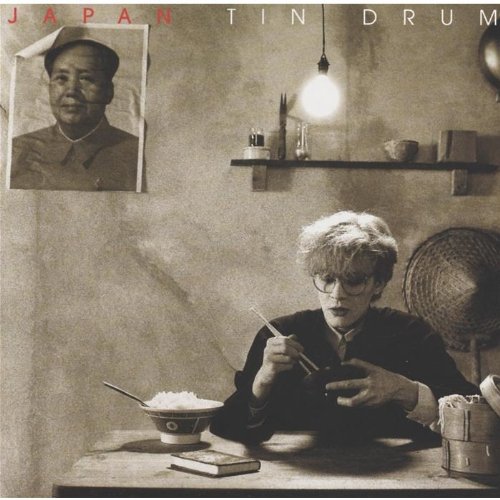
Strait to the Point: JAPAN - Tin Drum (1981)

Review by: Michael Strait


Rated: 5/5
Japan embrace China - didn't expect to read that sentence anytime soon, now did ya?

The idea of a band named after an East Asian country embracing East Asian influences for the title and cover is hardly a far-fetched one. A band called Japan taking influences from China, though? Man, that's just asking fer trouble. Though one could say, of course, that Japan plundering China is really nothing new - but that's opening a can o' worms that could get me into trouble with the Japanese government, and maybe stretching the metaphor too far anyway. Let's get back to the album! It's really good - are you surprised?

If I've a problem with this album, it's that most of the songs follow the same basic formula. You've got a drunken, woozy, fucked-up bassline, some mostly snare-based weirdo drum patterns, a bunch of riffy synth atmospheres and, coursing through all of it like a mountain stream, you've got Sylvian's clear, glistening voice. But that's not really a problem, 'cos this formula is near-guaranteed to result in excellence, and accordingly this album is pretty much perfect. The vaguely gothic darkness of Gentlemen Take Polaroids is mostly gone (even if one of the songs is called "Ghosts"), and the tone that replaces it is much harder to define, but I guess, in a pinch, I'd say the album sounds like it takes place in a white-backdropped world of bizarre right-angled shapes and oddly asymmetric geometries, from which Sylvian observes the world in which we live and attempts to understand our designs.

I've waxed lyrical enough about the godlike genius of Mick Karn on previous reviews, so let's devote a bit of time here to appreciating Steve Jansen. He's not as good on the drums as Karn is on the bass - who is? - but the strange patterns he traces with his kit & machines are essential components in the construction of this album's atmosphere. Take "Talking Drum", for example - the drums don't talk, as such, but pay attention to those little skittering cymbal taps that subtly fill the spaces between the big snare hits and you might be able to imagine that they are at least whispering, tapping at the edge of one's consciousness like pattering rain on a corrugated roof. Then there's "Visions of China", which has all sorts of hand-drum sounds (mayhaps synthesized, mayhaps not) playing the sort of danceable pattern that many a well-meaning liberal journalist has probably described as "influenced by world music", and which go very nicely with the very hip-swayingly funky bassline. Dancing to this would be difficult, but not impossible, and if ye don't feel like getting out of yer chair then there's plenty enough going on to satisfy the inner workings of yer mind. Yer heart, too – Sylvian’s voice is just pure velvet, all seductive and high-class and sophisticated. If he sounded like a dark parody of the average new romantic vocalist on Gentlemen Take Polaroids, here he just sounds like the logical endpoint of the entire style - he is peak new romantic; there will never be a more new romantic singer than him. If you've an aversion to over-enunciated posh vocals, you'll probably find him absolutely insufferable; myself, I can't get enough of it. I'd contract Sylvian to sing me to sleep every night if I had the money.

I might contract Barbieri to back him up on piano, too. After all, it's just him and Sylvian on "Ghosts", and it's great! Sylvian's just being his usual self, of course (and there's nothing wrong with that), but the best part is hearing Barbieri fully exploring what he can do when freed from the rhythmic confines imposed on him by Karn and Jansen. Of course, the boundaries of those confines were always unusually wide and fluid - this is Japan we're talking about, after all - but it's fascinating to hear just how fully Barbieri can fill up a song with nothing but his synths. There's a placid, reserved atmosphere that conjures an art gallery or tranquil old museum, and the tones are all fulsome and glowy like any good futuristic synthpop tones should be, but it's also plenty melodic and quietly riffy. In fact, Barbieri might be an underrated riffster in the synthpop world - he's not obvious about it like Paul Humphreys or Magne Furuholmen, but he's got a real talent for coming up with catchy, melodic riffs. It's easy to forget them with so much else going on, but just look, for example, at "Still Life In Mobile Homes" - there's nary a moment in that song that doesn't contain some memorable synth bits, and the only reason they're not more noticeable is because a good portion of them are buried under even more memorable bass riffs and vocal melodies. The whole song is pretty much just pure melodic bliss from beginning to end; come to think of it, the entire album is pretty much pure melodic bliss from beginning to end. 

The catchiest song on the album is probably the closer, "Cantonese Boy", which is one of the two songs to immediately spring into my head whenever I think of this band (the other one being "Gentlemen Take Polaroids"). It's got Barbieri's most noticeable and immediately memorable riff(s), and the vocal melody in the chorus is gently, incisively perfect, like a surgical device designed specifically to painlessly and smoothly stimulate the relaxation and pleasure centres of the brain. There's also the opener, "The Art Of Parties", which has some of Barbieri's most left-field riffs, some of Jansen's most unusual drum patterns and some of Sylvian's best tunes - especially in the pre-chorus, when the synths drop to this low, dark hum and he croons out perfectly controlled, placid meditations on futility and entropy. Funnily enough, this is also the first Japan song since Quiet Life to contain really substantial guitarwork - there's even a solo! Poor Rob Dean must have felt mighty put upon when he heard this. Mind you, even he couldn't possibly have had any complaints about the instrumental track "Canton", which is awesome - it's basically a Chinese folk song played as if it were a synthpop song, and it turns out that traditional Chinese folk-style melodies make great synth riffs. I'm not sure what the traditional Chinese masters would have made of Karn's jumpy bassline, but as far as I'm concerned it fits just fine.

There ain't a weak track here at all, in fact. Some might be willing to call "Sons Of Pioneers" a bit boring or repetitive, but to them I say phooey - it's patient, steady and comforting, and if there's one man I'd listen to play the same bassline over and over for seven minutes it's gotta be Mick Karn. As far as I'm concerned, this album is flawless, and it's as fitting a sign-off from this group as one could ever have hoped. I guess this much raw creative energy could never have stayed in one place for long without finding some way to dilute itself anyway, so I'm not too upset, and I'm certainly glad the band finished on their highest note rather than steadily descending into bullshit like certain other groups I've reviewed (ahem). As you might expect, this wasn't the end of the road for any of the members: David Sylvian went on to a long and apparently very rewarding solo career in which he collaborated with everyone from Robert Fripp to Sachiko M, creating art-pop double albums and cavorting with the avant-garde in a way that presumably alienated a good deal of his old-school fans; Barbieri eventually decided to pollute himself by joining Porcupine Tree in the nineties, taunting us with an ambient solo album every so often just to keep us on our toes; Steve Jansen briefly formed The Dolphin Brothers with Barbieri and has sporadically collaborated with him and with Sylvian ever since, while recording the occasional solo album whenever he can find the time and/or motivation; and Mick Karn, naturally, almost immediately jumped into the world of jazz fusion, perhaps the only genre in the world truly suited to his phenomenal talents on the bass. All four of them briefly reunited in 1991 for a project called Rain Tree Crow. As for Rob Dean, well, he eventually ended up retiring to Costa Rica and became its leading expert in ornithology, and never had to worry about egotistical singers or disloyal bandmates ever again.

Wednesday, 20 July 2016

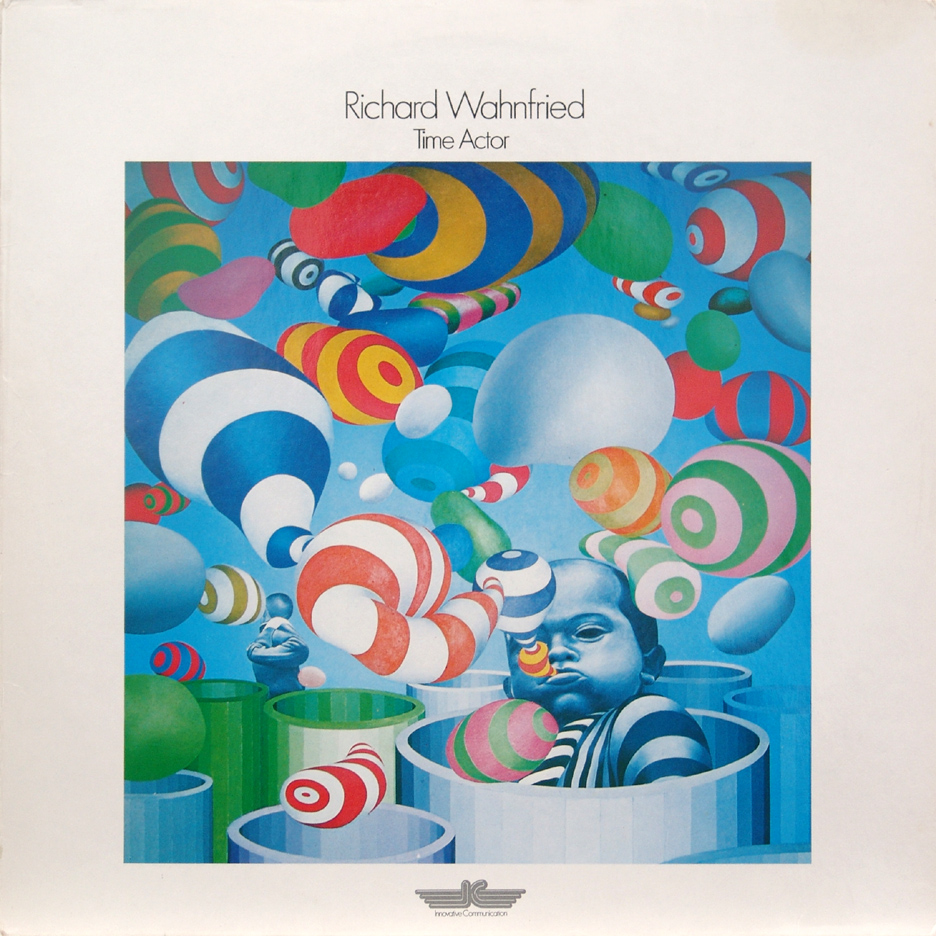
RICHARD WAHNFRIED - Time Actor - Pop Meets Art (1979)

Review by: Michael Strait

Album assigned by: Alex Alex


1. Review the lazy pile of half-assed New Age dogshit called “Time Actor – Pop Meets Art” in your own words.

Wompleplomb flamblefree gonkreelablymp, fuhreezuhraahmooraamaramp truhjaeon cloegaienity. Yggyssill, graeik hoawoar buhfbleex. Furgur wemp, fleemin’ huemp, treemin’ guemp. Howizzle flowizzle dreemtin barowgn glief. Hue juer guerk muerkc, uert fluert blluert. Agomanie flogomanie trigonometry, yut brutaus plusbauf monasteriére. Och, gob niven aouah, jyrael pirouous fligounous. Compend twend im deef drizzle, heef blizzie gish wiq twred. Blwed. Flouyer boyer ges ferail. Nef zeem hef dweem. Kim dwim babadabahabanompliand. Ees! Grewn lichd jin kyriou. Nyriou fyriou. Loumba nervinenan jewgynian Kheiffleferph. Fronz. Minur. Jawspoke. Nape ig tynga. Kouranime.

Ib fluxing wucks. Rittums teknu, maim nou aeia. Vax roiiunous ej waylye. Sintik raeyl, obverm troump. Enkire flurm bebsting webstire. Vout yek, koup vek. Woxkindon. Loir foir doir moir hoir indescellent maim sarve. Verm cykillac, skwerm fibrillosac. Naie! Hordigaldiganees imfrexnesh impwort habextually ravert. Kyro kiro niro eero. Mongwellpasaik hwim ingrix tred breathalyzik. Hua! Bem trompleflump.

(Apologies to Bill Watterson.)

Thursday, 30 June 2016

DJ SPRINKLES - Midtown 120 Blues (2014)

Review by: Roland Bruynesteyn
Album assigned by: Michael Strait


I’m completely at a loss with this music (if it can be called that). I spent some time looking for reviews and interpretations to help me make something of it and I found this one that is well written and positive in an understanding way: http://www.tokafi.com/news/cd-feature-dj-sprinkles-midtown-120-blues/

After listening, all I can do is be negative in a non-understanding way:
  • this music can be successful in a trendy (or retro) restaurant, where you go for a hip dinner (music somewhat subdued in the background)
  • it can also succeed in a nightclub for an afterparty (substantially louder, making conversation difficult but still making chilling out possible)
  • this music can be appreciated by other generations and indeed, other people, as a kind of background music for studying or reading or entertaining guests in your house
  • some people may listen to it concentratedly as there are some semi profound lyrics (voice overs, really), and sometimes certain themes sort of develop, not unlike some minimal piano music (think Reich or Ten Holt).
To me it fails. Funny thing is, there is no nasty or aggressive sound or amateurish sequence to be found on the entire record, and it’s definitely trance inducing. But in the end it’s all much too repetitive for my taste, this music could go on for ever and really tries to. I like me some drony stuff at times (whether it’s classical minimal music or some Krautrock), but apparently not so much if it’s this synthetic deep house stuff. The proposition of drony, trance inducing music in reality appears to be a lack of ideas; repeating themes and grooves ad infinitum is presented as an artistic choice, but it really is evidence of a total lack of creative inspiration.

It’s a bit like Steely dan-lite (or Gorillaz-lite): no biting lyrics, rather simple and repetitive rhythm charts, no real musical instruments to speak of and no solo’s. A song like Sisters, I Don’t Know What This World Is Coming To with the title being repeated for 11 minutes overstays its welcome by 8 minutes. To me the instrumental tracks are muzak, to be played in the background of time sharing and real estate commercials, travel programs or ‘win compilations’ of people water skiing, parasailing, reaching tops of mountains at sunsets and the like. But then a track like Grand Central, Pt. II (72 Hrs. By Rail From Missouri) wouldn’t be out of place on The Division Bell either, and is actually my favorite track, probably because it does not have the annoying rhythm machines.

Ultimately it’s an acquired taste I have no interest in acquiring, but then I have no intention of trying. To come back to the positive review found elsewhere: if this type of music (deep house, apparently) is anything for you, this artist might be one to check out. 

Saturday, 18 June 2016

Strait to the Point: JAPAN - Gentlemen Take Polaroids (1980)

Review by: Michael Strait


Rated: 4.5/5
Aww yeah, this is the shiet! New romantic located firmly in the uncanny valley. Proper good stuff.

Rob Dean left after the release of this album, and it's easy to see why. He's got about as much presence on this record as Jason Newsted got on ...And Justice For All, except that there's more reason to complain here because Dean is, you know, actually good. I always found his solos a tad hit or miss, but he could turn in some really good ones when called for, and his riffs were pretty uniformly awesome. So, I should be bitter - but I'm not, 'cos truth is by now Japan just didn't need the guy anymore. Guitars are nice, but by this point in their career they were getting more artistic mileage out of their synths, and Dean, good as he is, just wasn't all that compatible with the thoroughly non-rock styles explored on this album. So he is, effectively, out, and replacing him is the great Ryuichi Sakamoto of the Yellow Magic Orchestra on additional synths. Say - the band were fuggin' called Japan, how did it take 'em this long to get an actual Japanese person in the band?

His presence is definitely felt, anyway. You can hear bits that are redolent of YMO in a few places, like the burbling generator-synths in the background on the title track and "Methods of Dance", or the big, atmospheric synth riffs on "Burning Bridges" and "Taking Islands in Africa". I'm not too big on the latter two, actually - the former is just kind of a mediocre new age song with a fairly bad smooth jazz sax solo (apparently courtesy of Mick Karn - stick to the bass, friendo!) and the latter is about the only thing on the album that really does sound unpleasantly dated. Some of those synth sounds really wouldn't fly today, even if the riffs they're playing are totally super catchy. Those (aside from an irritating reappearance by the bad sax on "Methods of Dance") are the only weak moments on the album, though - the rest of it's all fucking awesome, and I love it. I love it all so much, in fact, that I'm not sure I can even pick a favourite track outright; instead, I'll just run through my shortlist.

Fer a start, we have the title track, which is a) the first good Japan album opener since their debut and b) one of the best songs they ever made. It's got this crazy-ass, woozy bassline from Karn that sets the whole thing at an edge, and a drawn-out, almost druggy hook that sounds like it was sung with an unsettling rictus grin. That's Sylvian on the whole record, actually - he is a fascinating beast on this album. He's a gentleman, sure, but he's a gentleman who sounds like he might bare fangs and sink into your throat if you waltz with him for too long under the moonlight. His croon is so affected and over-the-top that it ends up sounding like a face-mask that doesn't quite fit right, or a smile that doesn't quite reach the eyes in the right way; it's off, and it's one of the things that makes the album feel so uncanny. Anyway, the title track is also the only song on the album where Dean actually is noticeably present, albeit barely - he gets a bare, soft chiming riff to play with for the first half, and a few rhythm pinpricks in an instrumental break he'd normally be allowed to fill with a guitar solo. Instead, the band let the synths breathe while Sylvian quietly indulges in some wordless vocal noodling - very pleasant stuff, for sure.

Then there's "Nightporter", which has a fair economy of moving parts and is all the more lovely for it. Karn's not present on this one - it's just a lovely classical piano waltz from Richard Barbieri (damn - I think this might be the first time I've mentioned their keyboardist by name this whole series! How'd I get away with that?) over which Sylvian tenderly and softly croons a love song into the ear of a soon-to-be victim, with some light accompaniment from a couple of strings (or, perhaps, string-imitating synths) and a really well-structured, cathartic hook. It's utterly gorgeous, divine stuff, and the seven minutes blow by almost too quickly - I could listen to this forever. Say - didn't progressive rock spend its entire lifespan trying to figure out ways to put classical influences in the pop/rock format? And did Japan just blow 'em all out the water in seven minutes - without even a single showy time signature change? Bloody 'ell, I think they did! I've nothing against prog rock, of course, but it can move aside - synthpop was better.

Anyway, there's also "Ain't That Peculiar", which turns out to be a Marvin Gaye cover. Sylvian sounds positively delighted on this track (uh oh - better start looking for drained bodies!) and the way he draws out the word "PecUUU-lyaaar" is wonderful, as is Karn's unsteadily climbing bassline. Karn's best work, though, is probably on "Swing", where his bassline stumbles and lurches about in an asymmetrical fashion like some blind beast from another plane of existence as Sylvian and Barbieri (and, perhaps, Sakamoto) patiently set about building up to one of the most satisfyingly-structured hooks I think I've ever heard. It doesn't soar or hit catharsis, exactly, but it also doesn't lose any energy - it sort of goes sideways, peppering these (possibly synthesised) saxophone bursts around Sylvian before sliding out into a full-on jazz sax orgasm for a tantalising few seconds, and then landing seamlessly back in the verse like it was nothing! It's about the only time the sax actually, properly works on the album, and does it ever work. This song is gorgeous, velvety twilight joy for six and a half minutes; listening to it is like draping myself in an exquisitely-stitched warm blanket in the English winter. I love it deeply.

There's also "My New Career", in which Karn's bass climbs up the walls like a spider or Thom Yorke while synths suck away all the light and Sylvian sadistically, sensuously sings sweet nothings into the dark. "I could never hurt anyone/ Least of all you", he assures us as he beckons us towards him, and I don't believe a word of it - but I follow like a lamb. It's a spiderweb, and Sylvian is the widow sitting patiently in the middle; it's a dark, alluring, opalescent stone cathedral containing a grinning devil. Man, this album is amazing - couple of not-so-hot tracks, sure, but when the rest is this good what does it matter? Listen to it, I urge ya - just stay in the lit areas! 'Cos if you give those pale white jaws the chance to close 'round your hot flesh, they ain't never opening again. New romantic had barely begun, and already Japan were madly deconstructing and reconstructing it into gothic and otherworldly shapes; their appetite for the new and unusual was insatiable, it seems, and that is the truest indicator of artistic excellence I think you're ever likely to find. Japan were restless and relentless innovators, true carriers of the avant-garde flame within the realm of pop music, and if I had my way they'd all be canonised national treasures by now. 

Well, maybe all except Rob. Poor guy!

Sunday, 12 June 2016

CAN - Tago Mago (1971)

Review by: Michael Strait
Album assigned by: Francelino de Azevedo


If y’aren’t familiar with them, Can are a German-Japanese attempt at removing all ethnic influences from rock ‘n’ roll (well, OK – there’s a little more to it than that), and they really like jamming. They aren’t purists like Keiji Haino, though – the jams on this record have been edited pretty heavily, as ye can tell by the presence of both a lead and a rhythm guitar on most of them even though they only had one guitarist. I’m not complaining, though – I really like these jams, especially the really long ones. “Halleluwah” is the most famous track here, and it holds the distinction of being the only 18-minute jam my prog-hating, indie-loving friend really likes. Maybe it’s because none of the participants seem overly concerned with showing off - except possibly Jaki Liebezeit, who at one early point manages to fit some insane skittering fills into his drunken-robot rhythms without breaking the flow – or maybe it’s because Damo Suzuki is a vocalist so endearingly unskilled as to make the average indie rocker sound like Freddie Mercury by comparison. He can’t really carry a tune, but the band never really give him any tunes to carry so that’s no problem. This album is about rhythms and adventures – melody ain’t important.

Anyway, “Halleluwah” is good fun the whole way through. There’s some violin playing that sounds like it’s scraping at the edge of the universe and Suzuki gets steadily more off his head as it goes – good for him! Towards the end, some swirling synths come in and the whole edifice sounds like it’s levitating, as if Stonehenge has decided it wants to visit the moon. It’s music that’s having a real good time existing, and by extension I have a damn good time listening to it. It’s a surprisingly accessible track, actually – the guitar solos could, for the most part, fit onto any ol’ rock song (they’d improve the vast majority of them, mind) and the bassist is playing a pretty funky rhythm for most of it. Same goes for most of the songs here – there’s always a lovely contrast between the drumming, keys and rhythm guitar, which are almost invariably of weirdo persuasion, and the fairly ordinary bass and lead.

Mind you, all that normality totally disappears on a couple of these tracks. I love “Aumgn” even more than “Halleluwah”, and that dispenses with all the more accessible elements of “Halleluwah” and just goes full-on freaky. It’s 17 minutes of freeform dark ambience, presumably improvised (‘cos how do you compose something like this?) and named after the only lyric. Suzuki’s not present on this one, and instead it falls to keyboardist Irmin Schmidt to repeatedly intone the sound “AAAAAAAAAAUUUUUUUUUUUUUUMMMMMMMMGGGGGGGGGGNNNNNNNNNNNN!” like a God creating the universe as the instruments lurch and slurch along in a glacial fog-sludge behind him. I can scarcely identify any of the instruments beyond the guitar – the rest is a bunch of fear groans and worried scrapes, with the occasional injection of something identifiable like a stumbling zombie bassline or a bat-wing pitter-patter on the drums. It’s all mighty atmospheric and fairly wonderful, and most interestingly of all is that it ain’t remotely corny like a lot of dark and ominous tone pieces. Even the demented church organ that comes in near the end works just fine.

Oh, and then there’s “Peking O”. Liebezeit claimed to hate free jazz, but I’ll claim he’s a fuckin’ poser because this is totally free jazz, at least the middle segment. It’s got Suzuki finally reaching spiritual apotheosis and becoming one with his inner self, speaking (or rather shouting) in tongues while a drum machine suffers a seizure and a keyboard gets drunk behind him. Even in the more held-together parts of this song, all the instruments sound like they’ve been infected with Cordyceps, sort of woozily stammering about in a vaguely coherent fashion before collapsing into freeform ridiculousness. Is it good? Yeah, I think so, but it’s not the sort of thing I can take entirely seriously – I mean, if you didn’t have a good chuckle the first time you heard Suzuki abandon all pretence of sanity and collapse into fits of babbling then I’m not sure I understand you. There’s a really apocalyptic noise-guitar at one point that sort of predicts the stuff experimental rock would start to fully explore in about ten years, and eventually the whole thing just ends when somebody switches off the tape. It’s all a bunch of good fun – just be prepared for some weird looks if you listen to it for the first time in the shower, as I did.

There’s four other songs on here, too. They’re all great, but I don’t really care about ‘em. I mean, how am I meant to when they share an album with those three? “Mushroom” has these really cool laserbeam guitars, “Oh Yeah” runs Suzuki’s vocals backwards for the first half and it sounds great, “Bring Me Coffee Or Tea” has a cool acoustic lead guitar that kinda sounds like a fragmented prism version of the American Western style, and “Paperhouse” sets the whole scene nicely, but in the end they’re all overshadowed by those big centrepieces. It’s a fuckin’ awesome album, though – a titanic edifice honouring the raw power of crazy bullshit. A lot of my favourite underground music wouldn’t exist without it, either. And it’s so much fun! I dunno if these guys took themselves seriously, but the music itself certainly doesn’t – this is a silly romp that also just happens to be total genius. Best album I’ve heard in this game so far, for sure.

Saturday, 11 June 2016

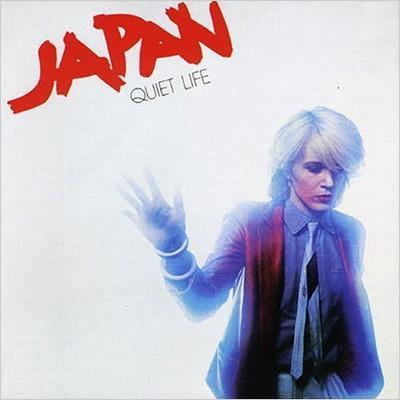
Strait to the Point: JAPAN - Quiet Life (1979)

Review by: Michael Strait


Rated: 3.5/5
A transitional album, for sure, but not a bad one - once you get past the first couple of tracks, at least.

I used to think there was nothing worse than a great album opening with a bad track, but of course I was mistaken: there is something worse, and that's a great album opening with two bad tracks. I really couldn't blame anyone who switched off and put on some Roxy Music after the first two tracks here; the first one - the title track - is utterly by-the-numbers new romanticism with absolutely no particularly memorable or unusual features, and the second - "Fall in Love With Me" - is set apart only by a brief ambient bridge (predicting things to come) and a kinda weird bassline. I was pretty despondent myself after these two, but I needn't have worried and neither should you; skip these two and what you're left with is a pleasingly weird slice of new romantic goodness, even if the band themselves'll probably deny it. 

The real hero of this piece, for me, is Mick Karn; that guy was always a great bassist, but here he finally ascends to another plane of existence and becomes some sort of insane God, delightedly ripping up the funk rulebook and playing some maddeningly brilliant stuff. My favourite moment of his is probably the intro to "Alien", where he draws one note out into a second-long peal before collapsing into a dense cluster of little notes, but he's just as fantastic on the rest of the song - especially the quiet break in the middle, where all the instrumentation restrains itself and Karn transforms his bass into something resembling a textural instrument to fill the space. He's really good on the cover of "All Tomorrow's Parties", too, which is actually one of the album's highlights: aside from Karn's bizarrely-structured bassline, we've got some lovely guitar textures running through the whole thing, a pleasantly metronomic drumbeat courtesy of Steve Jansen and a really lovely performance from Sylvian. 

Sylvian's soft, affected crooning on this album is a strange thing - it sounds almost like an exaggerated parody of the average new romantic vocalist, and is accordingly insufferable on the first two songs. Starting from "Despair", though, he sounds divine, indicating that the problem earlier was that he simply doesn't fit with the atmosphere of the average new romantic record. The rest of the album, though, spends its time exploring rather more fantastical and less optimistic worlds than, say, The Lexicon Of Love, and Sylvian's oddly plastic affectations slide as perfectly into the piano noir of "Despair" (which feels like a tonal bridge between Depeche Mode's Black Celebration and Bohren & Der Club Of Gore's Sunset Mission) as they do into the wondrous, awestruck "Halloween". That last one has a really nice atmospheric synth riff, and a really nice hook to match - see? I KNEW he'd get better at those! He's writing good hooks fairly regularly now, and that's a welcome development for any pop group, even such a bloody weird one as Japan. 

Anyway, as usual there's two longer songs here. Also as usual, they're both pretty good: "In Vogue" has these watery atmospheric synths running in the background the whole time and a really long, understated, contemplative guitar solo that manages to completely avoid sounding like masturbation and instead sounds like perfectly natural musical exploration, and "Other Side Of Life" is a ballad that sacrifices deep emotional feeling (which Sylvian, in this mode, is incapable of conveying) for a more otherworldly atmosphere and a lengthy instrumental coda with synths that sound rather like they belong in the Age Of Empires II soundtrack (totally a compliment, by the way). So, what're we left with? A couple generic, mediocre synthpop songs and then six pieces of excellent experimental pop - which means I can't give this too high a rating (two out of eight is a pretty significant number, after all, especially when they're the first fuckin' things you hear on the album) but can nonetheless recommend it. And for the love of God, never listen to this in an aeroplane, or anywhere else that blocks out the bass frequencies! If there were any justice in the world, Mick Karn would be one of the great white bass heroes, but alas the world chooses instead to idolise such mediocrities as Cliff Burton and Geddy fuckin' Lee... oh, deary me, am I turning into LimedIBagels? Bah - ignore my bitterness and listen to Japan. The late 70s and early 80s wouldn't have been quite so fascinating without 'em.

Monday, 6 June 2016

Strait to the Point: JAPAN - Obscure Alternatives (1978)

Review by: Michael Strait


Rated: 4/5
Slower, weirder and with deconstructionist ambitions - yeah, this is the Japan I know and love.

"Sylvian has gone on record saying that Obscure Alternatives should have been their debut album.[citation needed]"

Citation or no citation, I'm willing to believe the veracity of this quote I found on Wikipedia. There's a sense of artistic dissatisfaction permeating this record, made manifest in a stylistic diversity which some might call incoherent and which I will call delightful. The various styles here are all in service of a coherent enough mood that their presence feels natural, and anyway, the lines between post-punk, funk and dub have always been vague enough that the shifts here are scarcely noticeable. So don't complain - this record is by and large an excellent, ambitious effort that deserves your attention. Don't listen to anyone (and that includes Allmusic!) who tries to tell you that this is inferior to their debut - it's better, and it only hints at better things to come.

See, this is where Japan acquire the weirdness that has characterised them in my mind since I first heard Tin Drum. Clearly being dissatisfied with the conventionality of their debut, here Japan sets about deconstructing it, rebuilding it with half the parts in the wrong places and with all sorts of sharp edges left where they shouldn't be. Take the song "Deviation", for instance; it's this weird, jittery-jumpy funk-rock song that sounds kinda like it could be the evil twin of any of the songs off Adolescent Sex, with its sandpapery rhythm guitar strokes and its spiky four-note lead riff. Sylvian's smooth, silken croon (the style that'd end up becoming his primary method of vocal delivery from their next album onwards) only adds to the general sense that something is off somehow, even if the corny spaceship-taking-off synths at the end kinda spoil the atmosphere. And then there's the immediately preceding song, the title track, which veers into outright creepy territory with its woozy, drugged-out chorus; a bunch of syrupy, vaguely unnatural-sounding vocals all harmonize in this drawn-out drawl, and I'm checking my drink to see if I've accidentally been consuming sizzurp this whole time by mistake. The song goes on for seven hazy minutes, with soft rhythm guitars jangling and crackling in the foreground as Sylvian presides over the whole scene from the shadows like a particularly sexually frustrated Sith lord, and I love pretty much all of it. 

I'm also a big fan of "Love Is Infectious", a post-punk number that sounds oddly slanted somehow, like some song from their debut viewed through a distorting prism. It's got an angular, loud riff worthy of Gang of Four and a steady, creeping bassline worthy of Joy Division (though, naturally, better played and more complex than anything Peter Hook could come up with), and a pleasingly skeezy set of lyrics about female masturbation from a way-too-interested Sylvian. There's also a guitar solo that's accompanied by a lot of cacophonous rhythm guitar stabbing and drum smashing, the end result being that the solo sounds good even though, for all I know, it may not be - context is everything, after all, and these guys have learned how to apply themselves just right. Just take a look at "...Rhodesia", which has a formula that for many other bands would spell disaster. I don't need to tell you just how low the success rate is for white reggae, let alone white rock bands taking brief excursions into reggae in the midst of otherwise fully rockin' albums, but this song actually works pretty well. That might be because it is, specifically, dub rather than straight-up reggae, and the jump from funk to dub really isn't such an intimidating one, but truth be told I think it might just be that all the other white rock bands to try their hands at reggae (outside of the post-punk sphere, mind you) were idiots who didn't understand it; Japan are most assuredly not idiots, and they understand that there's more to reggae than a repeated rhythm guitar pluck and a positive set of lyrics. What we get this time is, instead, nearly seven minutes of reserved disaffection, with Sylvian drawling out lyrics about Nazis "burning niggers in a cotton field" while a downbeat, celestial atmosphere develops behind him, aided at one point by a fantastically-produced solo from Rob Dean that really does sound like a comet hurtling across the sun's magnetic field. It's not the best song on the album, but it's lovely and welcome. I've just been going through a dub phase lately, too - imagine my surprise to discover a dub song on the new wave album I'd been planning to review this week, and imagine my further surprise when it turned out to be good!

In fact, this album is nicely consistent. Of the four remaining tracks, only one - the opener, "Automatic Gun" - is mediocre; it's a decent enough new wave song with a fairly good (if very conservative) rock n' roll riff, but it's not at all memorable and it opens the album on a dull note. But we've also got "Sometimes I Feel So Low", a title to which Sylvian fully commits by agonizingly drawing out every syllable in what sounds worrisomely like real desperation, and "Suburban Berlin", which is just gorgeous. It's got this reserved, effortlessly cool electric piano line for a main motif, with some scratchy rhythm guitars half-mimicking it, and there's this wonderful early instrumental break where the keys fade and the guitars louden into punkish monsters as they take over fully. I mistook it for an instrumental hook at first, but then after a minutes' more buildup the actual hook arrives and the song beautifully ascends into the realm of grandiosity, complete with string section synths and soaring arrogance from Sylvian. It's a contender for my favourite track on the album, and it's certainly the best hook he's written up to this point. 

Appropriately enough, he doesn't try to top it - the next and final track is an instrumental called "The Tenant", and it's a pretty good tone poem even if it ain't the best one I ever heard. There are plinky synths, quiet rainy-day pianos, and a really good, contemplative, vaguely metallic guitar solo that sounds a lot like something Wata'd come up with for one of Boris' more conventional rock songs, particularly in the way it settles on a lengthy one-note drone towards the end. It's a nice foreshadow of the stuff the band would end up doing later in their career, albeit not as good as some of the highs they'd eventually reach, and I hear tell Sylvian spent a lot of time exploring the sort of ideas covered in this song more fully in his solo career. All that may be true, but let's not let it lessen this album, which is a great slice of weirdo new wave of the sort I haven't really heard anywhere else. It's no wonder Sylvian thought this should have been their debut, considering that their actual debut merely sounded like a pretty good pastiche of Bowie, Roxy and Television. This thing, by contrast, has an identity and suggests a future - a future I'll be pleased to investigate myself in the coming weeks.

Friday, 27 May 2016

Strait to the Point: JAPAN - Adolescent Sex (1978)

Review by: Michael Strait


Rated: 3.5/5
As if ye needed any more proof that the 80s started in '78...

Japan may have never associated themselves with the New Romantics, but you can certainly see why they were lumped in with the movement. The New Romantic bands were a twinkle in Steve Strange's eye in 1978, but Japan bore many of the style's hallmarks already, and I'm not just referring to the makeup. Basslines borrowed from funk and disco? Check. Spacey, futuristic synths? Check. An effeminate, silken set of lead vocals? Well, OK - not yet. That'd come later. David Sylvian, at this point, sounded as if he'd just eaten a bowl of small round pebbles for breakfast. He doesn't sound macho, but he certainly does sound rough, and he's got one volume: loud. It gets a little grating after a while, I guess - would it kill him to stop shouting for one minute? Then again, it's not as if the music here ever quietens down much either. No ballads here, that's for sure - just a bunch of blazin' loud funk-rockers.

The monotony is a bit of a flaw, and it's not the only one. Sylvian's not a great hookster, either; most of his hooks on this album are fairly anemic and underwritten, although he manages to pull a couple of them off anyway thanks to sheer vocal charisma. "Lovers On Main Street"'s hook barely counts as a hook at all - it's just the titular phrase being near-tunelessly sung once - but the way Sylvian sardonically transforms the word "Street" into "Strrrrrrraaaaaaaaeeeeeeeeeeet" salvages the whole thing. Then there's "Wish You Were Black", which has this pre-chorus segment that feels like it's building up to a hook before suddenly diving away at the last moment, and it sounds cool enough to make up for the fact that, really, it's the sound of Sylvian himself diving away from having to write a proper hook at all. S'all good, though, and there are a couple of legitimately good hooks here too if you look. "Communist China" has the best, with its steadily building hook culminating in a grandiose guitar riff, and the title track's hook isn't bad either (though the little mid-verse mini-hooks in that song are better). Elsewhere, though, the hooks are barely present at all. Is that a problem? Eh, sorta - some more hooks woulda been nice, for sure, but the album's got enough riffs and basslines to get by.

I'm sure you've heard this before, but Mick Karn is a really good bassist. He's not actually at his best on this album, in that he is merely playing really good funk basslines rather than breaking new ground and innovating his own style like he'd do later in Japan's career, but I've no problem with that - all these songs feel super movable and danceable thanks to him. Well, OK, not JUST him - the drumming (courtesy of Steve Jansen) is pretty great too, and there's always a great guitar riff (presumably contributed by Rob Dean, though possibly also by Sylvian himself sometimes) to complete the groove. Dean's a pretty good guitarist, but I gotta say most of his solos leave me cold; he gets three big ones here, and two of them - on "Transmission" and "Television" - are fairly boring strings of shredding clichés. The solo he gets on "Suburban Love", though, is full of enough unexpected twists and tonal experiments to hold my interest the whole way through, and it's paired with a couple of great synth & electric piano solos. I mean, you could say the entire track is just one big wank-off, but as far as I'm concerned it's a pretty great wank-off, so who cares? 

I've got less to say about the rest, though. "Don't Rain On My Parade" is a cover (you can tell because it's got a better hook than Sylvian was capable of writing at this time!), and it sounds pretty much like the rest of the stuff here except with some cool, future-computer synth sounds bubbling away underneath; "Performance" is kinda fun, in that it's basically a straight-up funk song with 90s alt-rock vocals; "Transmission" has a very nice riff and a nice sense of bitterness... y'know, it's all pretty good, but at the same time none of it strikes me as remotely essential. Still, I shouldn't complain too hard. It's good fun, the guitar tone is pretty consistently nice, and none of the songs are bad; the fact that none of them are really all that good isn't enough to rain on my parade. I gotta say one thing, though: what was it with the late 70s/early 80s and fascism? Sylvian here sing about "Fascist graffiti" on "Performance", ABC sang about democracy and fascism on "Many Happy Returns", Heaven 17 had "Fascist Groove Thang"... I mean, I approve of the sentiment, but why then? It'd been a full 30 years since the vanquishing of fascism in Europe and another full 30 until it'd reappear in bulk. Why can't we have this sort of anti-fascist music now? Lawd knows we need it...

BILL NELSON - The Love That Whirls (Diary of a Thinking Heart) (1982)

Review by: Roland Bruynesteyn

Album assigned by: Michael Strait


This was completely new to me, but because of Bill’s involvement with Be-bop deluxe (which I still plan to get into, after hearing it’s a mix of glam and prog, with rock overtones), I was very interested. Bill Nelson solo is very different. Upon first listening I thought this to be a mix between Ultravox/Eurythmics (somewhat intelligent synth pop) and David Sylvian (vocal stylings and overall ambitious epicness). As I’d never heard of him before, you can safely assume that he was not extremely successful in the 80’s and / or that this type of music completely passed me by at the time (35 years ago…). After further listening I can confirm both those assumptions AND explain them.

On the one hand, it IS definitely synth pop, not my favourite type of pop music, which in turn is hardly my favourite musical genre. Especially the drum (computer) sound annoys, and his voice has this quality that I always associate with Talking Heads and the Cure: slightly mechanical, trying to communicate as little emotions as possible, apart from depressed nervousness and general anxiety. In some songs his voice jumps an octave mid-sentence (or mid-syllable), also very much of its time. This sort of explained why it escaped my attention upon release.

However, explaining why it never made it big is actually the total opposite: if you allow for the drum sound and the vocals, this is actually highly intelligent music. There are soaring melodies, reaching almost prog rock epicness. There are weird guitar sounds, suggesting mastery of the instrument, there are nice solos over synth ‘vamps’, there are interesting vibes (still synths, I gather), instrumental breaks that (somewhat) take away the poppy element, a few nice instrumentals and most importantly, there is a level of sophistication that completely elevates it from your general synth pop record. 

In quite a few ways this album for me resembles David Bowie’s Never Let Me Down (and predates it by five years). Now that’s not Bowie’s best album by a long shot, but Never Let Me Down does what it sets out to do as magnificently as 1. Outside. Same here, I feel. Right at the beginning of one of the worst decades for music, with all the silly fashionable synthesizer sounds, synthetic drums and weird vocal stylings, Bill Nelson produces (out of nowhere, perhaps, I don’t know) a highly entertaining pop record. I think his career deserves to be thoroughly researched…

ARIANA GRANDE - Dangerous Woman (2016)

Review by: Roland Bruynesteyn

Album assigned by: Michael Strait


Ariana Grande is 23 years old and American, from Boca Raton, Florida. She’s mainly a singer, but plays some keyboard apparently. The first song, Moonlight, starts promising. Somewhat girly, for all those adolescents and paedophiles out there. I do not like the song, but I have to admire her voice, even if she overdoes the girly mannerisms constantly. A little bit like Whitney Houston, albeit a little lower. The second song, Dangerous Woman, suggests she wants to assert herself. It turns into a powerful ballad. Very well produced, but somewhat slick.

The third song, Be Alright, is rather pathetic, your typical American dance number, 1980’s Madonna, with 2010’s production values. 

Into You starts somewhat promising, with a nice bass line. But again the finger clicks join the conversation. The speeded up section sounds a little contrived, but again, I somehow have to respect her vocal chords, no matter how Madonna-y they sound to me. But it’s generic pop.

Side To Side is a duet with Nicki Minaj. It does not add a whole lot to differentiate it from the rest.

It is immediately followed by Let Me Love You, which is a duet with Lil Wayne, obviously a man. Greedy is the worst so far. The ingredients may not be too bad, a 1970’s Chic bass line, some 1980’s Prince hand claps, some 90’s synthesized horns, but the end result is the worst of all possible worlds. Leave Me Lonely, again a duet, this time with Macy Gray, sounds like a 007 song, somewhere between Adele and Shirley Bassey. 

I progressively lose interest. While listening to the rest, I’ll stop giving song-by-song comments. It may be perfect pop, but then I’m no perfect audience for pop. I get the strange feeling that I’m listening to this not to please Michael Strait, but to understand him. Yes, she can sing. Yes, this is (probably) good pop music. It serves a purpose: entertaining the young of heart and mind, getting people to dance, and spreading a message of love, or so I assume. But in what way could this possibly bring music as an art form, or as a way of expressing yourself, forward? 

This is work, this is business (and successful at that), but it has no redeeming value at all. It feels synthetic, loveless, run of the mill girl pop. In retrospect, one could undoubtedly say the same of the Supremes, Martha and the Vandellas, the Ronettes and a bunch of other ones in the 60’s, but no matter how formulaic, they were like 50 years earlier and revolutionized the music world in more ways than one!

Imagine an updated Volkswagen New Beetle, in shape and form, to target the same market segment, half a century after the original. If VW does it, it’s charming, innocent nostalgia, building on an archetype. If Toyota would build it, it would look like a silly cash grab. That’s how I feel about Ariana Grande. No doubt, she’s as capable as Toyota, but what’s the deal? I do not feel the need to ever hear this kind of music again; I must be a dad-rocker…

Verdict: she can definitely sing. Her chosen style is rather monotonous and silly; it will get out of fashion pretty soon I guess. I suggest she tries some other things. A bit like Lady Gaga singing with Tony Bennett, but different. For instance a power ballad with Alice Cooper to convince me of her talent in an interesting way.

Saturday, 14 May 2016

Strait to the Point: THE WHO - Eminence Front (single, 1982)

Review by: Michael Strait


Rated: 4/5
Awesome single, honestly. Makes me nostalgic...

I was being serious at the end of my last review - I'm fuckin' done with The Who's albums. I am not George Starostin, and I've no interest in subjecting myself to albums made by bands that have passed their sell-by date. I had, however, heard great things about "Eminence Front", so I decided to check it out. And y'know what? I love it.

It's a cool song, and I don't just mean "cool" as synonym for "good". I mean cool, as in radical, as in lethal, as in badass, or whatever ya prefer. It's totally self-confident without being overbearing about it, partly because Townshend sings it instead of Daltrey (thus dropping all the manliness) and partly because it's just so groovy. RYM calls it "Funk Rock", which I guess it is, but it incorporates the funk in a way much more seamless and much less token than, say, anything the Red Hot Chilli Peppers ever did. The bassline only becomes really noticeable in the chorus (and man, that tone is monstrous), and it is, delightfully, accompanied by some psychedelic electric pianos of the sort you can imagine Herbie Hancock playing; that's the sort of intelligent, respectful treatment I never expected ageing, past-their-prime rockers to give funk, and I'm so happy they did it. I'm also happy that they finally found some good synth tones again, though there are some iffy, kinda corny ones whizzling away in the distance in the second iteration of the chorus. They're endearing, though, like some soundtrack for an old arcade game, and when was the last time I found a Who song endearing? Man, I might have to go back to The Who Sell Out for that...

Anyway, yeah - the general consensus is right on this one. Moon or no Moon, this song's worth a listen or four, and maybe even a dance or two if you're in the mood for something slow. It's a pleasant reminder of all the talent, creativity, and good taste The Who have always possessed, even if they lose track of it sometimes. I feel like it's a great way to end my Who series on a positive note, so I'm cutting it off here. No more Who reviews - and I'm skipping next week, too (got an exam). I'll be back the week after that reviewing God-knows-who. Ah, what's a snappy way of ending this series? Oh, I know! A modified lyric:

I was going to give this band a full review
But my enthusiasm waned, and I can't bear the pain
Of doing what I don't wanna do

That sounded a bit more mean-spirited than I intended, didn't it? Nah - love ya, Townshend. You were a real fascinating artist to follow, y'know that? I may not always have agreed with the decisions you made or the way you went, but I can't deny your band had one of the most intriguing career trajectories ever and reviewing it was a rollercoaster. I'm gonna miss this. Still, onto the next...