WELCOME TO OUR NEW SITE: tomymostalas.wordpress.com

You'll be automatically taken there in a second.. Change your bookmarks, thanks!

Showing posts with label Francelino Prazeres de Azevedo Filho. Show all posts

Tuesday, 22 November 2016

STORMY SIX - Un biglietto del tram (1975)

Review by: Francelino Prazeres de Azevedo Filho
Album assigned by: Joseph Middleton-Welling


Italian prog and communism! The best combination since guava and cheese! In the foreboding acoustic opener, Stormy Six already show what they came for: “on its frozen path, the Swastika knows / that from now on, Stalingrad awaits in every city”. Lovely lyrics! Lovely strings! And the rest of the songs just keep up with the style. Too bad I’ve only been able to find translations for the lyrics to three of these, because this blood-pumping leftist themes are exactly what I need to help me face these grim times of neo-fascism. I could at least understand a bit from every track. Have I mentioned the strings? They’re not attempting to be “classical” like those common progressive acts, no sir. They incarnate Italian / Mediterranean folk music, instead, and I welcome this. Instrumentation is folky throughout the record; I don’t think I’ve listened to anything electric save for the bass, which is pretty good. On the other hand, a large diversity of acoustic guitar-like instruments brings variety, always exchanging the spotlight with violins, always catching my attention. The voice is just as good, a strong baritone that brings the right amounts of intonation and feeling. The album is emotional, alternating between ominously melancholic and sombrely blood-pumping. There’s a preponderance of the former, however, so the songs where the latter appears, for example the opener “Stalingrado” and the homage to Italian anti-fascist partisan Gianfranco Mattei, are the strongest. The other tracks sort of blend with each other, but are very pleasant nonetheless. This review was made on-the-go on my first listen of this record, so maybe further listens might show me hidden depths. I don’t need any more, though, to say that this is excellent, and stands on its own amongst all the greats of Italian prog.

Saturday, 12 November 2016

CHICO SCIENCE AND NAÇÃO ZUMBI - Da Lama ao Caos (1994)

Review by: Syd Spence
Album assigned by: Francelino Prazeres de Azevedo Filho


Ever since this project began, I’ve been given records whose taste doesn’t suit my palate, which is good to a degree. It get’s me out of my ghetto of listening patterns. So far though,  I’ve not really enjoyed any of them, which i find weird because I think i have a wide palette. I mean my current listening collection has reggae, jazz, metal, and pop rock, and yet, you Only Solitairians keep giving me music that I don’t enjoy. Apparently, i’m more narrow minded then I think I am. 

However, this round I was assigned an album that I should like. It’s this Brazilian funky hip hop alt rock fusion group with leftist politics and fantastic hand drumming (that only Brazil could do.) Essentially, Brazil's answer to Rage Against the Machine, a group that any child of ‘90s knows and loves. Yet, I don’t like this record. 

First let’s start with the MC. Now I don’t exactly know what he is talking about, I’m a dumb American that can’t speak Portuguese. It’s pretty terrible how monolingual my decaying empire is, but that’s the fact of the matter, but I digress. I’m pretty certain all the lyrics are leftist in tone, I believe i heard a Viva Zapata, and who doesn’t love Emiliano Zapata? Well, fascists of course, but surely any sane person loves themselves some Zapatistas. So good for Chico. It’s just his delivery sounds like a macho football hooligan that wanted to be a hip hop MC. I just find his tone and style unsavory. He probably is spitting the truth, but my dumb ears can’t decipher it or more to the point enjoy it.  

The next problem is the guitar. The tone is so ‘90s, it’s like a mixture of generic hardish alt rock and funk, which just turns me off. Like if he sounds like a local bar band’s guitarist attempt at sounding like John Frusciante or Tom Morello, and the guitar tones he uses are so generic ‘90s altrock that it sucks all the funk out. 

With all those problem, I must say the percussion was on point. I love those tribal drums, and this album has a lot of it. Unfortunately, they surround subpar songs with subpar guitar and a subpar MC. Not for me, perhaps next session, I’ll get a new album that I will love. 

Friday, 4 November 2016

CROWDED HOUSE - Together Alone (1993)

Review by: Francelino Prazeres de Azevedo Filho
Album assigned by: Nina A.


I’m sorry, Neil Finn fans, but I don’t see how he could be considered one of the greatest songwriters of his generation. Not from this record, at least. A power pop album with some nice variations but no strong highs or lows. Some places in the internet would suggest this is also inspired from Maori music. I call bullshit on that. The last (and title-) track has lyrics inspired from their mythology and a nice chorus singing in their language, but nothing else in the album seems any different from regular pop-rock.

The atmosphere and lyrics here are usually earnest and passionate, supported by some sort of melodrama in Neil’s voice that kinda turns me off in some tracks. There’s no song that tries to rock hard, or to be very catchy. It’s like Crowded House are content with sounding pop-rock but don’t try to push the boundaries of the genre. It would feel too harsh to call this “middle-of-the-road”, though. The best way I can explain it is that the great pop-rock I’ve listened to manages to keep the strengths of both pop and rock, while this is more like half-pop added with half-rock.

“Private Universe” is the biggest fail in that to me. It’s an attempt at an intimate love song, but the lyrics and the melody don’t really match, and the refrain is weak. “Walking on the Spot” is not very strong either, and talks about some banal domestic drama. “Can we look the milkman in the eye?” The other ballad, “Fingers of Love” is more successful. The sentimentality in the voice acts in its favour, rather than detracting from it. With its dramatic guitars and ornate words, it’s the best track here.

The second best, in my opinion, is the funky “Skin Feeling”. Other strong ones: “Pineapple Head” is a cool McCartney-ish ditty with a pulsating bass. “Catherine Wheels” is nice and folksy, it even reminds me of Neutral Milk Hotel. “Kare Kare” decided to laugh at this message, the following night she disappeared leaving no trace has a catchy refrain, “soon / in a valley lit by the moon”. “In My Command” has Neil doing his best impression of Lennon circa 1964.
As you can see, there are plenty of good songs here, and that is what makes a good power pop album. Together Alone is a good album, there’s no doubting it! The problem, I guess, is that I’m too blasé to enjoy it. There are just too many similar albums that just make me feel with much more intensity!

Friday, 16 September 2016

THE THELONIOUS MONK QUARTET - Misterioso (1959)

Review by: Francelino Prazeres de Azevedo Filho
Album assigned by: Schuyler L. 


When Schuyler assigned me a Thelonious Monk album, out of all NYC records he could have assigned me, I got the uncomfortable feeling I was going to disappoint him. I’m not the biggest fan of jazz, you see, and I specifically dislike noodling. Still, there was some hope, as I had previously listened to and enjoyed some well-regarded albums, like A Love Supreme and The Black Saint and the Sinner Lady. Maybe I would enjoy this too, and even enlighten myself more on this much-celebrated genre of music.

Well, it saddens me to say that even among the little jazz I’ve seriously listened to, Misterioso is particularly boring. Thelonious is a pianist, and I generally prefer the piano to wind instruments in jazz, so I thought it would be a strong point. But, to my alas, it’s one of the weakest, shiest pianos I’ve seen in the genre. Not that the other instruments are that much prominent. Somehow, it feels like every single instrument takes a secondary role in this record.

Jazz tracks generally start with a pattern that gets repeated or built up for a minute or more, before the improvisation part starts and goes for a while, until the pattern comes back for the end of the song. In the case of the jazz I’ve enjoyed, those initial patterns are usually very catchy, and they linger on my mind, easing in the noodling parts, that I don’t appreciate that much. Misterioso doesn’t even try to hook me, however. The initial patterns are all weak and uninteresting, except perhaps the one in “In Walked Bud”. Too bad this track has the worst solo of all in the disk, starting by the 3-minute mark, which ruins the previously built goodwill. It’s also the longest one, and god, what a chore it is to finish it!

The improv parts feel so dull and lifeless to my not-a-fan ears. I think part of the blame goes to the weakness of the initial themes, but that surely wasn’t the sole factor. None of the instruments seem like they were trying to reach a strong emotion here. It feels like the players were too content in making a sophisticated atmosphere and nothing more. I bet none of them even sweated. If I were to list moments that stood out, I would have to handpick stuff like drum solos, which is a testament to how much I disliked the overall sound. “Blues Five Spot” has a line that sounds like the “Popeye” tune for some seconds before disassembling itself, starting around 3:40. The title track has a growing melody of horns (or other brass instrument, I’m not good at picking them apart) around the 6-7 minute mark, but instead of climbing to a climax it fizzles out and opens the way for more meaningless piano.

I think Misterioso might have been the non-João-Gilberto jazz album I disliked the most. It is a dull long-winded 46 minutes of noise that neither excited the surface of my mind, nor sank comfortably to the bottom as background music. Instead, it made its presence felt all the time, but as an annoyance. It was a bad experience that I don’t wish to repeat.

Thursday, 8 September 2016

ZEZÉ DI CAMARGO & LUCIANO - Zezé Di Camargo & Luciano (2012)

Review by: Roland Bruynesteyn
Album assigned by: Francelino Prazeres de Azevedo Filho


As this was a rush job, due to a medical emergency, I did not do any research online about this band or duo, but just listened to the album on Spotify, making up my mind, and forming a judgment about the music, as I went along, concluding pretty much instantly that this would not be a new cherished discovery of an amazing album by an artist that I would like to know more about, even if they’re singing in Portuguese, the sweetest, most beautiful sounding language in the world, so three sentences would do.

At first hearing (and be aware, that is as far as I got) this half live, half studio album sounds like typical 80’s (power) pop: weird production (up front vocals, tinny sound, loud drums (in the worst Phil Collins style, just listen to Nao Tem Graça), synthesised or synthetically sounding strings) with some comforting semi-acoustic sounds, slightly epic melodies (sometimes not all that bad, really), which is OK by me, until I realised this album was produced in 2012!!!

Some of the songs, especially the live ones, such as Sonho de Amor and Eu To Na Pista Eu To Solteiro, sound energetic and happy and could be summer hits, but then there is a power ballad like Eu Quero É Mais, that would even fail at a Eurovison Song contest. Em Algum Lugar Do Passado, if ever so slightly slowed down, could have been covered by Sting solo and be quite acceptable, but Meu Nenén, Meu Bebe, Minha Vida is one of the worst songs I’ve heard all year.

Monday, 15 August 2016

ZEZÉ DI CAMARGO & LUCIANO - Zezé Di Camargo & Luciano (1991)

Review by: Mark Maria Ahsmann
Album assigned by: Francelino Prazeres de Azevedo Filho


Oh, I’ve heard beautiful things: the first four notes of Zezé & co’s version of “And I Love Her”, “Eu te amo” performed by deep and low strings bring the hidden melancholia of this song to the surface so that instead of a contemplative and happy love song it turns into a contemplative wistful and sad love song. I could easily imagine a band like the Tindersticks using that as a template for an autumnal version.

These four notes are the only things that are truly outstanding on this album. The rest of it is a dime a dozen sun, sea and beach & bikinis pop music.

This kind of music is sort of timeless and sort of locationless. They’ve been producing it all over the world since at least the late 1960’s.

I find it not too repulsive though obviously it is not “good”. It is not meant to be.

In my country there’s a TV program called Music Party On The Square. Dutch versions of Zezé & Luciano lip sync their latest hits before a mildly enthusiastic crowd. Spectators always start to dance spontaneously when they notice that one of the TV camera’s picks them up. I’ve always wondered what it would be like at such a party.

This album is very suitable for cafeteria’s and half price pizzeria’s.

My colleague says Zezé and Luciano are actually Ron and Russell Mael in disguise. And she would like to add that Russell’s mullet was fabulous in 1991.

Thursday, 11 August 2016

PETE TOWNSHEND - Psychoderelict (1993)

Review by: Francelino Prazeres de Azevedo Filho
Album assigned by: Graham Warnken


So, for our “pan round”, I was assigned Pete Townshend’s last solo album, a rock opera concept album about himself as a decadent rock star. A sure recipe for something awful, isn’t it? Well, yes, but I had to at least give the record a chance, for fairness’ sake. So I braced myself, tried to rid my mind of my prejudices, and played this thing. By the first listen, the situation wasn’t very auspicious, as the first track, “English Boy”, was supposed to be one of the few highlights here, and I found it bland. Thankfully, considering only the music aspect, the rest is pretty much on the same level, which left me wondering why that particular song got praised. I guess people somehow enjoyed / pretended to enjoy it more than the rest because it tries to recapture the Who’s rocking aesthetics, but it does so without real force and without a strong melody behind it.

During “English Boy”, I would come across what is the main nemesis of this album, the thing that makes an otherwise mediocre release bad: the dialogues. You see, that old school Quadrophenia style of having the story felt only by the songs wasn’t enough for Pete. He had to have voice actors saying bullshit throughout the whole disk, and some of the tracks are nothing but dialogues that go on for over a minute. This killed the album to me. Another album that has problems with dialogues, in my opinion, is Aquemini, which is an album I otherwise love. After every track, it has some skits that, while entertaining, ruin the flow of the music. Psychoderelict is much much worse on this aspect, because the dialogues try to tell an uninteresting story starred by awful characters.

In Psychoderelict’s defence, I must say there was a music-only version. However, it is pretty clear that one is meant to be a “lightweight” version for weaklings, and the true version is the one with the dialogues. Still, I was tempted to listen to that. The point of this round was to listen to awful stuff, though, and if I dared to inflict Zezé di Camargo & Luciano upon someone, then it would be dishonourable not to listen to the piece of garbage in its full form.
Back to music, let me stress that this album is mostly uninspired, it isn’t completely bad. Pete tries to be diverse here, which is a plus. There’s three “Meher Baba” instrumental tracks that taste like microwaved yesterday’s pizza. The third one, strangely numbered “M5”, is the best of them, the only one that managed to get me on a “vibe”. “Don't Try to Make Me Real” has a good refrain. “Now and Then” has a cool bassline and a weird vocal delivery that works to its favour. That’s it for highlights though. The rest of the disk entered my brain through one ear and left through the other.

What was really unforgettable here was the story. In a very bad way. I don’t know what exactly made Pete think we would be interested in those dialogues, but they’re everywhere! They come before or after the songs in their tracks, they sometimes have their own, dialogue-only, tracks, and in some songs, they even come interspersed with the verses and choruses, so as to give the listener no respite. You’re going to listen to this insipid excuse for a plot, and you’re going to listen to this all the fucking time! And not only the story is extremely badly written, the characters are completely unlikeable assholes, that I hated the first time I heard their voices. I’ll save you the details, because the contents here are incredibly shallow, but I’ll point to two lines that grabbed my attention:

“Dear Lily, thank you for your pictures” WINK WONK

“Rose, you didn’t get, didn’t you. I knew it all the time.” YES THAT IS A LINE THE MAIN CHARACTER SAYS

In a fitting note, the album ends with a dialogue. “What happened to that loving hippy shit?” Fuck you Pete! If you’re daring to diss hippy shit, you fucking better have something better than it to show! Instead, you come up with this, and, really, fuck you!

Monday, 13 June 2016

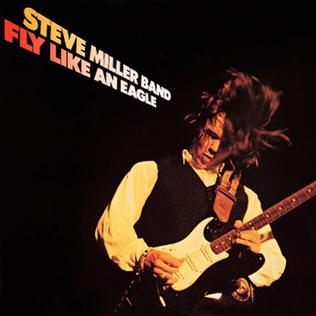
STEVE MILLER BAND - Fly Like An Eagle (1976)

Review by: Francelino Prazeres de Azevedo Filho
Album assigned by: B.B. Fultz


Steve Miller’s Fly Like an Eagle is supposed to be a “space blues” record from the 70s. While I don’t know exactly what “space blues” is meant to sound like, I’m pretty confident it’s not like this album. The only “space” element here is the trippy synth intro; nothing else feels spacey to me. And the “blues” part? Well, you know when a power pop album might have a single blues track to add some variety? This one has 4 or 5 of those, but they’re still blues as interpreted by a pop-rock artist, and not really pure blues or even blues-rock.

With failed expectations out of the way, this album sounds very much like it belongs in the 70s, which is good for a fan of that decade like me. While there’s an effort to give every song a nice melody, none are really stellar. The main problem here is the overall tameness of the rock and blues attempts.

Take “Mercury Blues”, for example: it manages to update an old blues song structure to the 70s quite nicely, but lacks any grit whatsoever. The two blues tracks in the end aren’t bad, but they seem like an afterthought, filler if there ever was any. “Rock’n Me” is actually embarrassing. It tries to emulate the blood-pumping guitar  style of Townshend and Hendrix, but it’s so mild, it’s like one of those “parkour fail” videos on the internet, where the person tries to jump from a rooftop onto another and falls in the middle. This is made worse when you consider Steve Miller was godfathered by no one other than Les Paul himself, and was supposed to be a great guitarist. Well, if he was, he certainly didn’t show it here. The guitars were unimpressive throughout the album.

That’s not to say there aren’t good songs here. The title track is very funky, with a catchy chorus. “Dance, Dance, Dance” is a country song that has the kind of energy this album could’ve used more of. The Sam Cooke cover “You Send Me” is the strongest point; it couldn’t have been otherwise given the differences in the songwriting capabilities of the two of them. It is sung in a way that makes it clear that the singer loves the song, and that makes it even more endearing to me. The best Steve-Miller-penned track here is “Take the Money and Run”, a piece of power-pop in the best Badfinger style and backing vocals stolen from “Sympathy for the Devil”. Fly Like an Eagle is much better when it does full pop than when it goes halfway blues.

In the context of all those great 70s albums, even when you just consider pop-rock ones, it won’t stand out too much. It should never appear on a best-of-the-decade list. But that is more of a testament to the amount of good stuff that appeared in that time, not that Fly Like an Eagle is bad or weak. I’m glad I’ve came across this album, a very pleasant listen.

Sunday, 12 June 2016

CAN - Tago Mago (1971)

Review by: Michael Strait
Album assigned by: Francelino de Azevedo


If y’aren’t familiar with them, Can are a German-Japanese attempt at removing all ethnic influences from rock ‘n’ roll (well, OK – there’s a little more to it than that), and they really like jamming. They aren’t purists like Keiji Haino, though – the jams on this record have been edited pretty heavily, as ye can tell by the presence of both a lead and a rhythm guitar on most of them even though they only had one guitarist. I’m not complaining, though – I really like these jams, especially the really long ones. “Halleluwah” is the most famous track here, and it holds the distinction of being the only 18-minute jam my prog-hating, indie-loving friend really likes. Maybe it’s because none of the participants seem overly concerned with showing off - except possibly Jaki Liebezeit, who at one early point manages to fit some insane skittering fills into his drunken-robot rhythms without breaking the flow – or maybe it’s because Damo Suzuki is a vocalist so endearingly unskilled as to make the average indie rocker sound like Freddie Mercury by comparison. He can’t really carry a tune, but the band never really give him any tunes to carry so that’s no problem. This album is about rhythms and adventures – melody ain’t important.

Anyway, “Halleluwah” is good fun the whole way through. There’s some violin playing that sounds like it’s scraping at the edge of the universe and Suzuki gets steadily more off his head as it goes – good for him! Towards the end, some swirling synths come in and the whole edifice sounds like it’s levitating, as if Stonehenge has decided it wants to visit the moon. It’s music that’s having a real good time existing, and by extension I have a damn good time listening to it. It’s a surprisingly accessible track, actually – the guitar solos could, for the most part, fit onto any ol’ rock song (they’d improve the vast majority of them, mind) and the bassist is playing a pretty funky rhythm for most of it. Same goes for most of the songs here – there’s always a lovely contrast between the drumming, keys and rhythm guitar, which are almost invariably of weirdo persuasion, and the fairly ordinary bass and lead.

Mind you, all that normality totally disappears on a couple of these tracks. I love “Aumgn” even more than “Halleluwah”, and that dispenses with all the more accessible elements of “Halleluwah” and just goes full-on freaky. It’s 17 minutes of freeform dark ambience, presumably improvised (‘cos how do you compose something like this?) and named after the only lyric. Suzuki’s not present on this one, and instead it falls to keyboardist Irmin Schmidt to repeatedly intone the sound “AAAAAAAAAAUUUUUUUUUUUUUUMMMMMMMMGGGGGGGGGGNNNNNNNNNNNN!” like a God creating the universe as the instruments lurch and slurch along in a glacial fog-sludge behind him. I can scarcely identify any of the instruments beyond the guitar – the rest is a bunch of fear groans and worried scrapes, with the occasional injection of something identifiable like a stumbling zombie bassline or a bat-wing pitter-patter on the drums. It’s all mighty atmospheric and fairly wonderful, and most interestingly of all is that it ain’t remotely corny like a lot of dark and ominous tone pieces. Even the demented church organ that comes in near the end works just fine.

Oh, and then there’s “Peking O”. Liebezeit claimed to hate free jazz, but I’ll claim he’s a fuckin’ poser because this is totally free jazz, at least the middle segment. It’s got Suzuki finally reaching spiritual apotheosis and becoming one with his inner self, speaking (or rather shouting) in tongues while a drum machine suffers a seizure and a keyboard gets drunk behind him. Even in the more held-together parts of this song, all the instruments sound like they’ve been infected with Cordyceps, sort of woozily stammering about in a vaguely coherent fashion before collapsing into freeform ridiculousness. Is it good? Yeah, I think so, but it’s not the sort of thing I can take entirely seriously – I mean, if you didn’t have a good chuckle the first time you heard Suzuki abandon all pretence of sanity and collapse into fits of babbling then I’m not sure I understand you. There’s a really apocalyptic noise-guitar at one point that sort of predicts the stuff experimental rock would start to fully explore in about ten years, and eventually the whole thing just ends when somebody switches off the tape. It’s all a bunch of good fun – just be prepared for some weird looks if you listen to it for the first time in the shower, as I did.

There’s four other songs on here, too. They’re all great, but I don’t really care about ‘em. I mean, how am I meant to when they share an album with those three? “Mushroom” has these really cool laserbeam guitars, “Oh Yeah” runs Suzuki’s vocals backwards for the first half and it sounds great, “Bring Me Coffee Or Tea” has a cool acoustic lead guitar that kinda sounds like a fragmented prism version of the American Western style, and “Paperhouse” sets the whole scene nicely, but in the end they’re all overshadowed by those big centrepieces. It’s a fuckin’ awesome album, though – a titanic edifice honouring the raw power of crazy bullshit. A lot of my favourite underground music wouldn’t exist without it, either. And it’s so much fun! I dunno if these guys took themselves seriously, but the music itself certainly doesn’t – this is a silly romp that also just happens to be total genius. Best album I’ve heard in this game so far, for sure.

Saturday, 21 May 2016

CORDEL DO FOGO ENCANTADO - Cordel do Fogo Encantado (2001)

Review by: Tom Hadrian Kovalevsky
Album assigned by: Francelino Prazeres de Azevedo Filho


and Arcadio could not find his shoes in the thick afternoon heat, sweltering in dread, as they were not on the porch like Valentina suggested. Valentina escaped admonishment by slithering across the smooth polished floors of the upper part and clinging to the sides of the walls. Alberta clapped her hands in the cool murky downstairs salon, her thin leathery fingers gleaming with fresh water from the fountain, and announced that it was time for piano lessons, and Arcadio, without shoe or delicate beautiful tweed coat from the far-off England of the norman men kicked himself out of the low window onto the garden bed, where the thin weeds and ugly flowers that grew and stagnated there wound themselves around his bony legs and tickled his pink flesh, and he let out a girlish little displeased scream, and Valentina rushed to the bedroom window and saw her delicate brother rushing down the lime-green hill, kicking off reeds of tall grass that caught upon his legs. Valentina called for mother mother moTHER MOTHER MOTHER MOTHER ALBERTA quickly, and slammed her delicate little fingers up and down upon the windowsill with a primal anticipation of Arcadio’s capture. She wailed about escaping piano lessons and not being fed dinner and possibly even worse things to come, and banged upon the wooden frame so hard it was audible for miles around, but to Arcadio it sounded only like drums and a joyous singing, a shouting perhaps, almost half in mourning and half in celebration, in a language from another place that he couldn’t understand. 

Sunday, 15 May 2016

CHRIS CUTLER & FRED FRITH - 2 Gentlemen in Verona (2000)

ASSIGNED BY THE HOST: Great Live Albums
Review by: Francelino Prazeres de Azevedo Filho


Cutler & Frith are a pair of avant-garde rock musicians and multi-instrumentalists, who gathered in the city of Verona to do some live improvisations. This album was a result of that concert, and was then named after one of the lesser-known Shakespeare plays. The track listing pays further homage to that play, as all tracks are titled “Act X, Scene Y” and have subtitles that reference characters and actions as well. Having never seen the play, I cannot say how tight those references are, though.

The “acts” by themselves don’t seem particularly consistent. Act 1 is composed of three “scenes” featuring the duo on the instruments that made them notable, drums for Chris and guitar for Fred. It was a good session of noise-making, overall. The first two scenes in Act 2 feature non-verbal vocals, screeching guitars and a tighter percussion, for a very dark and intense effect. The act mellows out and turns electronic on the third “scene”, unfortunately, and while it later gains on intensity and features some cool guitar wailing, it never follows up on the earlier vibes. I guess that is the flaw of improv music in general, while they touch many good ideas, they don’t carry them till the end.

Acts 3 and 4 are very similar to each other, with the jazziest percussion. Given that they consist of a single track each, they really should have been a single act. Act 5 starts as a sort of sound collage, but then turns into a military march. The encore is bluesy, and perhaps the best thing here after the early Act 2. Frith is a good guitarist, but he plays very little guitar in this album. The main “attraction”, to me, was Cutler’s beats, great throughout the record, and notable particularly as the saving point in the weaker tracks.

Listening to this live, watching the two gents perform all that crazy stuff, would be a great experience. Listening to this in my house hampers the immersion, and I can’t really enjoy this more than an interesting oddity.

Monday, 9 May 2016

AMY WINEHOUSE - Frank (2003)

Review by: Francelino Prazeres de Azevedo Filho
Album assigned by: Michael Strait


I’ve never been a fan of jazz. The little jazz I’ve came across in my life has been of the purely instrumental variety, the kind that is the darling of music critics. I’ve never listened to Billie Holliday. I probably should remedy this later, but right now I’m tasked with reviewing an album by someone who had in Billie her biggest inspiration, and I don’t have a base to talk about their relationship. I’ve also never listened to more than a few songs by Amy herself before, despite her being very popular among my generation. So I can’t compare this album to the rest of her work either.

The album itself has little variety; it consists of jazz song after jazz song, from the first song to the last two hidden tracks. Contrary to my impressions of the genre, nothing sounds corny here. I think the roughness of her voice is crucial to that. There’s a bratty, hedonistic, delinquent tone to her voice that holds the disk together. I think the producers were sure of that strength, because most of the arrangements are unmemorable, taking a secondary position. Nonetheless, the instruments are well played, the percussion is good and the sax is never musty.

It’s seriously lacking on the melodic level, thought. I guess that is to be expected, vocal jazz is supposed to be a naturally “talky” genre, but as a fan of pop and rock music, I demand some catchy hooks. Janelle could do it in Electric Lady, and Amy could have done it here too. Most of the songs are too similar too, making the listening tiresome. The first half of the album is particularly wearisome, while after track 8, “In My Bed”, it gets more interesting, as if it took a shot of musicality and drama. The best song here is “Amy, Amy, Amy”, with the title being repeated on the backing vocals, very catchy. The two hidden tracks are also better than most of the others, “Brother” is closer to soul than jazz, and “Mr. Magic” has the catchy backing-vocals-sing-the-title thing again and cool horns.

Frank is okay. Not really catchy or tasty, but there are spots of these elements here and there. I feel like I could enjoy it more after listening to the more well-reputed Back to Black. I could possibly see it as a vacillating first step towards something better, which I guess is the general critical consensus. Given that I haven’t, though, I think it’s merely nice but forgettable. This Frank doesn’t give pork rolls, much less gravy fries.

Friday, 6 May 2016

SUFJAN STEVENS - The Age of Adz (2010)

Review by: Mark Maria Ahsmann
Album assigned by: Francelino Prazeres de Azevedo Filho


Sufjan Stevens gives you constipation of the wrong kind. The right kind is constipation caused by for instance Phil Collins; when you hear the music and you instantly know it’s bad shit. Your body cramps up and it takes you a few days to get it out of your system if you just set your mind to it.

The Sufjan Stevens constipation is different. It consists of a lengthy inability to figure out if you like his music or not and if is his music is good or not. It might be best to avoid this kind of constipation altogether but you agreed to write a review of “The Age of Adz” so you had to deal with it.

So you listened to the album. You heard an album by an acclaimed multi-instrumentalist singer-songwriter who for a change used mainly electronic instrumentation to accompany vaguely confessional reflections on love, sex, life and death. You heard some things you liked, more things you disliked and many things that made no sense to you

You listened not once or twice but fifteen to maybe twenty times over a couple of weeks. And it was a strange experience because the album appeared to have the properties of some old fashioned psychology test, like a Rorschach test but not quite similar; the album seemed to reflect your mood in such a manner that on alternate listens you would either like it or severely hate it. You did not hear anything new or different in it and you could definitely pinpoint some things you loved or hated in it but you could never predict what your emotional response to it would be. Let alone analyze it or summarize in one sentence what informed your judgment. Add to that the fact that even after several hearings you could not reproduce a single detail of the album in your head; even “The Division Bell” performed better on that score.

You developed a mild obsession with “The Age of Adz”. You thought about it and the review you had to write all the time and in your mind you had already written a dozen different versions of the definitive review you are about to write. You knew what you liked about it but you were anxious that you would never figure out what you disliked about it so vehemently. 

Nor could you really decide if this would be a “Recommended-Album-Despite-All-It’s-Obvious-Flaws” or “Seriously-Flawed-Album-With-Touches-Of-Brilliance” type of review.

And you put off writing until the very last moment. And you fear that your Sufjan Stevens obsession will become a lifetime occupation.

Awful constipation.

Then finally you set out to write the review. You start off by mentioning the things you like about it and the thing you like the most about it is the beauty that can be found in the details of the arrangements. As one would expect of Sufjan Stevens the album is meticulously crafted and multi-layered and he uses a many sometimes unusual but often pleasant instruments to adorn his pieces. And when that approach works it is really quite good. Instances of this are strewn across the album; for example the horn coda on “Get Real Get Right” is really beautiful. Also the big-fartin’ electronic drum and bass foundation and the glitchy, slippery synthesizer sounds are at the very least fun. And you should mention the celestial female backing singers on many of the tracks but especially on “I Walked”; they are really delicious. As the sum of all it’s different parts “The Age Of Adz” is really a unique album. But that doesn’t necessarily make it a good album. In fact you have a number of problems with it that one by one wouldn’t be so disastrous but when you add them all up you are stuck with an album that is only partially palatable, in small portions.

The biggest problem is that even for a Sufjan Stevens album there’s a lot of Sufjan Stevens on it. Too much, in fact. One has to, for example, like Sufjan Stevens’ voice to fully appreciate this album because on this album at least there's no escaping it.

You dislike his voice. He sounds so sincere and introspective that after listening to it for a while you think Lemmy and Antony are the same person. It's so intrusive and all over the place that it reminds you of Freddie Mercury. And you don't like Freddie Mercury, to put it mildly. Furthermore, Stevens sounds so sterile, sexless and dorky that it's like he lived in Mike Love's throat for a long while. And he has a tendency to crack into falsetto all the time.

You dislike the density of the sound. It's so stuffed to the brim with little cosy, well crafted, pretty ornaments on top of ornaments on top of bombastic or------------------------------------------------------------------------------------------------------------------------------------------------------------------------------------------------------------------------------------------------------------------------------------------

THE MOTHERFUCKER'S ELUDING ME

Look, it took me too long to write this review and that's because so far I don't understand what I like about it. It's quite obvious what I don't like about it. The voice annoys me. The album is overcooked like somebody produced a cherry pie with not just cherries but also apples, kiwi's, strawberries, pineapples, pears, peaches and etcetera and what have you.

I think “Less Is More” is a valid principle but I can appreciate a certain lushness, for instance on Pet Sounds, if the embellishments at least serve decent songs. This album, however, lacks memorable hooks and the one song that sticks in my memory “I Walked” is uncomfortably similar to Dido's “Thank You”, of all things. Many pieces consist of repetitive chord sequences with varying instrumentation, chanted phrases and with Stevens' voice to the fore that can be very off putting. Take for instance the title track; it is just awful.

Stevens’ lyrics do nothing for me and I am non-plussed by the combination of supposedly intimate lyrics and very bombastic arrangements. On “The Age of Adz” Sufjan Stevens comes across as too eager to please and impress. He reminds me of a guy I once worked with who would, at the mere mention of the word coffee, jump up and get you a cup. Awful, servile creep. Seems like Stevens strives for beauty but never achieves more than prettiness. And thereby he leaves nothing to the imagination of the listener.

And what’s sorely missing is anything that really kicks ass or lays down a groove. Yes he applies a disco rhythm in a section the overlong (25 minutes), seemingly pointless and tedious album closing suite “Impossible Soul” but it does not take me to Funky Town.

So all in all there are so many things to dislike about this album for me that I would obviously dismiss it completely and put it in the trash bin of my mind. If it weren’t for I don’t know what.

And for me that’s the most intriguing thing about “The Age of Adz”; that in a certain light and at certain times I quite like it. Like a guilty pleasure, maybe. A very annoying guilty pleasure though. It is something about the atmosphere, and yes , of course some bits and pieces are quite beautiful. But in the end I just can’t figure out what’s the up side to “The Age of Adz”.

And frankly, at the moment I just don’t feel like delving any further into it. I’m tired (of it).

So, there it is: a failed review attempt.

When I was a kid my family used to own a jigsaw puzzle which was insolvable. The last piece would never fit. My mother promised five guilders to the kid that could finish it. Of course no one ever earned that money. Until I took a hammer and forced the piece into the puzzle and my mother, exasperated and because I was the youngest of the eight, paid the sum.

If I were to think any more of Sufjan Stevens I would like some money first.

Wednesday, 20 April 2016

Top 6 Jukebox: THE BEATLES

By Fahad Khan, Nina A. and Francelino Prazeres de Azevedo Filho


Fahad Khan


6. All You Need is Love

It’s all about the sentiments, man: those excessively utopian sentiments. A modern day secular hymn, it leads off with a raucous, but not unstately, rendition of the Marseillaise, the emblem of godless optimism. The song goes on to become an instant sugary cliche, but I love it, every single minute, right down to those repeated brass refrains. Finally it all starts to spiral and swirl into a maelstrom of even gloopier emotion and well that bit at the end with she loves you yeah yeah yeah gets me everytime.

5. Hello Goodbye

Once again I’m going to cite the tension between the essentially ephemeral, and even intrinsically silly — silly when shorn of their musical context that is — sentiments evoked by the lyrics and the weightiness and artistic heft that is furnished by the music. Then there’s confusion and perplexity of the song, the not knowing whether you’re coming or going. Except that it’s a gentle and joyous confusion, the perplexity of true pioneers working at the bleeding edge of art and culture with a sensitivity and a surefootedness that were utterly beyond the dreams of most of their peers.

4. She Loves You

Utterly irresistible: two minute twenty two seconds of pure pop ecstasy. Listen to how completely impatient it sounds, how much of a headlong rush into the future it represents. It manages to capture -- with a supreme vitality and freshness that’s scarcely dimmed with the passage of the years -- the instant when a generation’s extreme intolerance for boredom and the black and white limitations of the postwar world finally managed to kick start the 60s and modern day youth culture into existence.

3. Lovely Rita

The best song on Sergeant Pepper by a country mile. For me, Lovely Rita’s full-on zaniness has always proven a refreshing antidote to the tendency towards turgidity and a lack of focus in some of the album’s preceding tracks. It is, in essence, a randy young lad’s paean to a voluptuous and military looking meter maid, the titular Rita, whom the narrator manages to invite out to take some tea, and even gets to share a couch with — but without alas ever quite “making it”. The song ends with a heavy panting that’s either shagging or (given this aforementioned inability to make it) a gasping sort of masturbation, but it sounds so much like a dog’s panting that you kind of don’t realise what it is, or might be, straight away. Lovely Rita’s charm derives largely from its brassiness and its chutzpah. The track represents an aural allusion to that cheeky, fringey, head shake you always see them doing in the footage from the beginning of their career: and of course it also serves as a fantastic showcase of Lennon and McCartney’s complete mastery of the songwriter’s craft.

2. Sexy Sadie

The Beatles seemingly at their most frivolous and inconsequential — but it’s precisely here that you can really appreciate just how genuinely superlative Lennon and McCartney’s songwriting talents actually were. Just listen to it a few times in a row, over and over, until it finally clicks into place, and takes up permanent residence in your head. The words sound kind of silly to start with, and yet the music is so compelling, overloading the lyrics with such colour and significance, that soon they begin to appear weighty in and of themselves. Now, at this point you could well begin to roll off all the usual detailed, technical musicological/textual-rhetorical explanations as to why their songs continue to inspire awe and devotion amongst music fans of all generations; but I maintain that in essence it was the combination of both the Beatles’ supreme talent for melody along with, rather crucially, the absolute open-endedness, that somehow gnomic, elusive aspect characteristic of their art, that ensured its immortality. Sexy Sadie has that elusiveness in spades and it’s a song that continues to intrigue listen after listen after listen. 

1. Strawberry Fields Forever

With Strawberry Fields Forever you feel like you’re getting the Fab Four at the absolute top of their game. They’ve reached the point where they can afford to goof around as much as they want and to make a decent stab at pushing whatever musical or cultural boundaries they felt like when they got up for breakfast that morning. All the same, it doesn’t have the self-consciousness and  that hint of pomposity that tends to mar their other more overtly experimental or psychedelic works (indeed for me it far surpasses other superficially similar tracks like Lucy in the Sky with Diamonds and in fact most of Sgt Peppers). Strawberry Fields has a languid and dreamy, opiate feel to it, across the which there wafts a certain air of ‘continental’ sophistication, and then there’s the insistent ‘primitive’ rhythms and finally a release into unreality and consequent bliss. The lyrics make little sense and yet they mean so much that, in the end, they manage to encapsulate the spiritual yearnings of an entire generation. When all is said and done, it’s a gorgeous, gorgeous mess. It seems to not want to go anywhere in particular but can’t really stand to stay still either: poised between a deep desire for an alice-in-wonderland style escape from the realities of everyday life, a reversion to a childlike state of simplicity, and the irresistible thrusts and promptings of personal ambition.

Nina A.


In 1980, Chocho Vladovski (of Tangra) wondered whether in time under the stars in the window there will be light, and whether he will still be listening to the Beatles and reading the timeless poets. He's sadly not around anymore but in a world where the beat, shortness and earwormy hooks are still pop songs’ main qualities under consideration, the Beatles are still the kings in the consciousness of many audiophiles, melomaniacs and casual music fans. Sadly, this most iconic of pop bands never touched my heart of hearts and never made my Balkan feet tap to the beat, but after some consideration, I had to concede that there are a couple of Beatles songs that are worthy of my love (or at least like) and here is the top 6 among them:

6. Eleanor Rigby

Have you seen that meme that All The Lonely People come from art college? Have you seen Paul Poirier and Vanessa Crone deliver a stunning performance on the ice to a version of this song in 2011? All I am saying is that this song had to take some helping to make it past my “ordinary people sob story” detectors, but still the strings provide the perfect backdrop and support for this piece and even the singing approaches genius emotiveness levels at points (something that is usually lacking with the Beatles).

5. Blackbird

You know, figure skaters luuurve the Beatles, and they are somehow generally seen as the intellectual skating kid’s path to greatness. Joshi Helgesson skated a cute routine to this Beatles song (or at least an elevator muzak blues cover, which is something else that skaters seem to love) in the 2014-2015 season. But I am best friends with this song from before - for example, the time when my sister would practice nothing else on the guitar for more than a year. Or the time when I stumbled upon the King’s Singer’s a cappella interpretation of it and it stuck to my brain like bubblegum sticks to hair. Ew. The bare bones arrangement and evocative lyrics do this song a massive service and its pretty melody is able to shine. Also it sounds perfect on a backdrop of rainy April evening noises, as I have just found out.

4. Revolution 1

Iconic British ice dancers Torvill and Dean skated to Revolution in the 1989-1990 season, actually (I don’t know why the skating routines keep happening in this list). However, I prefer Revolution 1 to Revolution, and it is mostly because of the beat, quite bluesy both times (major plus - I think the Beatles don’t do bluesy often enough) but I prefer the more laid-back and steady version here. Probably also because I am tired of hearing Revolution and Revolution 1 sounds like a refreshing rearrangement to my Beatles-unappreciative ear.

3. Because

Aaaaaah-aaah. This song is very pretty in an a cappella rendition but the harpsichord that underpins the whole thing is even better. Also the lyrics are rarely appealing and there is no English drama that can be found in the newspaper. Yes people, I think that the puns of blueness, etc. here work rather well here. Very well indeed.

2. Within You Without You

Someone told me that the lyrics to this are preachy. Well, what do you expect, it has sitars and is vaguely Indian and this is the 60s when New Age wisdom was released into the wild and even the title kinda ominously suggests what’s going to be going on here. I have no issue with that because for the most part I cannot make out what George is saying at all. His voice is just a part of this compelling oriental tapestry that’s being weaved before your very eyes. The whole thing is epically cool and like a hypnotised cobra, I want to rise out of my basket and do a little dance.

1. I Want You (She's So Heavy)

Finally, a Beatles love song I can actually believe. No pick up lines, wink wink, nudge nudge, romantic clichés and other superfluous detail. He wants you so bad and it is driving him mad. The rhythm is driving too. The guitars sound appropriately gritty and so does everything else about the production. Now this song goes from an highlight moment to a highlight moment but my favourite bits are the subdued parts, and especially how the guitar mimics the vocal, and especially especially how the second repetition of “it’s driving me mad” trails off (on the principle: tension on the first repetition, release tension on the second — always very effective). Love the drumming, love the bass, love the guitar, love the organ, love the singing, love the passion and the maturity of the delivery. Best Beatles song ever.

Francelino de Azevedo


The Beatles are my favourite band, and have been since I’ve been 8 or 9, I don’t even remember. There’s not a lot to say about them that hasn’t been said, but here are my favourite 6 songs, in no particular order.

With a Little Help From My Friends

What makes this song unique, not only in the Beatles’ catalogue, but in the whole world of music, is the combination of so many disparate elements, that mingle with each other so perfectly. Paul’s bass is insistent, pulsing, talking throughout the song, while the piano brings a note of longing. Ringo’s vocal delivery is perfect, laid-back and sympathetic, contrasting with the others’ backing, which is simply gorgeous. The sum of it all is simply undescribable, mood-wise. Is it a happy song? A sad one? Or is it one that englobes the whole myriad of human emotions in less than three minutes? Probably not as much, but if any song is close to this ideal, that’s “With a Little Help From My Friends”. Also, some people say they prefer Joe Cocker’s version, and I couldn’t disagree harder, as he made a normal song out of something so special.

I've Got a Feeling

This was recorded live on the famous 1969 rooftop concert, perhaps I wouldn’t consider I’ve Got a Feeling so special if it weren’t so. On the other hand, I think it’d still rate highly, no matter what. As it is, this song is a glimpse into a different reality where they never stopped touring during their creative peak. And what a reality would that be! It is believed that it was their mastery of the studio that brought the Beatles to true greatness, well, there’s “I’ve Got a Feeling” proving this belief at least partially wrong! Both Paul’s and John’s voices feel much different live, with a weariness that don’t just add to the song, but in fact makes it. George, Ringo and Billy Preston are also completely tuned to the two stars. Mood-wise this is also very ambivalent, Paul’s lyrics are supposed to be happy, while John’s were meant to be sad, but both singers somehow mixed their emotions, so it ends up sounding so very urgent! This is a song felt in the guts and in the heart, a huge chunk of what rock and roll is supposed to mean.

Cry Baby Cry

Music is above all melody, and in the traditional pop song, the strongest melodies are saved for the refrain. Of all the great refrains found in the Beatles’ discography, this one is perhaps the strongest. The melody is gorgeous, and sung by John at his softest, which is accentuated by the hammering of the piano, bubbling bass and occasional guitar scream. Even though the verses themselves are not bad, with their folkish melody and intriguing lyrics, they could be cut from the song to the point where it would be three minutes of “cry baby cry / make your mother sigh / she’s old enough to know better / so cry baby cry” and it would still be an excellent song. In fact it would gain a different meaning, more like a mantra, and might even had been better than the original.

Eleanor Rigby

The Beatles’ most influential song. In 1966 this changed the perception of what a ‘pop song’ was meant to be. The melodies were lusher and more “classical” than anything else on the charts, and the somber lyrics made it even more clear: Rock was Art! Even if not for it’s historic significance, this song would still be one of the greatest ballads ever written. The verses’ vocal melody is simply stunning, and the strings are likely to have been the most beautiful in Sir George Martin’s career.

Long, Long, Long

The quiet “Long, Long, Long” might be one of the most overlooked Beatles’ songs. However, it touches me in an unequaled way. The way it starts so silently, as if drawing you inwards, but then submerges you in gorgeous intensity, on the “so many tears” bridge, it’s a journey throughout George’s soul. The ambiguous lyrics were meant to symbolize a rapprochement with God, but really they can mean anything you feel the strongest about. It’s also one of Paul’s and Ringo’s best performances, and they do provide a huge depth to the song.

The Abbey Road “suite”: You Never Give Me Your Money / Sun King / Mean Mr. Mustard / Polythene Pam / She Came in Through the Bathroom Window / Golden Slumbers / Carry That Weight / The End

Yeah, I went there. I asked Fahad and Nina if they’d let me and they said yes, so I did it. But really, even if they had forbidden me I’d choose “You Never Give Me Your Money” by itself. Everything in there is perfect, the piano, the bass, the vocal melodies, but specially the most beautiful guitar sounds George has ever produced. Seriously, it’s like he simply doesn’t stop with amazing guitar lines, culminating in the gorgeous part that appears when Paul does “came true / today” and continues till the end. That line is so haunting, if I listen to it once, I’ll hum it for the rest of the day. But, after a short rest on the beginning of Sun King, the rest of the suite continues with musical magic. It was meant to be the Beatles’ swan song, and they showed off all their range, diversity of melodies and moods, and, why not, instrumental virtuosity. No other artist in history can claim to close their career with something so significant, with the possible exception of Mozart and his Requiem Mass, and that’s because he fucking died writing it!

Playlist: Spotify, Deezer

Wednesday, 13 April 2016

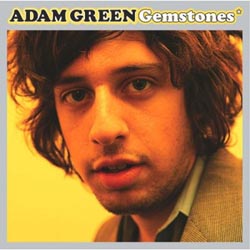
ADAM GREEN - Gemstones (2005)

Reviewed by: Francelino Prazeres de Azevedo Filho
Album assigned by: Roland Bruynesteyn


A bouncy album full of happy-go-lucky tunes coupled with dirty sexual lyrics, Adam Green’s Gemstones might seem, at first listen, like an album that tries too hard. That might put off potential listeners, as it looks more like a novelty act than something made for the sake of its music. However, by halfway through the album, it’s clear that not only Adam has a great voice, but some good songwriting chops as well.

The 15 songs are all on the short side, and they use the same few instruments, with a focus on the electric piano. They also have lyrics going all over the place, and a few of them even sound sincere. Most, however, are humorous, or try to be so. Quite many of those have lines like “and if I went back to that whorehouse tonight / do you think I'd find a reason for a princess not to bite / my cock” or “Carolina, she's from Texas / red bricks drop from her vagina”. Are they successful in their humour? Honestly, no. Ween could manage to convince us when they did stuff like that because they acted really stupid. Adam on the other hand always sounds kinda intellectual, so he just looks like an asshole.

The strong point of this album is the melodies. Even if the arrangements all sound similar, they are incredibly varied, and pretty good overall. Due to the short lengths of the tracks, the album almost dazzles you with the sequence of hooks. While there are some blues and pop-rock influences, the focus seem to be on pre-1960s genres, bringing to mind cabaret- and Tin-Pan-Alley-style ballads. In this respect, I soon realized the album is pretty similar, in mood and melody, to the classic 69 Love Songs; in fact, it seems almost like a continuation of that album’s aesthetic. That comparison made it easier to accept the lame humour.

If you don’t mind a singer that occasionally sounds like a jackass, and if you like a good variety of melodies that go straight to the point and never overstay their welcome, do listen to Gemstones.

Tuesday, 22 March 2016

SPECIAL REVIEW PROJECT: 2015 IN REVIEW - Best and Worst Albums of 2015

2015 IN REVIEW
By Francelino Prazeres de Azevedo Filho


Every time a year ends, music websites and publications all around the world publish lists that feature what they consider the best albums that were released on that year. These albums come with great compliments and, usually, intriguing names and cover arts, tantalising me. This has always been a sort of shame to me, as I felt that I was missing on good music, year after year. So, I’ve finally decided to do something about it, and on February 2016 I started a sort of “Project 2015”, in which I would listen to a bunch of critically-acclaimed albums from last year, and decide which of them I liked and which I didn’t.

At first, it was more of a personal thing, just me writing on an excel file which albums I thought were worthy of further attention after a first listen. However, with the chat of the Only Solitaire group, it ended up getting bigger, as people would suggest me albums, or would ask to see my excel (this made me make it prettier and more comprehensive). By the time we did group-listens of some albums from the list, it was clear that it turned into more than that, and I decided to “publish” it on this blog post, as well as on my facebook account.

Throughout February and in early March I listened to 73 albums released in 2015. I didn’t listen to all of those from beginning to end, but I made sure to listen to each of them long enough to be able to make my opinion. I also want to make it clear that this is meant to be my personal reactions to these albums, shaped by my taste in music, and nothing more than that. Those albums got inside the list from many sources, most of them figured in Brazilian and international best-of-2015 lists, but some came from chat suggestions, and some came from stuff I happened to find and thought were interesting to be listened to. I didn’t get everything I saw on those lists either, only things I thought seemed promising to my taste.

On the excel tables, I did a small description of the sound of each album, and I gave each a one-line review, which was painted green for a positive reaction, yellow for a neutral reaction and red for a negative reaction. I also selected, like the (in)famous Pitchfork website, a few albums to receive a Best New Music award.

Of all the 73, there were only 7 albums which received a negative verdict, including the much acclaimed Kamasi Washington album, The Epic. I guess I just don’t like jazz, but I found the length of it personally offensive, it’s more than three hours long! The worst of the bunch, however, was Defeater’s Abandoned, which started with clichéd dramatic pianos, then a pathetic screaming started, and I couldn’t take it anymore.

22 albums got a neutral reaction. Cidadão Instigado, which is sometimes appointed as one of the best Brazilian rock bands of the XXI century, is yet to be able to touch me, their Fortaleza wasn’t bad but nothing that I would want to spend time listening to. Another disappointment was Frevotron, which promised a modern electronised update on the frevo genre, but sounded like anything but frevo. On the international side, Father John Misty sounded half as good as Elton John on his good songs, and was utterly boring on the others, coupled with pretty bad lyrics. I really wish Robin Pecknold would return to music, because the rest of the Fleet Foxes are nothing without him. The biggest waste of a cool cover belonged to this category, Kelela’s Hallucinogen EP, which was just one more album that followed this recent trend of beautiful arrangements and instrumentation coupled with a lack of good vocal hooks. Bike, Unknown Mortal Orchestra and Passo Torto & Ná Ozetti were also guilty of that.

A special mention goes to albums that felt genuinely deep and intriguing, but just weren’t suited to my tastes, like the weird schizophrenia of Oneohtrix, the ambience of Nicholas Jaar and Mount Eerie, and the noise-plus-religious-chants duo between Cadu Tenório and my admired Juçara Marçal.

The last and largest category consists on albums I gave a positive verdict, 44 out of 73. Among those, it’s worth mentioning the great moment Brazilian music in general, and hip-hop, specifically, is living. Searching for inspiration in folkish afro-traditions, the 70s post-tropicália or on the sleazy brega, artists are mixing genres and producing unique albums. If one listens to Ava Rocha, Melodia Preto Bendi, Jonas Sá or Johnny Hooker, they would get an idea of how diverse and vibrant the Brazilian scene is.

International music, however, seems very fragmented, and the only visible tendency is a reduction on the use of guitars. But even those were put to good use by Courtney Barnett or Viet Cong. Many well-established artists did not disappoint this last year, with Magma, Joanna Newsom and Tame Impala releasing good follow-ups that add nicely to their discographies. Modest Mouse, on the other hand, disappointed me with their forgettable Strangers to Ourselves, which included a semi-rap-song with lyrics about cleaning his pistol!

Among the 44 positive albums, there were 12 that I considered the finest of 2015. Two were electronic pop: from the Brazilian state of Pará, Jaloo mixed pop with carimbó to make a very catchy and diverse album; while from overseas, Canadian Grimes wrote, sang, played and produced by herself a kaleidoscopic masterpiece. Still on the electronic world, but far more avant-garde, was Holly Herndon’s Platform, with dazzling vocals that reminded me of Stockhausen’s Stimmung. 

The last two foreign albums that figured on this top 12 were both very personal, although they had very different moods. Sufjan’s Carrie & Lowell might not be as good melodically as some of his previous albums, but is incredibly touching, and pretty much bares his soul. To Pimp a Butterfly stands out for the stunning amount of different “voices” Kendrick Lamarr has.

Back to Brazil, Elza Soares’ Mulher do Fim do Mundo is also very personal, and through her coarse 70-year-old voice, and great arrangements, entrances the listener in her world. Great arrangements are also a feature of banda-fôrra’s debut EP, which left me with great expectations for their future. Bixiga 70 gives us another dose of great afrobeat, perhaps their finest.

Finally, on the hip-hop front, I loved particularly four albums. Or rather, three albums and one EP, as Senzala Hi-Tech amazed me with a new kind of afro-vodoo-hip-hop with 90s Native Tongues influences, and they only needed 6 tracks to do so! The Instituto collective called so many great artists to perform on the collaborative Violar, it just wasn’t possible for it not to be awesome. Rodrigo Ogi’s RÁ! is worthy of the capitalisation and exclamation, as it has great grooves, great lyrics, great hooks and a great variety of moods.

Last, but definitely not least, the album I consider the best of 2015: Emicida - Sobre Crianças, Quadris, Pesadelos e Lições de Casa…It can be touching, it can be scathing, it often is both, simultaneously, it is simply marvellous! One of those albums where I just felt the wonder that it music, and on the first listen!