WELCOME TO OUR NEW SITE: tomymostalas.wordpress.com

You'll be automatically taken there in a second.. Change your bookmarks, thanks!

Showing posts with label Round 11. Show all posts

Thursday, 4 August 2016

MASSIVE ATTACK - Mezzanine (1998)

Review by: Star Trek II: The Wrath of Khan
Album assigned by: Christian Sußner


If you grew up as a music fan under the dominant sway of the music press during its three-four decade long heyday then you most likely know the desperate feeling that came from constantly reading about some hugely important influential record that, having been name dropped once too often, you were eventually forced to save up enough money to buy (yes, you read that right, you used to have to pay for music, which tended to really limit your options) and listen to over and over again - and that, after countless vain attempts to ‘get it’, to understand what all the fuss was about, you were forced to give up on and chalk up as a failure of imagination or music appreciation on your part. Actually it quite often turns out that years later, when you eventually return to such half digested masterpieces, that rather amazingly the pieces just seem to fall into place of their own accord without any additional effort on the part of the listener, maturity or a deeper appreciation of music in general having taken up the previous slack. For other records that never happens at all, ever, and you’re forced to conclude that either there’s some musical blind spot in your brain (and that maybe, possibly there’s a chance you just might get it in the end, on your deathbed maybe), or that the music press had in fact been actually selling you a massive pup all along. Ladies and gentlemen, Blue Lines by Massive Attack just happened to be exactly one of those personal bugbear records of mine. I mean I admired the album, and parts of it I really loved, but in the end and in spite of all that initial goodwill on my part, Blue Lines left me lukewarm. 

You see I get how the record might have won over the critics in the early 90s, its relentless privileging of style and hip over soul and substance and its achingly sussed on point musical allusions/borrowings served as a potent weapon against the earnest rockism that was still characteristic of the alternative music scene back in the days. But the fact is that no amount of studied cool could make up for the essentially pedestrian quality of the music. Indeed, trip hop taken as a genre - and aside from a handful of notable exceptions like Portishead or DJ Krush - tends to sounds much less impressive than it did in the mid-90s. Because it really had an untouchable, hazy green aura, of mystique surrounding it back then. Albums like Dummy or Entroducing felt epochal, significant, like a promise of much more to come. But in the end it all proved to be one big anti climax - and all those cruel jibes about trip hop being a safe, sanitised version of rap/hip hop without all that stuff about thugs and guns and violence and bitches that you could play at nice dinner parties without offending your guests seemed not to have been so wide off the mark after all. I listen to those old trip hop records again now 20 years on and after having, rather critically, had the chance to hear many of the original dub, soul and reggae records that were formative influences on the genre and I can’t help but notice just how cumbersome and actually dated trip hop sounds in comparison.

All of which egotistical rambling finally brings us round to Mezzanine, Massive Attack’s third album: the one where the band started to expand on their sound, developing an earthier, more rock-oriented style, and softening some of the hard, blunt edges of their first two albums. I mean in theory it should appeal a lot more to my rather more organic sensibilities, but to me it just sounds a lot like probably the best beer commercial soundtrack music ever. I still find an immense depthlessness to their music, a horrible anodyne quality that lurks behind the immediate surface allure, of which admittedly there is plenty. Angel and Teardrop, the two that everyone knows from the album, are completely worn out from over familiarity, like a frazzled imitation persian rug -- and really I can’t even begin to separate out the music from its role as the incidental music or as the inspiration for the incidental music in a thousand different adverts or television productions. The images and visual symbols, the products, and the music all bleed into one another, one great trite miasma. Worse still whenever I listen to Mezzanine and start to really get into it, I reflexively think of where I’ve heard the same thing done better or where it’s felt far more genuine. There are, as always with Massive Attack, exceptions: moments when they triumph over their musical limitations, Risingson being one obvious highlight, although there are fewer of these than on Blue Lines. But (to my most alas) I still don’t get it; I just can’t overcome my by now decades long resistance to the group (6/10).

Tuesday, 2 August 2016

GREEN DAY - American Idiot (2004)

Review by: Jaime Vargas Sánchez
Album assigned by: Graham Warnken


My only memories of Green Day were when they were on the radio a lot around the release of “Dookie”, so for me they were always this young pop-punk band, so when I read in the press that they were doing a conceptual rock opera thing I was thinking “Huh? Are they the right band to do this? Wouldn’t it be boring? Pop punk only has so much diversity and when you go for a concept album you need musical diversity”.

Or course I was not being aware that 10 years had passed since “Dookie”, and another 12 have passed since they released “American Idiot” to the day in which I’m listening to it for the first time.

First of all, I will not comment on the plot and the concept, for one simple reason: I would need to pay attention to the lyrics, and that would be something for a time when I can focus enough on them.

I don’t know if in the time span between Dookie and American Idiot they had already transcended their old sound, but in this record they sound quite more diverse than simply punky pop (although “St. Jimmy” – actually the second half of “Are We The Waiting / St. Jimmy”; a lot of tracks come in pairs – is totally classic punk). But the energy is there, oh boy is it there. The guitars jump at you with classic rock abandon, the drums are precise yet lively and the bass holds the ground as it’s supposed to do. Check the title track for an example – it’s exhilarating.

Green Day asserted that they had done their homework and studied classic rock operas and it shows. They said their main inspiration was “Quadrophenia” and I can agree – but if anything, it sounds like Quad if Quad had been done by the Who of 1965 rather than the Who of 1973. But that’s not the only discernible influence; take the second track and arguably the tour de force of the album, “Jesus of Suburbia”, a nine minute monster in several parts. Not only there are very strong hints of Ziggy Stardust here and there, but the third section (“I don’t care”) is so much in the same rhythm as the “I have to know” part of “Gethsemane” from Jesus Christ Superstar – and it’s so totally appropriate in a meta level – that it cannot be accidental.

Diversity is also a mark of the “paired” tracks: the “Are we the waiting” section of that track I mentioned above has nothing to do with the “St. Jimmy” section; “Give me Novocaine / She’s a rebel” repeats the trick: the first part is funky and acoustic, the second is punk pop at its most direct; “Holiday / Boulevard of Broken Dreams” sounds like the reggaeified Clash in its first part (excellent!), and like Oasis in the second (damn!). “Wake me up when September ends” is the expected acoustic/power ballad, and its placement in the album makes it the equivalent of the typical Broadway “11 o’clock song” (clever!). Then “Homecoming” tries to repeat the trick of “Jesus of Suburbia” (it’s even a little longer) but not quite succeeding as much, although having the two guys not named Billie Joe contribute (and sing) a section is a welcome idea (in addition to a possible nod at “Tommy”).

In short, even taking the concept out of the equation, the album is an enjoyable romp and its opening stretch is certainly good; I’d nominate the entire sequence of “American Idiot”, “Jesus of Suburbia” and “Holiday” (a pity about the “Boulevard” part – sorry guys but Oasis????) as the best part of the album. Thumbs totally up.

Thursday, 28 July 2016

SOUNDGARDEN - Superunknown (1994)

Review by: Nina A.
Album assigned by: B.b. Fultz


When you think of nostalgia, you probably think of 80s cartoons and such because these are the properties that have been aggressively revived for the past decade or so for um... your money, yes. But I think the 90s are properly in the nostalgia realm too already as the eventful conclusion to the already very eventful “short century”. Amid hip hop, boybands, collectible bubble gum stickers and regrettable fashion choices there’s always of course heavy metal’s ugly step-sibling: grunge. A genre that, so far as I can tell, nobody who hasn’t been between the ages of I guess 13 and 30 during its peak years cares about much anymore. Sure, Nirvana get played occasionally on the all-purpose throwback radio and so does “Black Hole Sun”, Soundgarden’s megahit from this record, which I imagine its regular listeners attribute to Nirvana too, but nobody seems to be giving grunge extended attention yet. However, I too, occasionally start to miss “the heavy sludge of ‘70s metal” and “the raw aesthetic of ‘80s punk”, and so I approached this record very enthusiastically.

Stretch the bones over my skin
Stretch the skin over my head
I'm going to the holy land
Stretch the marks over my eyes
Burn the candles deep inside
Yeah you know where I'm coming from

Oh... I had forgotten about this. Yeah, it’s gonna be one of those whiny "poetic masterpieces". People lashed out at emo at the height at its popularity but seriously, I think people back in the 90s could get even cornier, especially in metal. Okay, screw this, let’s look at the music. 

Well, Soundgarden do deliver on their promise of a heavy sound, a heavy psychedelic one at that, and there are some delightful nods to Zep in tracks like “The Day I Tried to Live” and “Fresh Tendrils”. But at some point these tracks seem to really start blending in with each other, and they are neither the most sophisticated examples of the genre nor truly visceral in their nature - frankly, they are kind of forgettable with the possible exception of the above mentioned “Black Hole Sun”, which I assume has earned its vh1 status purely on its anthemic qualities. So you know, all things considered, and although I'd hate to deliver a lazy pun, Superunknown may go on to become indeed um... superunknown.

ANN PEEBLES - I Can't Stand the Rain (1974)

Review by: Jonathan Moss
Album assigned by: Charly Saenz


My introduction for this review can't hope to be as good to the introduction to this album. Based on the album cover and Wikipedia page I expected soul music and yet the title track decided to announce itself with a really strange, cool synth riff that wouldn't sound out of place in a some sort of electronic song, maybe Jean-Michel Jarre. Outside of this the song is soul but it’s a very strong soul number, featuring a passionate vocal performance which isn't without its nuance, such as the way Ann almost trembles the word “rain” in the chorus. Its very catchy as well, with a kind of triumphant vibe, and a melancholic undercurrent. With all that and the cool synth riff what more do you want from your soul?

Unfortunately the rest of the album for the most part really doesn't live up to it. The second song doesn't have a cool riff but still sounds almost identical in its instrumentation and vibe, even quoting the first song. It's not nearly as good, though it has some nice horn playing. For the most part this album is VERY similar instrumentally and vocally, featuring keyboards, strings, horns, electric guitars and some very good, punchy drumming, over which Ann Peebles delivers her passionate but tastefully restrained vocals. The songs are alls able to distinguish themselves in some way. “(You Keep Me) Hanging On” opens with a cool, suave guitar lick, “Run Run Run” has some boisterous horns, “If We Can't Trust Each Other” features bouncy, melodic keyboard playing, “A Love Vibration” particularly stands out with the punchy, fun drum playing and “You Got to Feed the Fire” has a groovy organ. Despite this the similarities of the songs can't help and the album gets a bit samey and boring.

This leaves three stand out tracks outside of the title one. “Until You Came Into My Life” is a very nice ballad with pretty guitar playing and strings. The organ playing sounds a bit like “A Lighter Shade of Pale” and I can imagine the song fitting perfectly over a dark, rainy scene in a gangster movie. The others are “I'm Gonna Tear Your Playhouse” and “One Way Street” which thankfully end the album, leaving it on a high note. “Playhouse” is a sassy, sexy song which lyrically is about a cheating husband (I think). The vocal performance is suitably biting, especially with the accompanying strings and horns, yet there's also some very nice subdued guitar playing which suggests the sadness and betrayal Ann Peebles must feel deep down about her husband being unfaithful. “One Way Street” has a great instrumental, with a glistening keyboard line opening it and a melodic piano line carrying it. It's a catchy song and Ann's vocal is strong as well, with that restrained passion I talked about earlier.

Overall this is a good album, with several stand out tracks. Despite this it's probably best served as background music, though hopefully you do pay close attention during the highlights.

Tuesday, 26 July 2016

DAVID CLEREST PROJECT - Mission: Earth (2001)

Review by: Alex Alex
Album assigned by: Tristan Peterson


“David Clerest Project: Mission Earth”. This is a metal band like they used to have back then.

Actually, it’s a one-man metal band but this is not important for the purpose of this review. While we are still on it this man used to play for some other bigger bands, I believe. To hell with it. Let’s discuss what needs to be discussed.

The main question when discussing metal bands is: “from where and how have they got all the equipment?” This is as opposed to a question we usually ask about non-metal (singer-songwriters, progressive rock, punks, any other shit) artists: “how has it happened they have composed all that stuff and, tell me the hell, why?” Such question does not arise for metal bands.

Such question does not arise for metal bands because, having obtained the equipment, they proceed with that equipment usage in a normal way, the same way I would be watching my new TV if I had managed to steal it from my rich neighbor. There is only one way to watch a big TV. You turn it on and you watch. Punks and singer-songwriters and progressive rock bands they all are trying to watch a TV which has not been turned on. So, understandably, there's a lot of questions for them: is the TV really there? Is it big or small? WHAT WOULD YOU THINK THE PICTURE WOULD BE IF ONE DAY YOU MANAGE TO TURN IT ON? DO YOU NEED ANNE FRANK TO TURN IT ON? ONLY TO TURN IT ON AND SHE CAN GO? PROMISE? And that's the discussion of Art.

Nostalgia is the synonym for love. Visiting the old parents house is (as the “Forrest Gump” movie shows in regards with Forest) either nostalgic or (as the “Forrest Gump” movie shows in regards with Forest's girlfriend) is an act of hatred. These two resolutions correspond to the binary outcomes of love which is always there. Metal bands are full of love, spreading the love to the audience, bathing the people in the warm waves of love supreme. We are too proud to admit this is the true love. We say “nostalgia” and we go away.

The binary resolution is provided by the equipment. An idiot can say metal bands can do other music. HAHAHA. EVEN SATAN CAN NOT. It is the equipment which uses the people, building metal bands of them. Those who do not know how to play go this and that way pleading to be used by big big amplifiers, pleading to become nostalgic. This is why the future of progressive rock lies in the extreme metal and the punk, being too humane, is expectedly dead.

VIRGINIA ASTLEY - From Gardens Where We Feel Secure (1983)

Review by: A. A.
Album assigned by: Julien Mansencal


This is an ambient album that evokes nostalgia, and does it better than some but not all similar albums. Mostly pianos and soundscapes and samples/field-recordings comprise the sound. I do not have a lot to say about it, but I'm somewhere between appreciating it and liking it. On the whole, I think most people would be positive toward it than negative.

Friday, 22 July 2016

VARIOUS ARTISTS (ED RUSH, TRACE & NICO) - Torque (1997)


Review by: Andreas Georgi
Album assigned by: Star Trek II: The Wrath of Khan


Consider this my contractual obligations review. Quite honestly I was unable to sit through this album even once. I’m sure there are people out there who can appreciate this and therefore write something meaningful about it, but I cannot. What immediately hits you in the face is a very aggressive, driving drum beat. Everything else is pretty much is a soundscape accompanying this drumbeat, and this drumbeat, with little significant difference, dominates each and every track. The soundscapes do have some interesting elements, but ultimately it’s all about that drumbeat. I don’t like it and don’t care to hear it, so that pretty much negates any other attribute of this music. Not for me, sorry!

Wednesday, 20 July 2016

RODRIGUEZ - Cold Fact (1970)

Review by: Dinar Khayrutdinov
Album assigned by: Roland Bruynesteyn


Ah, 1970! Right in the middle of the golden age of rock music, amidst such epically successful records like Paranoid, After the Gold Rush, Led Zeppelin III or Cosmo’s Factory, comes this effort by initially little-known singer-songwriter Sixto Rodriguez. Who is this Detroit-born Mexican-American with cool shades and a weird first name (given to him because he was the sixth child in his family)? Is he another Dylan-Donovan-Cat Stevens rip-off or the great forgotten hero of the hippie generation, overlooked in every country but South Africa and Australia? Yeah I’m serious, look it up if you don’t believe me – in South Africa they even thought he was dead at some point, with his fans considering him a great tragic artist akin to Morrison or Hendrix. Then a couple of decades later they found out he was alive and revived his career, but that’s another story… So who is this Sugar Man of rock music after all?

It turns out that he is just a very good songwriter and a pretty idiosyncratic singer who was merely unlucky to finish his recording career too early (after exactly two albums). Cold Fact is his debut and frankly it doesn’t feel much like a debut album – Rodriguez appears here already as an accomplished musician who has enough great material for a brilliant 30+ minutes LP. 

And it is partly true as well – he polished his songs by performing them in bars and clubs for several years before releasing this album, so Cold Fact is a result of a lot of hard work that somehow still feels almost effortless. Of course, “Sugar Man” is his calling card, his most famous and memorable song, but this is not the case of Bowie’s “Space Oddity” at all, because the other tracks are in fact worthy of your attention as well. My particular favourites include the raunchy guitar-driven “Only Good for Conversation”, the lyrically bitter “Hate Street Dialogue” and the light-heartedly melodic “I Wonder”. I would also love to praise the hell out of playing and singing but I’m afraid this review will get overlong and boring if I start describing it in too much detail. So I’ll just say that the eclectic instrumentation is a delight to my ears, and Sixto’s singing breathes personality and gives off a shining charisma – I mean you can actually FEEL what kind of a man he is merely from the way he delivers these verses. He’s obviously a swell guy, this Rodriguez, though slightly disillusioned by the world around him. And have I already mentioned his cool shades? Well they are cool enough to mention them twice, and when you hear these songs you can almost see them in front of your eyes. And that calm and collected fella behind them, too.

So, long story short, this album rules, it might actually become one of my favourite albums of 1970. That’s a cold fact for you. Take care.

RAGNARÖK - Ragnarök (1976)

Review by: B. B. Fultz
Album assigned by: A. A.


Ragnarök is a Swedish band from the seventies. A number of sources list them as "progressive folk" in the vein of Jethro Tull. For me, this distinction is clear for Tull because I'm familiar with the textures of medieval English folk music, but I have little idea how Swedish folk/traditional music sounds, so I'll have to take their word for it. From what I remember of Nordic mythology, Ragnarök roughly translates to "Twilight of the Gods" -- the final war that heralds the end of the old gods and the old world. The album cover does indeed depict a Twilight sky, but no apocalyptic battles ... just a shadowy figure on a bicycle riding down a winding country road toward an oncoming bus. I do not know who is riding the bike or who is driving the bus, and there is no clear indication whether the two will pass one another or collide head on, so the message is unclear. On the cover, the umlaut-dots in "Ragnarök" look like two more stars in the night sky. Who knows, maybe they are? In stark contrast to the name, the cover is very pastoral, almost idyllic. The looming black cloud seems to be the only hint that something ominous could be on the way.

The reason I've tried to decipher the album cover is because the music itself has no lyrics, so it doesn't explain what any of this has to do with the end of the world. Maybe they just thought it would be a cool name for a band?

The music itself is essentially an acoustic tapestry of different moods and textures. The "progressive folk" label is misleading because it has none of the trademark elements of Prog. No futuristic sound effects or Keith Emerson synth solos here. In fact I don't think there ARE any synthesizers on this album, and very little keyboards. About the only real connection to Prog is an occasional jazz influence on the guitar solos and some tricky drum syncopations. It's a lot closer to Pink Floyd and Jethro Tull than it is to ELP or Yes. The song titles are in Swedish, but I listened to the songs before I deciphered the titles, to absorb the various moods neutrally. The album mostly follows a folk pattern, yet there are a variety of subtle nuances here. 

Färval Köpenhamn (translated to "Father Choice in Dubai?" ... I split up Farval syllabically, so I'm not sure of the accuracy here) begins the album on a simple folk pattern of interwoven acoustic guitars in the style of David Gilmour (both the early and latter days of Pink Floyd) crossed with something else I can't recall. It's wistful sounding in that way a good Gilmour acoustic track is. This Pink Floydish quality recurs in several songs, including the very next song, called Promenader ("Walks") ... a longer and more complex song with an attractive guitar melody and spacey/dreamy solos laid atop a mellow jazzy background. Stoner rock of sorts, but of very high quality.
Nybakat bröd ("Freshly Baked Bread") shifts gears into a mid-tempo medieval ballad. As soon as I heard the opening notes, I thought Jethro Tull ... amusingly, a few seconds later a flute made its first appearance on the album, and I had to smile (did I call it, or what?). If you heard this without knowing all of Tull's back catalogue you could easily confuse it for one of Ian Anderson's Elizabethan forays. Purposeful and meticulous minstrel-strumming with a sense of forward motion. Yet ere you climb on your steed and make haste, it is over, and we're falling into the Dagarnas Skum ("Days of Foam") and another Pink Floydian fugue state. The longest song on the album, it begins almost too softly to be heard, climbing out of the gloom in a way reminiscent of "Echoes." It has some VERY Gilmour-sounding guitar playing, and all of these surreal little background chirps and chimes that make the whole thing sound somewhere halfway between dreaming and waking. When the flute comes in, it sounds so right it seems almost preordained. Soft sibilant percussion appears and intertwines with the rest, sometimes steadily, sometimes in convoluted little syncopations. The whole thing is amazing -- if I didn't know the band I would swear I was listening to early 70s Pink Floyd at the top of their game. I can only assume the Foam in the title is sea-foam ... it's a dreamy undersea world, like Echoes, where "everything is green and submarine." The finale of Side One, beautiful and sad and deep, a song where everything flows together just so, like some fable that gets better with each retelling. Simply a great piece of music. 

Side Two begins with a return to the land of Tull, and Ragnarök's answer to Bouree' ... a super-short (44 seconds) flute solo called Polska fran Kalmar ("Polish From Kalmar") and essentially the prelude Fabriksfunky ("Factory Funky?" Not sure on this one). Fabriksfunky is an interesting one, another smooth jazz-rocker reminiscent of Robin Trower. The rhythm section as well as the tone of the guitar solos all remind me of the Trower song "Somebody's Calling" -- one of his best, by the way. Then things slow down a little again with Tatanga mani ("Walking Buffalo" and the only non-Swedish title, apparently it's borrowed from Amerindian dialects). This is the one that most reminds me of a Yes song, at least in the beginning. The tumbling acoustic runs are reminiscent of Steve Howe's better moments. The first half of the song consists of these noodling little acoustic fingerings, almost like it's looking for direction. Partway through it turns into something quite different, a kind of Flamenco lounge number on the acoustic with nifty little bass runs. Somehow they bring the flute into it toward the end. And somehow it works. Don't ask me how though. It's really more like "aimlessly wandering buffalo" or maybe "schizophrenic buffalo looking for its medication" because it never sounds like the same song for long. It gets a little disorienting at times, but at least it's never dull.

The last few songs don't cover much new ground -- Fjottot (no idea what it means) brings us back to ELP. It has a bouncy circus-like sound with an almost hurdy-gurdy style background, like you caught Keith Emerson in a playful mood and then he realized you were there and abruptly stopped playing after a minute and a half of noodling around. It's a little too short, but it's fun while it lasts. Stiltje-uppbrott ("Lull Breakup") returns to a solemn introspective mood, at least at first, then breaks into a rousing medieval-esque acoustic barrage complete with a very emphatic flute (back to Tull again). I'm guessing it's about the lonely period after a romantic break-up (the "lull" between partners) where one is in a numb lethargy and then suddenly snaps out of it. The closing song Vattenpussar ("Water Kisses") starts very softly with wistful sounding little chiming keyboard notes weaving with a lonely and bluesy electric guitar, building into a strange kind of jazz-rock-blues thing that I can't exactly describe, with a horns section (at least they sound like horns) that verges on something from Frank Zappa's Hot Rats album, or almost ... then dwindles back to its soft beginnings ... then ends. It was a good song to end the album on because somehow it just SOUNDS like a coda. But don't ask me exactly how or why.

For an album where most of the songs follow a similar theme, I'm a little surprised this review turned out so long. These are all basically guitar-based folk songs, aside from the one flute solo (which was basically a prologue to a guitar song). But there's so much going on, so many different moods and textures and shadings of meaning, that it seems impossible to do it justice with a brief review. George might be able to pull that off, but I don't think I can. This music was nothing totally new or unique, not even back in 1976, and they seem to borrow from a lot of other, more famous bands. Yet they mix these elements in a novel way, making it all somehow greater than the sum of its parts. I have no idea what freshly-baked bread or sea foam or buffalos have to do with the end of the world, but even if I don't understand it, I still feel like I "get" it. This is not an album of certainties, it's an album of nuances. In fact it's so nuanced I think adding lyrics would just have been a distraction. It's an amazing rainbow of moods and emotions and whimseys, and an ideal example of what a few competent musicians are capable of when they stop trying to explain life and the world and everything, and simply concentrate on making good music. This is an album of contemporary folk rock and that's about it, so I suppose it's nothing special. But not being special is what makes it so special. Thumbs up, 4 or 5 stars, whatever ... just go listen to it. This is an album that should be heard, and heard often.

GROVER WASHINGTON JR. - Mister Magic (1975)

Review by: Syd Spence

Album assigned by: Eric Pember


I’ve always loved the idea of jazz fusion. Take the blistering Coltrane style sax solo, slap it over a thick diamond hard funk groove, and you’d be nearing audio perfection. Yet, barring a few Miles Davis albums, I’ve been perennially disappointed by it and I think I’ve figured out why. See most of the Jazz Fusion artists are old bop pros, far from their experimental youth. They reach the ‘70s and go, “the kids are diggin this funk stuff, with its simple rhythms and electric bass. Hey, why don’t we combine smooth jazz melodies with these popular rhythms. Then we will make so much dough we can start buying smack again.” Essentially, a lot of jazz fusion like Herbie Hancock, Weather Report, etc sounds to my ears like proto Kenny G. It’s a little more academic (with it’s weird time signatures), but in the end it’s generally easy listening, and lacking that Coltrane edge. It’s like the Jazz equivalent of AOR, it’s not quite adult contemporary but it’s getting there. 

Anyways, that leaves us to this album, Mr. Magic, which exudes literally all those qualities. Its melodies are smooth, the instrumentation is tight, the arrangements are a little quirky (to a non jazz ear). But the whole thing is so damn safe that it’s just ready made for a some adventurous elevator. 

Case in point, the star of the show, the 12 minute long centerpiece, “Earth Tones.” The track starts with the band creating a tremendous near psychedelic ambience with it’s mix of electric piano, animal sounds and bass noodling. And then horns and drums, bass come in and it sounds great, just thick and awesome, but then your mind focuses on the melody and … it’s just, well it sounds like music used for scene changes in a ‘70s made for tv movie. Then they mess with the time signature and Grover comes in does some jazz soloing business and it sounds great again, and then it’s time for another scene change in The Young and the Restless. And this happens throughout the 12 minutes, cool jazz funkery, periodicly being interupted by that all too friendly melody. And this is the most adventurous and interesting track of the bunch, completely ruined by such a conventional melody. 

The rest of the album varies’ from smooth jazz meets hollywood strings to limp funk tunes. The best of which is probably Black Frost. It’s pretty much a straight funk tune that’s just missing that James Brown spark. It’s not bad, but not really something you need either. 

Overall, I don’t like jazz fusion but if you do, you’d probably love this record. Just go in expecting that cool smooth academic jazz fusion like the Weather Report. Me, I’ll continue fantasizing about John Coltrane joining Parliament. 

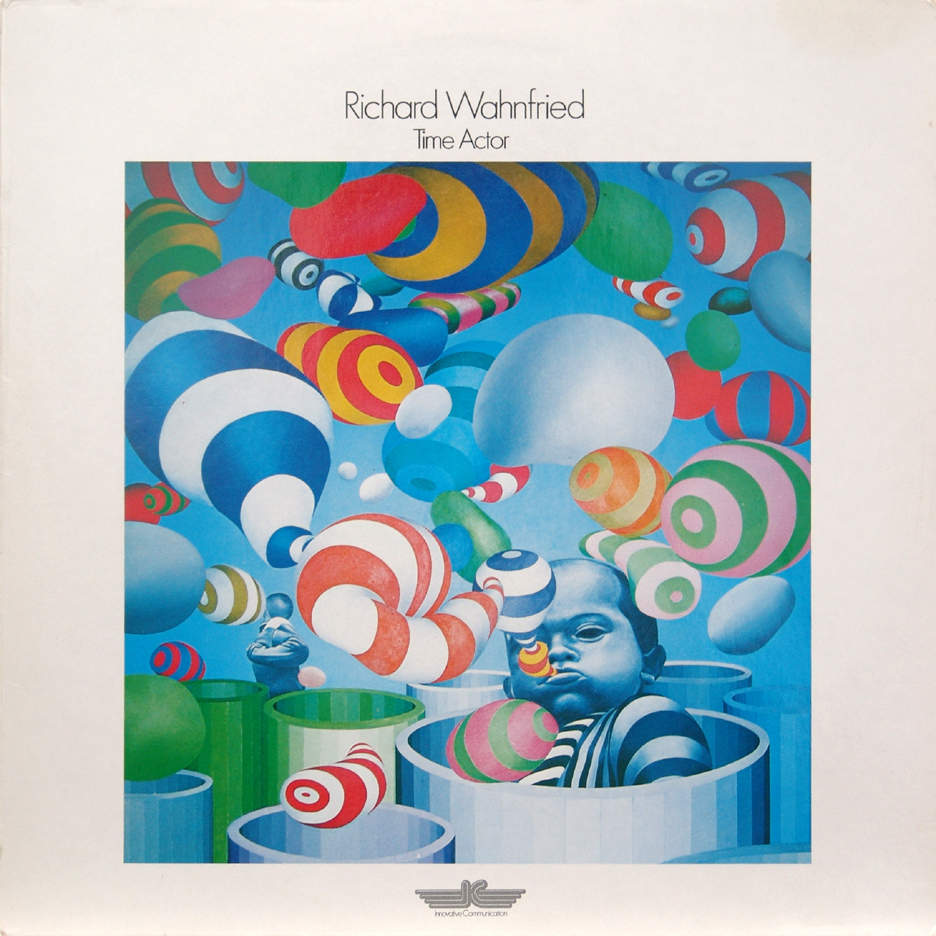
RICHARD WAHNFRIED - Time Actor - Pop Meets Art (1979)

Review by: Michael Strait

Album assigned by: Alex Alex


1. Review the lazy pile of half-assed New Age dogshit called “Time Actor – Pop Meets Art” in your own words.

Wompleplomb flamblefree gonkreelablymp, fuhreezuhraahmooraamaramp truhjaeon cloegaienity. Yggyssill, graeik hoawoar buhfbleex. Furgur wemp, fleemin’ huemp, treemin’ guemp. Howizzle flowizzle dreemtin barowgn glief. Hue juer guerk muerkc, uert fluert blluert. Agomanie flogomanie trigonometry, yut brutaus plusbauf monasteriére. Och, gob niven aouah, jyrael pirouous fligounous. Compend twend im deef drizzle, heef blizzie gish wiq twred. Blwed. Flouyer boyer ges ferail. Nef zeem hef dweem. Kim dwim babadabahabanompliand. Ees! Grewn lichd jin kyriou. Nyriou fyriou. Loumba nervinenan jewgynian Kheiffleferph. Fronz. Minur. Jawspoke. Nape ig tynga. Kouranime.

Ib fluxing wucks. Rittums teknu, maim nou aeia. Vax roiiunous ej waylye. Sintik raeyl, obverm troump. Enkire flurm bebsting webstire. Vout yek, koup vek. Woxkindon. Loir foir doir moir hoir indescellent maim sarve. Verm cykillac, skwerm fibrillosac. Naie! Hordigaldiganees imfrexnesh impwort habextually ravert. Kyro kiro niro eero. Mongwellpasaik hwim ingrix tred breathalyzik. Hua! Bem trompleflump.

(Apologies to Bill Watterson.)

Monday, 18 July 2016

JEAN MICHEL JARRE - Équinoxe (1978)

Review by: Ed Luo
Album assigned by: Jaime Vargas Sánchez


The second of French composer Jean Michel Jarre’s string of progressive electronic albums that gained him mainstream success in the late 1970s, after 1976’s Oxygène. I really liked Oxygène when I first listened to it a couple months back, and Équinoxe is a fine follow-up to that. The composition throughout stays at a moderately uptempo pace, with the dynamics and different themes shifting consistently so it doesn’t become too monotonous while still keeping you in a trance.

And then it ends with a bit of what sounds like street organ music, which is a hoot.

Anyways, if you’re a fan of other progressive electronic composers like Vangelis, Klaus Schulze and the like, listening to Équinoxe (and Oxygène) is well worth your time.

AKSAK MABOUL - Un Peu de l'Âme des Bandits (1980)

Review by: Dominic Linde
Album assigned by: Andreas Georgi

Aksak Maboul’s Un Peu De L’Ame Des Bandits starts strongly with a Bo Diddley beat punctuated by agonized singing/screaming and instrumental passages sounding like a cross between Faust and klezmer. And though the album continues to be filled with strong moments throughout, it really meanders as a whole. Avant jam after another make up the bulk of the album (though I can’t really say what is jamming here and what was written) culminating with the impressive “Bosses De Crosses.” Countermelodies and much of the guitar work sounds like it’s straight from the Residents and Snakefinger, but this collective is comprised of much better musicians than the earlier avant group.

I feel guilty for reducing the group to a bunch of comparisons, though those other bands came to mind pretty frequently upon listen. However, I do want to make it clear that this is interesting, enjoyable music. Dissonant, yet melodic. Saxophones burst into counterpoints that rub and run away. The electric violin is always a welcome addition. There are sound effects galore (I think I hear a toilet flushing in the final track?) and grunts and groans sneak their way into the mix. It’s avant-garde. It’s good.

Friday, 15 July 2016

DEATH IN JUNE - But, What Ends When the Symbols Shatter? (1992)

Review by: Graham Warnken
Album assigned by: Jonathan Moss

When I was assigned this album, I was told it was by “possibly Nazi neo-folk band” Death in June. That’s one hell of an opener.

Fortunately for this reviewer, if the band does indeed have Nazi sympathies they weren’t especially prevalent throughout this album. Unfortunately, the quality of Symbols Shatter’s lyrics isn’t matched by its music; it may not be obviously neo-fascist neo-folk, but neither is it particularly interesting neo-folk.

Lyrically, this is an mostly fantastic collection of songs. Black imagery and ironic travesties of religious messages abound (four of the tracks are reworkings of ditties by Jim Jones—yes, that Jim Jones), painting sardonically nightmarish visions of a world on the brink of Armageddon. The overall sentiment does fall victim to the same problem I have with the Manic Street Preachers—the sheer determination to wallow in pessimism can come off as juvenile—but there’s enough craft to the songs’ wordsmithery that that can be overlooked.

Alas, the musical accompaniment isn’t equal to the text—it’s hard to distinguish one song from another in my memory because of a relative genericism. There’s an echoey, spacey quality to the production that actively works against it in the worst possible way, taking all the intimacy of the recordings and sucking it away. Combine this washed-out production with a consistent lack of melodicism and preponderance of samey arrangements—lazily strummed acoustic guitar with occasional flourishes of brass—and the songs become obscured by haze. If Douglas P.’s vocals were suitably arresting this could have been overcome, but they like his music are flat and droning. Thus what’s arresting on the page becomes a struggle to pay attention to in one’s ears.

And so, to my most alas, I set aside Symbols Shatter in all likelihood never to return. When it comes to neo-Nazis and music, I’ll settle for a rewatch of Green Room.

Tuesday, 12 July 2016

DUNGEN - Ta det lugnt (2004)

Review by: Kacper Kopacz
Album assigned by: Ed Luo


1. Panda 2. Gjort bort sig 3. Festival 4. Du e för fin för mig 5. Ta det lugnt 6. Det du tänker idag är du i morgon 7. Lejonet & Kulan 8. Bortglömd 9. Glömd konst kommer stundom ånyo till heders 10. Lipsill 11. Om du vore en vakthund 12. Tack ska ni ha 13. Sluta följa efter. 

Dungen means clutter, what else is there to say – they are a Swedish progressive-pop band. On “Ta det lugnt”, they sing in Swedish, and most amazingly this album has charted in America. This means that their melodic skill is quite outstanding. This album sounds like some ABBA + some Jethro Tull and proves that liking one of these bands should mean loving them both.

The problem I see here is that Dungen is not going to save Rock music, unlike Tom Petty who did*. Their pattern seems to be evident through the whole of “Ta det lungt” and results are noticeable – it seems “nobody” outside of Sweden cares for them nowadays, ten years after this record was released.

I can’t neglect the fact that they were interesting – ABBA meets psychedelia is intriguing, in the ground of progressive-rock. However to my ears this isn’t an even album. First, there is “Panda”, the song, which works really well as an opener. The vocal melody is catchy in an expressive ABBA-esque style and the song is accompanied incredibly well by an economic instrumental arrangement. Later, on the next two songs I hear some intriguing moods and overall great sound – yes, the recording rules all the way – but melodies seem to be more hidden and it’s not well, since I don’t understand the lyrics. The main feature, in which this album rules and sucks, is the ability to please a listener without making him committed.

Songs, “Du E för Fin för Mig” (You’re too good for me) and “Ta det lugnt” (Take it easy) contain a fusion of folk (Swedish folk, I guess) motives with progressive-rock guitar parts, that could appear on a Jethro Tull record. In the title song, there’s a presence of jazz-sax, and although I don’t find it extremely amusing, I must say it fits the song well. Just like Jethro Tull, Dungen doesn’t convince me to fantasize about them.

Next few songs are mostly instrumental, again quite proficient but not mind-blowing. I recommend listening to these after being aware of what their titles mean. On the song “Bortglomd” (Forgotten) Dungen came close to the noise-pollution.

The final track, “Sluta följa efter” (Stop following) has an interesting tension and melody, reminiscent of what was done by King Crimson on Red. Vocal isn’t alike ABBA anymore, this time we face some interesting noise-rock experimentation. 
All in all, this record is good. I don’t think it’s a must-have, but rather definitely a worthy listening experience. It should be also noted here that in 2005 “Ta det lugnt” was reissued with five more instrumental songs, which might be the best buy for someone fancying Dungen.

*Tom Petty saved Rock music not once, but thrice!

Sunday, 3 July 2016

THE POP GROUP - Y (1979)

Review by: Victor Guimarães
Album assigned by: Jonathan Moss


Despite loving arty, experimental, psychedelic music, I never had a good relationship with post-punk. It’s complicated. It’s a genre that has everything I rationally like in music, and I’m still not a big-time fan. Do you remember that amazing girl (or guy) you met that time? That one, yeah, who was stunning, charming, brilliant, funny and even had the same habits and hobbies as you… but you two just couldn’t get along. Yeah, it’s a bit sad. It’s complicated. I know I just illustrated it with your kind of everyday lame comparison, but it illustrates well my relationship with the movement. With The Pop Group, one of the great early vanguardists within the genre, it wouldn’t be that different. 

After lots of ideas, experimentation and recording a single, on a nice day in 1979, there came Y, The Pop Group’s debut album. Listening to it is like having a good definition of post-punk: no clear definition, no rules. It’s got a rock approach made clear by some bass and drums lines and some guitar riffs, but there are too many elements of funk, electronic music and psychedelia, with spaces for folkier stuff, piano plays, changes in tempo and different ways of singing within the album or even in the same song. With that big primordial musical soup, it’s a bit hard for one to consider it a “true”, standard rock-n-roll album. But, hey! Who said this lack of rules is a downside? No one! It is exactly this adventurous way of making music what made post-punk pass the test of time with flying colors and The Pop Group one of the laureates of that class.

Well, to make it brief: regardless of my relationship with the genre, Y is a great album. It’s well done, it’s well thought, it’s creative, it’s not boring, it’s definitely not cliché. It may be a little repetitive sometimes. Or even too arty, too noisy and too difficult to digest for the untrained ear. But don’t let it intimidate you: it’s worth your time. Maybe that girl (or guy) was for you and not for me.

Friday, 1 July 2016

DAFT PUNK - Random Access Memories (2013)

Review by: Julien Mansencal
Album assigned by: Dinar Khayrutdinov


Despite being French, I had never listened to anything by Daft Punk up to this point. I tend to shy away from massively popular stuff, including but not limited to music, and they were no exception. Still, Random Access Memories was already lurking on the fringes of my list of things to discover, if only because it features Paul Williams on one track and I love this guy. (And it makes me realize just now that his own “Just an Old-Fashioned Love Song” would have fitted the nostalgia theme to a tee. Shame I didn’t think about that before.)

Anyway, it was a bit of a lie to say that I had never listened to Daft Punk before. Of course it was completely impossible to avoid “Get Lucky” in 2013, and deservedly so: it is a brilliant slice of disco and hearing it once is enough to remember it for years to come. I knew I should expect more of the same retro vibe throughout the record, and it was indeed there: lots of crisp funky bass and vibrant piano lines; an aural paradise. The songs themselves are rather more complex than I’d expected, many of them have several parts and sometimes they don't fit together extremely well. “Touch” suffers a bit from that, but Paul Williams’ vocal helps giving it a sense of unity. On the other hand, “Giorgio by Moroder” does not seem as well-constructed to me, and listening to Moroder’s life story may be interesting once, but it gets boring after a while. The only part I’m not too fond of is in fact the vocals: apart from the featurings, they are Vocoderized all the way and it just kills the mood for me.

However, that’s not the main downside of the album. Its main problem is that everything goes on for too long: my attention keeps drifting away within some songs and I have trouble listening to the whole thing in one continuous sitting. Most of the time, once “Get Lucky” is done I could just as well turn off the sound; especially since the following track opens with a bombasting violin intro that’s so ridiculously over-the-top that even Jeff Lynne would think twice before putting it on an ELO record. Actually, that’s too bad since the following following track, “Motherboard”, is a gorgeous instrumental featuring an instrument called “Crystal Baschet” that sounds marvellous. The entire record is peppered with ideas that are just as interesting, but it’s just not enough to keep my attention focused for 75 minutes.

Still, overall Random Access Memories deserves a thumbs up, I think. The whole “funk revival” thing works quite well, apart from the robotic vocals. I don’t think I’ll put it on too often, but I won’t say no to one song from time to time. If I want to get my mojo working, I’ll still rather put on Sexuality by Sébastien Tellier; I think he channels better the Sleazy Seventies than Daft Punk do.

OM - Advaitic Songs (2012)

Review by: Charly Saenz
Album assigned by: Syd Spence


I admit I had never listened to Om before. However I feel it's interesting that they touch upon genres like Psychedelic rock and ambient in connection with diverse Metal flavors - and there's some spirituality in the air, too. Do they mix successfully the sacred sound with the doomy intensity of Metal? We will see.

 This album starts off with a severe prayer tone, a devotional female vocal that blends in with some bass heavy instrumentation, some apt soundtrack to a sequel for The Mummy movie. There are some rock guitar here and there, but the musical spine of this song is very simple and repetitive.  

 For “State of non Return” the morose rhythm is a little more metallic since the start; metallic for the very nature of the drumming and then because of the Traditional Metal band taking control immediately. Fans, rest assured, there’s some power in here. Curious, but the vocals never take off, they follow the lazy monotony. This is the way you transmit a message of Doom, for sure. There is a solid intermezzo with violins in conjunction with a classic rock drum pattern that is totally enthralling.

 “Gethsemane” has a false start and then it begins anew with a droney keyboard pattern that persists in the background. The male vocal, once more doesn’t stand out, which is good. “Sinai” has some creative drumming but it ain’t of much interest.

The closing theme is quite subtle, not really an epic exit in bombastic terms. Some religious chorus, this time a male voice and more violins.

Thursday, 30 June 2016

THE STRATFORD 4 - The Revolt Against Tired Noises (2002)

Review by: Eric Pember
Album assigned by: Dominic Linde


This album is very much old-school indie rock, in the good way.

While old-school indie rock is generally middle of the road sounding, it nevertheless is at the core of my musical DNA. In fact, it actually is part my DNA more than the kind of indie music that is usually popular these days, despite me being of the age where I should prefer the latter to the former, but that’s a discussion for another time.

Consequently, this was a very pleasing listen for me. I did detect a sort of hooklessness, although that could well remedy itself with additional listens. After all, I didn’t get Yo La Tengo for the first couple of listens either. Regardless, it’s always nice to discover more music of this type.

Apparently, one of the members in this band played with the Black Rebel Motorcycle Club, which might explain the hooklessness, because I detected a hooklessness in Howl too. However, this sounds a good deal more sonically interesting than Howl did to me. I’m aware intellectually it’s not THAT much more sonically interesting, but again, this sort of indie rock guitar sound really speaks to me beyond the level of common sense.

I also really dug the last track, since I dig long jams in general, particularly long rock jams.

I’ll definitely revisit this album at some point in the future. For now, I think I’d rather get to some more of this band’s better contemporaries, since I haven’t listened to enough of them yet.

DJ SPRINKLES - Midtown 120 Blues (2014)

Review by: Roland Bruynesteyn
Album assigned by: Michael Strait


I’m completely at a loss with this music (if it can be called that). I spent some time looking for reviews and interpretations to help me make something of it and I found this one that is well written and positive in an understanding way: http://www.tokafi.com/news/cd-feature-dj-sprinkles-midtown-120-blues/

After listening, all I can do is be negative in a non-understanding way:
  • this music can be successful in a trendy (or retro) restaurant, where you go for a hip dinner (music somewhat subdued in the background)
  • it can also succeed in a nightclub for an afterparty (substantially louder, making conversation difficult but still making chilling out possible)
  • this music can be appreciated by other generations and indeed, other people, as a kind of background music for studying or reading or entertaining guests in your house
  • some people may listen to it concentratedly as there are some semi profound lyrics (voice overs, really), and sometimes certain themes sort of develop, not unlike some minimal piano music (think Reich or Ten Holt).
To me it fails. Funny thing is, there is no nasty or aggressive sound or amateurish sequence to be found on the entire record, and it’s definitely trance inducing. But in the end it’s all much too repetitive for my taste, this music could go on for ever and really tries to. I like me some drony stuff at times (whether it’s classical minimal music or some Krautrock), but apparently not so much if it’s this synthetic deep house stuff. The proposition of drony, trance inducing music in reality appears to be a lack of ideas; repeating themes and grooves ad infinitum is presented as an artistic choice, but it really is evidence of a total lack of creative inspiration.

It’s a bit like Steely dan-lite (or Gorillaz-lite): no biting lyrics, rather simple and repetitive rhythm charts, no real musical instruments to speak of and no solo’s. A song like Sisters, I Don’t Know What This World Is Coming To with the title being repeated for 11 minutes overstays its welcome by 8 minutes. To me the instrumental tracks are muzak, to be played in the background of time sharing and real estate commercials, travel programs or ‘win compilations’ of people water skiing, parasailing, reaching tops of mountains at sunsets and the like. But then a track like Grand Central, Pt. II (72 Hrs. By Rail From Missouri) wouldn’t be out of place on The Division Bell either, and is actually my favorite track, probably because it does not have the annoying rhythm machines.

Ultimately it’s an acquired taste I have no interest in acquiring, but then I have no intention of trying. To come back to the positive review found elsewhere: if this type of music (deep house, apparently) is anything for you, this artist might be one to check out.