WELCOME TO OUR NEW SITE: tomymostalas.wordpress.com

You'll be automatically taken there in a second.. Change your bookmarks, thanks!

Showing posts with label Round 8. Show all posts

Friday, 6 May 2016

SUFJAN STEVENS - The Age of Adz (2010)

Review by: Mark Maria Ahsmann
Album assigned by: Francelino Prazeres de Azevedo Filho


Sufjan Stevens gives you constipation of the wrong kind. The right kind is constipation caused by for instance Phil Collins; when you hear the music and you instantly know it’s bad shit. Your body cramps up and it takes you a few days to get it out of your system if you just set your mind to it.

The Sufjan Stevens constipation is different. It consists of a lengthy inability to figure out if you like his music or not and if is his music is good or not. It might be best to avoid this kind of constipation altogether but you agreed to write a review of “The Age of Adz” so you had to deal with it.

So you listened to the album. You heard an album by an acclaimed multi-instrumentalist singer-songwriter who for a change used mainly electronic instrumentation to accompany vaguely confessional reflections on love, sex, life and death. You heard some things you liked, more things you disliked and many things that made no sense to you

You listened not once or twice but fifteen to maybe twenty times over a couple of weeks. And it was a strange experience because the album appeared to have the properties of some old fashioned psychology test, like a Rorschach test but not quite similar; the album seemed to reflect your mood in such a manner that on alternate listens you would either like it or severely hate it. You did not hear anything new or different in it and you could definitely pinpoint some things you loved or hated in it but you could never predict what your emotional response to it would be. Let alone analyze it or summarize in one sentence what informed your judgment. Add to that the fact that even after several hearings you could not reproduce a single detail of the album in your head; even “The Division Bell” performed better on that score.

You developed a mild obsession with “The Age of Adz”. You thought about it and the review you had to write all the time and in your mind you had already written a dozen different versions of the definitive review you are about to write. You knew what you liked about it but you were anxious that you would never figure out what you disliked about it so vehemently. 

Nor could you really decide if this would be a “Recommended-Album-Despite-All-It’s-Obvious-Flaws” or “Seriously-Flawed-Album-With-Touches-Of-Brilliance” type of review.

And you put off writing until the very last moment. And you fear that your Sufjan Stevens obsession will become a lifetime occupation.

Awful constipation.

Then finally you set out to write the review. You start off by mentioning the things you like about it and the thing you like the most about it is the beauty that can be found in the details of the arrangements. As one would expect of Sufjan Stevens the album is meticulously crafted and multi-layered and he uses a many sometimes unusual but often pleasant instruments to adorn his pieces. And when that approach works it is really quite good. Instances of this are strewn across the album; for example the horn coda on “Get Real Get Right” is really beautiful. Also the big-fartin’ electronic drum and bass foundation and the glitchy, slippery synthesizer sounds are at the very least fun. And you should mention the celestial female backing singers on many of the tracks but especially on “I Walked”; they are really delicious. As the sum of all it’s different parts “The Age Of Adz” is really a unique album. But that doesn’t necessarily make it a good album. In fact you have a number of problems with it that one by one wouldn’t be so disastrous but when you add them all up you are stuck with an album that is only partially palatable, in small portions.

The biggest problem is that even for a Sufjan Stevens album there’s a lot of Sufjan Stevens on it. Too much, in fact. One has to, for example, like Sufjan Stevens’ voice to fully appreciate this album because on this album at least there's no escaping it.

You dislike his voice. He sounds so sincere and introspective that after listening to it for a while you think Lemmy and Antony are the same person. It's so intrusive and all over the place that it reminds you of Freddie Mercury. And you don't like Freddie Mercury, to put it mildly. Furthermore, Stevens sounds so sterile, sexless and dorky that it's like he lived in Mike Love's throat for a long while. And he has a tendency to crack into falsetto all the time.

You dislike the density of the sound. It's so stuffed to the brim with little cosy, well crafted, pretty ornaments on top of ornaments on top of bombastic or------------------------------------------------------------------------------------------------------------------------------------------------------------------------------------------------------------------------------------------------------------------------------------------

THE MOTHERFUCKER'S ELUDING ME

Look, it took me too long to write this review and that's because so far I don't understand what I like about it. It's quite obvious what I don't like about it. The voice annoys me. The album is overcooked like somebody produced a cherry pie with not just cherries but also apples, kiwi's, strawberries, pineapples, pears, peaches and etcetera and what have you.

I think “Less Is More” is a valid principle but I can appreciate a certain lushness, for instance on Pet Sounds, if the embellishments at least serve decent songs. This album, however, lacks memorable hooks and the one song that sticks in my memory “I Walked” is uncomfortably similar to Dido's “Thank You”, of all things. Many pieces consist of repetitive chord sequences with varying instrumentation, chanted phrases and with Stevens' voice to the fore that can be very off putting. Take for instance the title track; it is just awful.

Stevens’ lyrics do nothing for me and I am non-plussed by the combination of supposedly intimate lyrics and very bombastic arrangements. On “The Age of Adz” Sufjan Stevens comes across as too eager to please and impress. He reminds me of a guy I once worked with who would, at the mere mention of the word coffee, jump up and get you a cup. Awful, servile creep. Seems like Stevens strives for beauty but never achieves more than prettiness. And thereby he leaves nothing to the imagination of the listener.

And what’s sorely missing is anything that really kicks ass or lays down a groove. Yes he applies a disco rhythm in a section the overlong (25 minutes), seemingly pointless and tedious album closing suite “Impossible Soul” but it does not take me to Funky Town.

So all in all there are so many things to dislike about this album for me that I would obviously dismiss it completely and put it in the trash bin of my mind. If it weren’t for I don’t know what.

And for me that’s the most intriguing thing about “The Age of Adz”; that in a certain light and at certain times I quite like it. Like a guilty pleasure, maybe. A very annoying guilty pleasure though. It is something about the atmosphere, and yes , of course some bits and pieces are quite beautiful. But in the end I just can’t figure out what’s the up side to “The Age of Adz”.

And frankly, at the moment I just don’t feel like delving any further into it. I’m tired (of it).

So, there it is: a failed review attempt.

When I was a kid my family used to own a jigsaw puzzle which was insolvable. The last piece would never fit. My mother promised five guilders to the kid that could finish it. Of course no one ever earned that money. Until I took a hammer and forced the piece into the puzzle and my mother, exasperated and because I was the youngest of the eight, paid the sum.

If I were to think any more of Sufjan Stevens I would like some money first.

Tuesday, 26 April 2016

UNIVERS ZERO - Heatwave (1986)

Review by:Tom Hadrian Kovalevsky
Album assigned by: Eric Pember


Save for the topiary, everything shifts and changes at random within my line of vision. Outside, the heat rises from the ground and makes everything seem almost liquid, as though I am dwelling underwater in a glowing palace of glass and gold. The world stretches and distorts and makes itself into new shapes without my influence and I am caught up in the rhythm of the funeral march once more, stretching eternally, seemingly without end. Ah, to say that it were painless would be to lie and pretend that nothing had happened; to smile and pretend that it was over, the chairs packed away, the curtains drawn, but from here, I can see everything as it becomes due to me. The music draws to an unnatural lilting halt, and somewhere a woman laughs and a glass is dropped, for these are indeed dangerous times.

Saturday, 23 April 2016

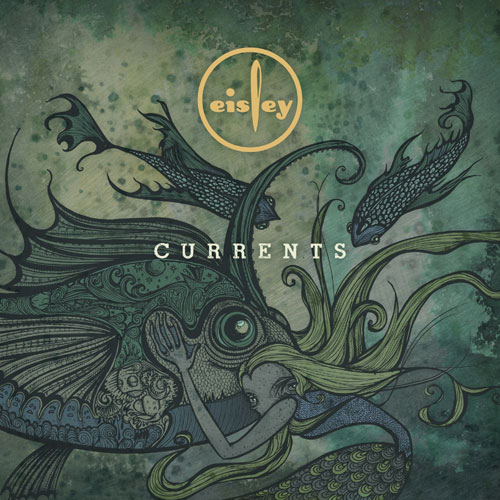
EISLEY - Currents (2013)

Review by: Alejandro Muñoz G
Album assigned by: Nina A.


Eisley is a Texan band formed by four siblings and their cousin. They seem to put a lot of effort upon each song’s textures, and that’s one of the strengths of the album. The overall sound strongly reminds me of Florence + The Machine, especially in songs like “Real World”.

There are some really delightful moments in the album. Take for example the superb opening track built upon different layers of acoustic and electric guitar lines; the melody of the “come lay under my wing” line in “Drink The Water”, mimicked by a piano all along the song; or the gorgeous piano arpeggios in “Shelter”.

I’m usually a big supporter of “albums” as integral works of art which should be listened from beginning to end to understand each song in its context. However, in this case the fact that most of the tracks share the same mood and tempo means that, when listened thoroughly, the album may appear quite unexciting at some point. This problem is accentuated by the limitations of the singing: while the lead singer (or are there more than one lead?) is a perfectly capable one, it’s not a particularly versatile or dynamic voice. For these reasons, I believe these songs are much better appreciated when listened apart from the album, isolated or alternated with other artists contrasting songs.

Overall, Currents is a beautifully crafted indie pop-folk-rock album; a nice listening experience, and I would surely return to some of its songs.

Friday, 22 April 2016

PAU RIBA - Dioptria (1970)

Review by: Andreas Georgi
Album assigned by: Jaime Vargas Sánchez


This one is a bit difficult to review. I honestly had never heard of this album, Pau Riba, or anything in its genre. I have mixed opinions of it, but it’s not without its charms and interesting points. The first thing that stands out obviously is that it’s sung entirely in Catalan (or is it Mallorqui?). I do speak Spanish, and that helps me understand at least a bit of the song titles and the lyrics, though honestly not enough for me to get a true sense of their meaning. The language barrier is not a problem - I listen to stuff sung in various African and Asian languages which I don’t understand at all! I like the sound of Catalan being sung, which is a nice distinguishing feature. What I am lacking completely, of course, is the lyrical, cultural, and musical context for this music. It was released in 1970 and sounds very much like a product of its time (good and bad). On some of the tracks I get the impression that the vocals are delivered in an ironic, tongue-in-cheek out of tune fashion, but I don’t know what that’s about.

The music itself is basically folky psychedelic rock. I said it was a product of its time, but quite honestly I think even by 1970 standards the rock stuff sounds somewhat dated and clichéd sounding. The slower stuff is much better and more distinctive, and seems to draw on sources beyond just Anglophone rock and folk, which I would be interested to explore. “Noia de Porcelana” is one the songs that comes to mind as a highlight, though it’s hard to write in more detail about individual tracks. Overall it was an interesting listen. There’s a big world of music beyond your comfort zone – go explore it.

This review is also posted on Amazon here.

NELLIE MCKAY - Get Away From Me (2004)

Review by: Rodrigo Lopes
Album assigned by: Dominic Linde


Nellie was only 21 years old in the release of her debut album, and it shows, but not in a bad way. She purposely go from one genre to another tapping on jazz, pop and hip hop with a joyful yet sarcastic attitude that carries with it how young she is. The two-part album is vibrant and quick witted and soars through a myriad of themes that goes from an obsession with herself in ‘clonie’ - where she proudly elects her clone as the best companion she could possibly find – to the dull image she portrays of a traditional marriage in ‘I wanna get married’. She has a good clear voice, and overall the arrangements of the songs are quite nice; nothing fancy, but tasteful, very ‘singer-songwritery’ if you will.

But the album is not without flaws. While I consider the CD to have very few filler songs, the fooling around with all those different styles and the mockery and cynicism in almost every lyric sometimes felt just a little bit too much, like she was trying too hard to make those transitions seem effortless and also to show how different of an artist she was.

Despite that, I found the album to be on the most part coherent, even though the themes and genres were so diverse. I think that her youth both helped and got in her way in this record. This has ‘debut album’ written all over it, it almost sounds experimental, and sometimes her inexperience ends up showing, but for me, a some part of the album’s charm was exactly there. Her goofiness and lighthearted approach makes this a very fun album to listen to. This also made possible for her to tackle deeper and more serious subjects while maintaining the carefree aura of the album.

This album is definitely not for everyone but I believe that it would resonate with quite a few people. 

DREAM THEATER - Metropolis Pt. 2: Scenes from a Memory (1999)

Review by: Graham Warnken
Album assigned by: Victor Guimarães


I never really feel qualified to analyze prog music, because I’m not really knowledgeable in musical theory. As a pianist of some eight or nine years this really shouldn’t be the case, but time signatures and key changes and whatnot aren’t something I’ve ever really been able to internalize. All this basically to say that I can’t really speak to the technical intricacy of anything on this album.

That said, what I go to prog albums for is an atmospheric listening experience. I listen to The Dark Side of the Moon or Pale Communion or In the Court of the Crimson King when I want to get into a certain mood, when I want to passively let sound wash over me rather than actively engage with the music. And in this respect, I quite enjoyed Scenes from a Memory.

It was always gonna be love at first sight, because the cover art is done by Dave McKean, the man who created the covers for every issue of Neil Gaiman’s Sandman comics. The Sandman connection is indicative of the thematic material that is to follow: dreams, altered consciousness, the thin line between reality and illusion, etc. etc. Of course, as with pretty much every rock opera, the story is melodramatic and preposterous when examined under scrutiny, but as that’s a given it’s easy to move past. The lyrics are also nothing particularly special, but again, that’s not why I’m here by and large.

The music, then: I listened to the album as one long suite on YouTube with no divisions between songs, so I can’t really isolate moments on a name-by-name basis. The whole, however, was remarkably pleasing. The adjective “dreamlike” is too abstract to use, and bears connotations of hazy, misty ambience that isn’t really appropriate, but the music definitely does communicate the multi-layered perceptual maze that the album is all about. Twisting, intertwining instrumentals, reminiscent of Opeth’s more recent stuff but not as heavy, feel like water trickling through one’s ears or a helix spiraling upward in the brain. It’s an album to get lost in, to be experienced in total rather than in drips and drabs.

I thoroughly enjoyed this listening experience, and look forward to returning to Scenes from a Memory and Dream Theater’s other offerings. Here’s to a proficient, enveloping musical experience—even if the story is still kinda silly.

Thursday, 21 April 2016

АКВАРИУМ (AQUARIUM) - Сестра Хаос (Sister Chaos) (2002)

Review by: Jonathan Hopkins
Album assigned by: Dinar Khayrutdinov


Before I get to the review, let me tell you that finding any information on this album or this band is borderline impossible. Aquarium has exactly one album entry on RYM, and isn't this one. Sister Chaos wasn’t on Spotify in my country, nor was it anywhere easily available online. I was very lucky that exactly one person had it up on Soulseek, and that the mp3s were good quality.

Broadly speaking, Sister Chaos could probably be described as art-pop, but it's fairly difficult to nail down. I have no knowledge of Aquarium outside of this, but here, at least, their greatest asset is their unpredictability. None of the songs really sound like each other, and the surprising moments scattered throughout the songs tend to be the best parts of the album, such as the suggestive slide riff that pops up occasionally in the funky “500” (I used to play bass for the Funky 500) or the lovely piano break that appears out of nowhere in “Fording.”

Aquarium have quite a lot of influences on display, and strangely, its diversity might be a weakness. Most of these songs are good, but none of them have much of an identity of their own. They have a few defining quirks, but in many ways, “Brother Nicotine” is a Beck song, “Fate’s Foot” is something off Harmonium’s first album, “500” largely feels like The Stone Roses (albeit with very different instrumentation), etc. That’s not to say that it’s bad. The pastiches are good. I just have a difficult time grasping exactly who Aquarium are as a band, other than that they like their trip-hop rhythms and psychedelic tinges here and there.

The album seems very even to me, but if I had to pick a couple of highlights, I’d go with the slightly jazzy, slide driven “Psalm 151,” “Fording,” which combines its groovy verses with a, unexpected catchy upbeat pop chorus, and the bright piano pop of “Cardiogram.” The only thing that doesn't really hold up for me is “Rastamen from Hicksville,” which is an amazing title wasted on a rather bland stab at reggae. While I basically enjoy Sister Chaos, nothing stands out to me much, and nothing ever strikes me as great or brilliant. It’s a pretty good album, certainly invested with a lot of craft and talent, and worth a few listens, but I’ll probably never feel like pulling it out again.

Wednesday, 20 April 2016

TRIUMVIRAT - Illusions on a Double Dimple (1973)

Review by: Alex Alex
Album assigned by: B.B. Fultz


In Russia, we used to have a minor hit, the lyrics went “There are three stars in the sky those stars are you and me”. Great lyrics. If you do not understand why those lyrics are great you might eventually will.

Bearing the above lyrics in mind is useful when encountering a group consisting of three members and called “Triumvirat”.

Electronic keyboards to a piano is what a hentai cartoon is to a Tinto Brass drama. In that sense Tangerine Dream are the masters of dramatic hentai.

The Sunflower mask and the flute are unique artifacts.

Lyrics in English, forged by German bands, are among the best lyrics in English ever.

The album states that in Germany there were schoolgirls, too. Schoolgirls are by themselves so eternal that no matter how many tons of synthesizers you would bring on stage,  they would effectively prevent any paradigm shift.

An unsuccessful carrier was, I gather from the album, a great fear for a young German. In the end of the song they ask “who’s going to work for you for the rest of your life”.

Fortunately, by now Angela Merkel has successfully resolved that problem.

HELPER - Watch the Stove (2016)

Review by: Syd Spence
Album assigned by: Michael Strait


It’s a five song novelty trap mixtape. Does that sound good to you? Then get it, but to my ears it sounds pointless. The raps all have that generic choppy trap flow and the production is as generic as the flow. The joke is a half smile at best and not that original in the larger hip hop scene (the entirety of the Fat Boys career immediately comes to mind). Though the majority of this record stays in generic trap, one track in particular goes against the grain and that’s “Food for Your Soul” which is straight Nujabes worship i.e. jazzy background hip hop. The flow is pretty great on that track, though completely like every MC Nujabes had ever used. 

In summation, if you want food themed hip hop just get mm… Food by MF Doom. If you want Novelty food hip hop get a Fat Boys greatest hits. If you want trap get a Future record. If you want jazzy background hip hop get a Nujabes record. If you can’t wait till Weird Al Yankovic tackles trap, run, don’t walk to Helper’s Watch the Stove. 

THE SAINTS - Eternally Yours (1978)

Review by: Michael Strait
Album assigned by: Mark Maria Ahsmann


Okay, so, on the three major components to this album:

  • The guy’s VOICE. He’s probably the most Australian vocalist I’ve ever heard in my life, and he’s such a quintessential rock singer too. Utterly snotty, disaffected, rough and raw, contemptuous – and yet also capable of projecting surprising amounts of personal emotion when necessary, not to mention carrying a tune if he really exerts himself. He’s a sarcastic rock n roll demon with some personal demons of his own; in other words, he’s like Mick Jagger if Mick Jagger was genuine. He’s my favourite thing about this album, and the chief reason I’m planning on seeking out some more Saints in future.
  • The guitars. They’re what you might expect from a punk rock album recorded in 1978 – scuzzy buzzsaws aggressively sizzling about at high speeds, playing mostly chords and riffs. There’s a few cleanly-picked segments (well, clean here being contextual; they still sound like they’re struggling to swim their way out of a cloud of fuzz). The riffs, thankfully, are great, inventive and catchy stuff, and the few solos (still more than the average punk rock album of the time, mind) are a little amateurish but usually quite blistering and cool.
  • The rhythm section. The drummer’s pretty good, all told, but unspectacular – he rarely draws attention to himself and instead just focuses on keeping time in a way that is just primal enough to not be boring and just professional enough to not sound lazy. The bassist is the real talent here, I think – his basslines are all super cool, noticeable, swaggericious and precise, and his tone ain’t bad at all.

Now, as for individual highlights: The first track, “Know Your Product”, is one of two tracks to contain noticeable horn arrangements. They’re used awesomely, and create probably the most memorable riff on the album. It’s fascinating just how well these pristine, majestic instruments blend with the mudslinging guitar and acidic vocals, but they really do fit perfectly and it makes me wonder why more punk rock bands didn’t think to do something like this.

There’s also three acoustic tracks on the album. I wouldn’t call any of them ballads, and in fact only the middle one – “A Minor Aversion” – is really noticeably slower than its surrounding electric rockers. All of them are awesomely evocative, anyway. They sound a bit too irreverent, irreligious and acerbic to be redolent of the American west, but they certainly sound like an old wooden dive bar in a desert somewhere, which I guess is fitting considering that Australia’s probably the only other place in the Anglophone world you can really find those sortsa joints. The vocalist in these songs really fits in perfectly – I can’t picture him as anything but a leather-covered, gun-toting motorcyclist fleeing some distant personal failing, kinda like Mad Max without the civilisational collapse. The harmonica used on one of the electric rockers – “Run Down” – adds pleasingly to this impression.

The track “This Perfect Day” is two and a half minutes of fuckin’ punk perfection, and I love it. Aside from this wonderfully, effortlessly cool clean guitar bridge which – again – sounds like the soundtrack to a cowboy walking through a tiny Australian outback town, the chorus sounds like it’s constantly falling over itself again and again in preoccupation with the vocalist’s self-loathing. This is how self-loathing in rock music really SHOULD sound, by the way – disguised, presented as a careless spit in the face of the world that he’s trying to hate in order to distract himself from himself. This song is part of a string of tracks, starting at track 7 and lasting the rest of the album, that doesn’t breach 3 minutes long, and that’s just what I need from my scuzz-rock. Lawd knows this kind of music can get tiresome if it sticks about for too long – I mean, a leathered-up biker cowboy might be fascinating to have in your town for a bit, but do ya really want him greasing up your spare bed for a week?

Some other things of note include: the riff on the final song, “International Robots”, which is such an exact and precise rhythmic match for the riff on Green Day’s “American Idiot” that it makes me suspicious of the latter group; the guitarwork in the chorus of “No, Your Product”, which sounds like it’s trying to reach the sky before flaming out and falling down into the sea like an early SpaceX rocket; the chorus on “Private Affair”, which is just gloriously catchy; and, finally, just the general joyousness I feel from this record. That might seem contradictory, considering how much I’ve just been talking about the guy’s self-loathing, but this music really does sound as if it is enjoying its rebellion against the world on at least a primal level. After all, even if you’re running from winged demons on a motorcycle, there’s gotta be some pleasure in the visceral thrill of going so fast, and that’s what I get out of this album. It’s characterful, soulful, genuine, evocative, powerful, loud and, best of all, damn good fun – listen to it at once.

GÉNESIS - Génesis (1974)

Review by: Dinar Khayrutdinov
Album assigned by: Alejandro Muñoz G


Génesis, whose name should not be confused with the classic British prog-rock group's, is a 1970s Colombian band who obviously took part of the inspiration from folksy late 60s psychedelia (something in the vein of Traffic or Spooky Tooth) and the other part from Colombian ethnic music (which itself is most probably a cross between Latin American and Native American tunes and rhythms). This 1974 self-titled offering is the band’s sophomore album and it is… an okay-to-good record. Yes, for some reason, this is pretty much the only adequate epithet I can come up with. It’s pleasant, it has nice melodies and professional musicianship, yet it is hardly anything groundbreaking or even in any way unique, apart from the fact that the album is incredibly short (only 24 minutes!) but they managed to cram 8 songs and 1 bluesy instrumental into this short running time. To be perfectly frank, after the first listen I was going to dismiss the album as generic and derivative, however these tunes grew on me on subsequent listens, and I really enjoyed the authentic American atmosphere. The album’s flow is smooth, with more folk-rock in the first half and more atmospheric “Native American” tracks (that flute-driven sound is pretty cool!) in the second half of the album. The only element that is deserving to be deemed ‘bad’ here is definitely the production – unfortunately, the album’s sound is muddy and somewhat muffled to the point that you can hardly hear some of the instruments sometimes. In some weird way this reminded me of early efforts by my favourite Russian band Aquarium who had similar production problems early on in their career, so my guess is that, like Aquarium, Génesis probably just did not have good equipment to record on. The parallels, however, do not end there – Génesis’s brand of folk-rock is at times eerily similar to what the Soviet rockers tried to do, albeit a decade later. One track that sounded especially familiar to my Russian ear was Sueñas, Quieres, Dices – listen to Aquarium’s early stuff and you’ll get what I mean.

Overall – I’m not sure I will ever return to this band, but the experience was enjoyable and rewarding.

TEAGUE CHRYSTIE - Adventures in Faking This (2014)

Review by: Nina A.
Album assigned by: Graham Warnken


The Internet doesn’t seem to know a whole lot about Teague Chrystie, apart from the fact that he is a visual effects artist and that he has at some point written a musical of the name “Sad Max” with another guy, named Jim Frommeyer. But this scant information does indeed put the 5-track record “Adventures in Faking This” into perspective. It suddenly does make sense that the guy who’s written it has had experience with musicals because all these songs are textbook-crafted. They showcase expert knowledge of how to do your song in this or that style, to suggest this or that. (And probably not a ton of originality, if I have to be honest).

The opening track, with the visually concrete title of “Limp-Dick Christmas Lights”, already suggests that if we’re not dealing with full on comedy here, it is at least spoofing or self-aware irony. The singing on it I’ll assign to the self-aware irony column, aping very successfully the Elvis Costello school of setting your lyrics to the music, but the musical backdrop is probably more suited to the spoofing column: there are even the obligatory announcing-a-Christmas-number jingly bells in the intro. The bombastic horns and the boogie-woogie rhythm associated dashing sleighs (or zombified shopgoers) really drive the point home here. Unfortunately, while I thought this track is super fresh and funny on first listen, by the fourth I kinda hated it the way I hate every Christmas boogie-woogie, jingle bell rock or bluesy number ever.

Next up is a delicate waltz time ballad of the name “Blank Walls and Crowded Shelves”. Now the waltz signature is used widely for such purposes as depicting nostalgia or comfort or feelings you’ve sort of made peace with or... yeah... a vignette of ordinary people's life drama, which is the use it is put to here. The string accents emphasise the whole affair in just the right way and the corny lyrics are something I find no pleasure in listening to. But hey, I know for a fact that some people can have a cathartic experience on something like this.

I feel that “I Feel More Like a Leonard”, the third track here, is supposed to be this cultural reference or a sublime in-joke but I don’t know what it is about really. Again, the energy, passion and measured shredding are just as prescribed (textbook derivatives, remember) and the 6/8 meter is a nice touch that enables this song with a driving rhythm.

The penultimate “Writing a Letter” is a gentle piano ballad, equipped with a heartfelt vocal delivery and lyrical details such as “perfectly mature adult” and “can’t stand myself”. This sort of thing would work great in a musical actually — where you have to shed light on the internal character drama and his motivations. Outside this context though, again, it is something I have absolutely no interest in learning about.

The raunchiest track on here serves as a closer to this 5-part magnum opus and this time Mr. Chrystie puts on his best Gogol Bordello impression. “The Insidious Communist Propaganda of Steve” opens on a rhythm as heavy as a drunk dancing bear from Belarus and sports the correct amount of chaotic enthusiasm to make it work, although the chorus-like “la-da-da-da”s are not nearly as drunken and tobacco-hampered as those that can be found on a Gogol Bordello record. The lyrics are probably funny too, if you can take communism puns and jokes by people who have a super vague idea of communism, which I usually cannot. In fact, why don’t we ban the word “propaganda” altogether — it certainly would make most high-school assignments more pleasant to read, as students would no longer feel the urge to use it left and right to prove they have understood the topic. It would also be relieved of its duty of a go-to word for people who cannot be bothered to do their own thinking. Anyway, the song features the obligatory spoken (or rather boisterously shouted) word coda and even gains steam to finish on a beat worthy of a balkan brass band. It does not hold as long as a balkan band would have it hold though (’cause that’s when the most frantic dancing happens), as it derails into its quirky component sounds pretty quickly. Oh and there is a scream.

So in conclusion, I’d say that Adventures in Faking This can be a fun record for a couple of listens, but I wouldn’t exactly cry if I never heard from it again. Congrats to Mr. Teague Chrystie on being so impressively good at faking this, though. The professionalism shines on all of the tracks.

COCOROSIE - The Adventures of Ghosthorse and Stillborn (2007)

Review by: B.B. Fultz
Album assigned by: Rodrigo Lopes


One of the first things I noticed was, there's a lot going on here. Genres as diverse as indie, rap, and ... opera? ... are thrown together in unusual combinations. I'm not sure how well it works (it would depend on your definition of "works") but the album is definitely experimental, and that's usually a plus. It's hard to describe the music specifically as this or that, so I'll give you my take on the vocals.

Two voices dominate this -- I'll call them the "odd" voice and the "normal" voice (this band is the brainchild of two sisters, so I'm assuming they're the two different voices). The odd voice is predominant on most tracks. It's very odd, and reminds me of Yoko Ono a little (not a criticism and not a compliment, just a neutral observation). It's not exactly "dissonant" but it's definitely an acquired taste. Sometimes it approaches something ethereal and reminds me of that singer from Belly (remember her?) as well as other vocalists I can't place. I was actually on the next-to-last song before I realized who this voice REALLY reminds me of is BJORK -- sorry, I don't know how to do the umlaut. It's weird that it took so long to make what seems, in hindsight, like an obvious connection. But then it's a pretty weird album (again, a neutral observation).

The "normal" voice is more melodic and more conventional, but I don't always prefer it. Sometimes it sounds overblown and melodramatic. The normal voice is easier to listen to than the odd voice, but the odd voice is often more compelling.


Some High Points --

"Bloody Twins" stands out. Between the music box sounds in the beginning, the increasingly strange voice, and the Pink Floyd-style wind effects, it evokes a peculiar mood, even moreso than most of the other songs.

"Sunshine" has an elegant simplicity that drew me in, while the strangeness of that voice simultaneously kept me at arm's length. A weird feeling of being pulled and pushed at the same time.

"Werewolf" reminded me of a Beck song in the beginning although I can't pinpoint why ... something about the words and how they're sung. It's interesting to hear this one develop, since it alternates between a "slow rap" done by the odd voice, and a more melodic / almost operatic style by the other voice. My first impression was, it sounds like it could've been a background song on Breaking Bad, probably for one of the more surreal or thought-provoking scenes.

"Animals" has an almost (but not quite) traditional *boom-boom-bap* backbeat, which is just different enough to be interesting. Especially when it fades out completely in the middle of the song, then eventually fades back in. It's almost like two different songs struggling to be heard. 

"Miracle" (the last song) is hard to describe but it probably has the most curious musical structure of all the songs. I'm not sure if the album ends on the "best" song, but it definitely ends on one of the most interesting songs.


Some Low Points --

"Black Poppies" gets (more than) a little grating, mainly when the odd voice gets very high-pitched and sounds like a small child singing. It's just too damn saccharine and this weakens the mood of the song. I don't mind eccentric approaches as a rule, but to me, this overtly childish voice was just annoying.

"Girl & the Geese" is no more than a very short story, set to rudimentary music. I don't always mind that -- "Seen And Not Seen" by the Talking Heads does something similar and I love that one. But SANS presents a fascinating idea about gradually changing your face by changing your thoughts, set to an involving background score that compliments the words. "Girl & the Geese" is just a snippet of magical realism about people turning into geese, and the music is much more ... sparse, I guess. At least it's very short.


CONCLUSION --

To be honest I felt a little out of my depth so I briefly looked up what other reviewers said, if only to find something to anchor my thoughts on. My view comes closest to what BuzzSugar said ... that the album is “well worth a listen despite its flaws.” Except I get the feeling BuzzSugar had SPECIFIC flaws in mind, whereas my general impression is much more vague. I know there are minuses to this album, just as I know there are plusses too. I just can't always tell which is which. I'll refrain from giving it an "X out of 10" rating because I'm probably not qualified to rate this music, if only because I'm not sure what "comparables" to scale it against. It seems to defy standard genres, at least as I know them.  

At any rate, the album was an interesting listen, and makes me curious about how the two sisters came up with this particular combination of styles. 

WALL OF VOODOO - Dark Continent (1981)

Review by: Joseph Middleton Welling
Album assigned by: Jonathan Moss


The drums on this album are insane - but not in the way you’d expect. The first note I wrote when listening to this album for the first time was ‘drum machine.’ Imagine my surprise when I looked up this album online and found out that Wall of Voodoo have a real live drummer. Presumably with arms and everything. All I can say is that he does a great job of sounding like a machine, all the drums on this album sound like clinky synth pads and old style drum machine patterns. Really martial rhythms that are an amazing foundation for some demented New Wave. But enough about the drums,

The rest of the band is also great. The guitar alternately scurries and clanks, in the classic post-punk style. Some songs are dominated by synths, which have a cool 50’s sci-fi style. Every other song or so the bass will punch in with a really bulbous riff. ‘Back in Flesh’ is probably the album’s best bass moment. The whole song sounds like Joy Division trapped in a malevolent circus. The vocals on this one are amazing too, real paranoia taken so over the to that it becomes hilarious. Most of the songs seem to be about paranoia to be honest. The vocalist reminds me a bit of Jello Biafra. 

There are a number of great choruses on the album and a couple of tracks that rely more on unhinged atmosphere. Honestly the album is very consistent and that makes it hard to pick highlights. I’d recommend listening to ‘Red Light’ ‘Animal Day’, ‘Back in Flesh’ or ‘Crack that Bell’ for a good precis of what this album is like. But the whole thing is so consistent that I could see almost any song being picked as a highlight. 

In conclusion - a fun album. Will listen again.

Monday, 18 April 2016

EYELESS IN GAZA - Rust Red September (1983)

Review by: Ed Luo
Album assigned by: A. A.


Now this is an album whose exact sound I don’t think I’ve heard before much, if at all. All of the songs overall are essentially moody, ethereal pieces that, although very melodic, very guitar-based and easy on the ear, are still kind of secondary to the atmosphere of it all. That said I’m not quite sure what to make of the vocalist, whose vocal style really reminds me of someone who I can’t recall at the moment. Out of all the songs I would go for “Pale and Pearl” as a highlight, but really I think the tracks work best as a cohesive whole. Would definitely recommend this to others just for the atmosphere, and need to give this another listen when I have more free time :p

LAURIE ANDERSON - Bright Red (1994)

Review by: Dominic Linde
Album assigned by: Tom Hadrian Kovalevsky


Pairing Brian Eno with Laurie Anderson seems like a better idea than pairing Brian Eno with Coldplay—and needless to say, it makes more sense than joining him with Paul Simon. It makes sense, because Laurie Anderson is herself a cutting edge electronic artist, albeit one who takes more from the New York performance art scene than the ambience championed by the aforementioned producer.
            
All this being said, Bright Red simply sounds like a Laurie Anderson album. I had no idea Brian Eno had anything to do with the album until I opened the liner notes a few listens in. So then, why even mention the man? I wonder if Laurie reached out for external assistance after writing the pieces or if they were written for/with Brian Eno? Gone are the pop melodies appearing on Mister Heartbreak and Strange Angels (And even to an extent on Big Science) and left is mostly spoken-word pieces with instrumental accompaniment of varying quality. Adrian Belew adds nice noise guitar to “Firefall,” and Joey Baron adds drums as the only accompaniment to the interesting (and melodious!) “Muddy River.”
            
A reliance on digital keyboards makes some of this sound dated, especially on tracks such as “Bright Red” and “Speak My Language,” which seem like they could be created largely on MIDI programs. “Speak My Language” in particular reminds me of releases by the Residents from the late ‘80s/early ‘90s, with vocal samples, almost-tribal drumming, and cheesy synthesizers. There are neat little touches with the instrumentation that save the album from being too monotonous and digital: the accordion in “Beautiful Pea Green Boat,” the percussive distortion in “Puppet Motel.”
            
Of course, neither Laurie Anderson nor Brian Eno would allow a project to be a disaster; cheesier-sounding tracks still create nice atmospheres and boast inventive production, but I feel little emotional attachment to this recording like I could with the more rhythmic parts of Big Science (Many tracks on Bright Red lack rhythmic drive) or the pretty melodies presented on Mister Heartbreak. Some of the backing is warm, but much of it feels too sterile to evoke emotion. Her poetry can be enjoyable, and songs like “Firefall” and “Speechless” feel very emotional. Sometimes her lyrics are too abstract, and her voice too distorted or broken—as with “In Our Sleep,” which trades lines with her future-husband Lou Reed, to glean much meaning.
            
There’s a lot of complaining in this review, but all-in-all it isn’t an unenjoyable experience listening to Bright Red. It has atmosphere, a healthy amount of experimentation, mostly nice production, and the lyrics are fine. It’s just missing the melody.

Sunday, 17 April 2016

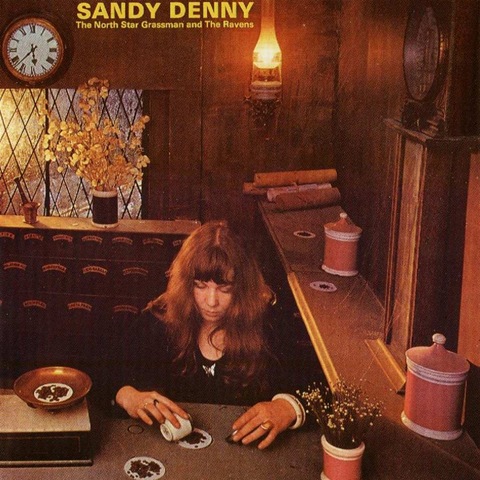
SANDY DENNY - The North Star Grassman and the Ravens (1971)

Review by: Victor Guimarães
Album assigned by: Charly Saenz


The very first Sandy Denny's album I've ever listened to was a perfect match for that particular rainy night I picked for the experience, which was a great surprise in itself. As a good Led Zeppelin fan, I've known her name from her part in “Battle of Evermore”, in the over-the-top classical Led album Untitled IV. Sandy was one of the talented musicians behind the legendary band Fairport Convention, one of the pillars of british folk in the 60s, but her tribulations and problem-prone career made her leave the band and, making her long story short, eventually led to this delicate piece of work reviewed here. 

Denny's vocals are something close to amazing, matching the sophisticated, ethereal, a bit sad and quite dreamy mood of the record.

The starting track, “Late November”, starts following this album sophisticated trend, getting most of the artist's vocal talent and lyricism as well as displaying great instrumentals, such as guitar and drums. Following, we have Sandy's beautiful interpretation of traditional Irish folk song “Blackwaterside”. Then, we've got “The Sea Captain”, which follows the album dreamy, ethereal atmosphere.

“Down in the Flood” is a Bob Dylan cover that shakes you from the sweet melodies from before to a rockier corner, with great contribution of guitarist Richard Thompson, Denny's companion in Fairport Convention times. 

The fifth track is “John the Gun”, my favourite on this record. A combined effort of Denny's talent and Thompson's support, the song brings in great vocals, guitar riffs and lyrics. Definitely a must-listen, probably worth a spot in a future “Best Of”. 

“Next time around”, a sad love song showing Denny's vocal talent as well as a very interesting strings arrangement. The seventh track, “The Optimist”, sports a happier melody befitting the title and lifting the spirits after the previous sad song.

“Let’s jump the broomstick”, a version of Brenda Lee song, written by Charles Robbins, is another tribute made by Denny in the album and, such as Dylan's tribute in the fourth song, brings a different mood to the record, this time with a more country, pop way. 

Next comes “Wretched Wilbur” in a comeback to the folk, ethereal mood, which helps to introduce the title track “The North Star Grassman and The Ravens”. Another great piece of work, the song displays a darker approach as the lyrics seem to be a nice metaphor for death. The second must-listen in the album. Finally, there is “Crazy Lady Blues”, a nice song that gives the listener something more than the classical blues approach one should expect regarding the title, resulting in an upbeat, high-spirited way of finishing this journey to 70s brit-folk scene. 

If you are looking for folk music with a light atmosphere and amazing vocals, The North Star Grassman and The Ravens would be not only a good call, but also an inspiration to listen to Sandy Denny's solo work and to Fairport Convention.

THE CONTORTIONS - Buy (1979)

Review by: Jonathan Moss
Album assigned by: Andreas Georgi


The Contortions were a no wave band, which was essentially a genre of avant-punk made by artistic weirdos as a reaction against new wave, hence the name no wave. Now personally I think new wave is one of the greatest musical genres and I've listened to very little no wave.

What I'm trying to say is that this album fucking sucks.

Nah, it's really good actually! From what I have heard from other no wave bands The Contortions - fronted by endearing mad man James Chance - had a slightly more conventional sound, hell, I even read somewhere that James demanded a certain amount of competence from the band! (incidentally, though called The Contortions at this point, they were always James Chance's band)

So what does the actual album sound like? It can really best be described as a mix of really scratchy, atonal yet funky Andy Gillesque guitar playing, impassioned yelping from Chance, wild saxophone playing from Chance, catchy, funky basslines, occasionally weird organ playing and man, is the drumming serviceable1. Tone wise, it has a kind of urban, downtown New York vibe, maybe like Marquee Moon but less romantic and whimsical and more like New York probably was at that time (understand, I was born in 1995 and have lived in Glasgow my whole life). While I'm continuing with the easy comparisons, the vocal styling of James Chance sounds remarkably similar to Richard Hell. James sounds a bit sleazier and sarcastic, and his voice isn't always as animated and amusing as Richard’s was. He can still be pretty wild though, especially on certain songs.

Speaking of certain songs, man do some of these songs individually stick out! Others don't, but that's to be expected. Okay, so the opening song “Design to Kill” gets off to a pretty good start, containing all the things that give the album personality and which I've already talked about (scratchy funk guitar, catchy bass lines, manic singing). It just contains this really agitated vibe, like the band were bored recording it and just wanted to rip shit up, which explains why James would attack people in concert. During the chorus bit, it also has some nice spy rock2 guitar playing, showing that the record can also do cool, unexpected things! Second song “My Infatuation” continues this unexpected diversity by having a circus rock guitar riff!3, and a weird off-kilter vibe which almost sounds like a drunk walking down an alley in a psychedelic children's film, like Fritz the Cat! “I Don't Want to be Happy” might be my favourite song on the album, it just has such a fun, wacky vibe, with funny, sardonic lyrics! Musically it has a cool, groovy organ riff like for bachelor pads where the bachelor also sniffs heroin and murders people. “Contort Yourself” is a classic, showing how melodic the album is, this shit is catchy! The song “Anesthetic” goes for a slightly more serious, less cartoony style, being almost reminiscent of late period Tom Waits and featuring a kind of clanging, almost industrial guitar riff.

So, to get the most obvious complaint out of the way, this album can get pretty monotonous and if you're not in the mood it'll probably be pretty annoying. It's pretty short though, so it's not a major problem. Not every song is a success, though none of them are bad, just so-so. It's still a pretty great album though, James Chance had a lot of smart, funny lyrics and the vibe the album does have is fairly unique.

Overall this is definitely an album worth commending, not necessarily due to its historical importance but more because of how fun it is.

1 The drumming might actually be really good, I don't really know how to talk about drumming unless it's really obvious it's good, as with Keith Moon or Bill Bruford.
2 Is spy rock a genre?
3 Is circus rock a genre?

Wednesday, 13 April 2016

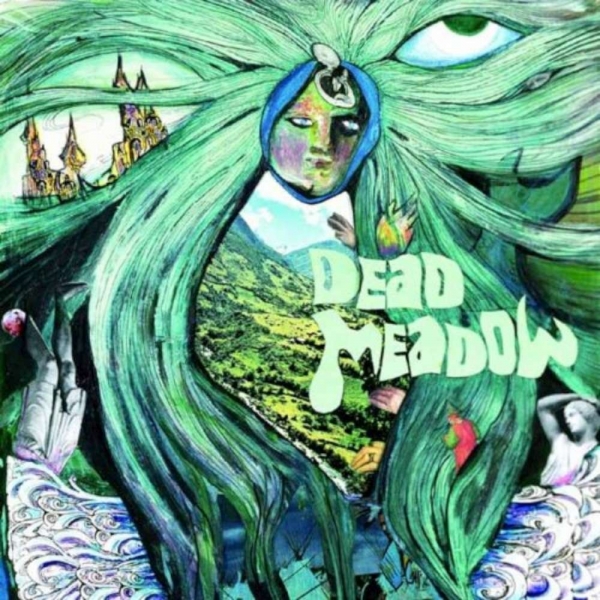
DEAD MEADOW - Dead Meadow (2005)

Review by: A. A.
Album assigned by: Syd Spence


Dirty stoner rock riffs; dazed, far-out, almost wispy vocals drowned in the haze and standing in contrast to all the mucky fuzz; and slow, loosened up drumming. This is the formula Dead Meadow keep using on their eponymous opus. Now, stoner rock and doom metal are the kind of music I used to be hugely into in my youth and evaluating this album for the review brings back old memories of being a Seeker of the Riff ™, though this is hardly the kind of music I listen to anymore.

We start off with a quiet buzz on “Sleepy Silver Door” that leads into a monstrous riff and eventually progresses into one hell of a slow jam, whereas “Indian Bones”' heavy psych indulgences evoke in me images of a stoned out shaman doing his voodoo in front of a fire and inhaling as much the pot smoke as the noxious fire smoke. “Dragonfly” has a somewhat post-rocky ambiance backed by repetitive drum beats.

The next track, “Lady”, reminds me a bit of Manfred Mann Chapter 3's “Travelling Lady”, except that, of course, there are no trumpets or jazz influences here. “Greensky Greenslade” is full of slow doomy blues playing and conjures an atmosphere of early morning rain. “Beyond the Fields We Know” is probably the standout track for me. If the album is soundtrack to a rolling-out-the-joints session (as stoner albums usually are), this might well be the high point of the whole trip. “At The Edge of the Wood” has folksy acoustic beginnings, and pretty much qualifies for a troubadour ballad. “Rocky Mountain High” features some kind of spacey synths towards an end that gets kind of slightly terrifying at least the first time you listen to it. The ending track simply named “Untitled” is mostly an anthemic guitar tune and clocks a short two minutes span, ending quietly without making any fuss.

There's variation, certainly, although the overall sound does not go through any drastic changes. The riffs are interesting and the blues excursions quite lively. The drumming is laid back and relaxedly precise. In fact, the entire album is permeated with certain tranquility, as if not especially or excessively concerned about breaking any new ground but simply about doing a good job at recreating the good old stoner psych formulae with some indications of an individualistic sound. Hey, this is stoner rock after all!

CODEINE - Frigid Stars LP (1990)

Reviewed by: Roland Bruynesteyn
Album assigned by: Joseph Middleton-Welling


In many ways, this album has a somewhat Pink Floydian feel: simple drums, prominent guitar (circa Animals, I think), mostly minor chords, a sad and pessimistic atmosphere and a voice that is a little lower than Gilmour’s and a little less sadistic than Waters’. Keyboards are almost absent however, and they lose to Pink Floyd in other fields as well. Overall starting to listen with Pink Floyd in mind may not be honest or helpful, but I could not get it out of my head.

Generally, the album is very monotonous and it has a slow, dragging, drony feeling in many places. In “Gravel Bed”, the singer has real trouble to stay in tune and it’s quite painful to hear. “Pickup Song” starts with some quieter guitar, before becoming a drone again. Next point of reference was Ragged Glory by Neil Young, also 1990-ish. Neil’s voice may be an acquired taste as well, but as far as energy goes Neil Young and Crazy Horse win hands down.

OK, let’s give them a “Second Chance”: five songs in, we get a different sound. Probably still a guitar, but it sounds like a cross between a mellotron and an organ. Here the drone works and it may be the best song so far.

In “Cigarette Machine” the singer is not really singing but telling the story, such as it is. There is some use of dynamics here, that elevates the song somewhat. “Old Things” employs a similar trick, although the singer is trying to sing again. “Pea” is the best song of the album to my ears, partly because it’s mostly acoustic, perhaps…

This is really nothing for me, too few ideas (it’s all one song, really) and poorly executed, but I may be an old conservative dad-rocker. Youtube reviews on the whole are (very) positive but this music fails to engage me at all.

This album is probably ideally suited for a depressed 16-year old boy who can empathize with the feelings expressed here, while contemplating his own (apparently) shitty future. “Luckily” I was 15 when the Wall came out! If waterboarding will not return (as per current CIA director), playing this music loud, ten hours a day, might be a good follow up.