WELCOME TO OUR NEW SITE: tomymostalas.wordpress.com

You'll be automatically taken there in a second.. Change your bookmarks, thanks!

Showing posts with label Nina A. Show all posts

Wednesday, 28 December 2016

VANGELIS - Oceanic (1996)

Review by: Nina A
Album assigned by: Alex Alex


Apart from tacky cover art, the 90s were also the decade of new age music made by weird Euro guys. But I like the smiling mermen and women on the cover here, they look far too happy and wholesome and really not sinister at all, and due to this I think they wouldn’t fit in well enough in some Sinbad or Odysseus tale, which is where you would expect your merfolk to show up.

Likewise, the oceanic journey in Oceanic is not very sinister at all – it’s a smooth sail from the triumphant send off of opening track “Bon Voyage” to closing track “Songs of the Seas”, which, if I have to be honest, sounds like the outro to a group meditation session in yoga class; prevented from reaching gorgeousness status only because electronica (especially in the 90s) tends to be so flat in sound. To Vangelis’s credit, however, every track on Oceanic is arranged well enough to not sound needlessly heavy, in fact to be even curiously comforting. Even the sweet little mermaids (or sirens as they are billed here) show up as soon as track two to murmur sweetly, and seemingly not with the intent to put you to sleep and bite off your head, but rather to rock your little ship on gently and lovingly on the pillow of their voices.

And here I want to apologise to Alex for putting off reviewing this masterful record for so long. I aspired to attempt to be as funny as he usually is in his reviews, but I realised a lot of water has to flow through (Bulgarian expression) and I have to have eaten a lot of bread (another Bulgarian expression), before I can even hope to bow at the feet of the master. Still, during that time I played Oceanic a lot, and I grew fond of every track on this musical oceanic sightseeing journey (for yoga class ®).

Friday, 4 November 2016

CROWDED HOUSE - Together Alone (1993)

Review by: Francelino Prazeres de Azevedo Filho
Album assigned by: Nina A.


I’m sorry, Neil Finn fans, but I don’t see how he could be considered one of the greatest songwriters of his generation. Not from this record, at least. A power pop album with some nice variations but no strong highs or lows. Some places in the internet would suggest this is also inspired from Maori music. I call bullshit on that. The last (and title-) track has lyrics inspired from their mythology and a nice chorus singing in their language, but nothing else in the album seems any different from regular pop-rock.

The atmosphere and lyrics here are usually earnest and passionate, supported by some sort of melodrama in Neil’s voice that kinda turns me off in some tracks. There’s no song that tries to rock hard, or to be very catchy. It’s like Crowded House are content with sounding pop-rock but don’t try to push the boundaries of the genre. It would feel too harsh to call this “middle-of-the-road”, though. The best way I can explain it is that the great pop-rock I’ve listened to manages to keep the strengths of both pop and rock, while this is more like half-pop added with half-rock.

“Private Universe” is the biggest fail in that to me. It’s an attempt at an intimate love song, but the lyrics and the melody don’t really match, and the refrain is weak. “Walking on the Spot” is not very strong either, and talks about some banal domestic drama. “Can we look the milkman in the eye?” The other ballad, “Fingers of Love” is more successful. The sentimentality in the voice acts in its favour, rather than detracting from it. With its dramatic guitars and ornate words, it’s the best track here.

The second best, in my opinion, is the funky “Skin Feeling”. Other strong ones: “Pineapple Head” is a cool McCartney-ish ditty with a pulsating bass. “Catherine Wheels” is nice and folksy, it even reminds me of Neutral Milk Hotel. “Kare Kare” decided to laugh at this message, the following night she disappeared leaving no trace has a catchy refrain, “soon / in a valley lit by the moon”. “In My Command” has Neil doing his best impression of Lennon circa 1964.
As you can see, there are plenty of good songs here, and that is what makes a good power pop album. Together Alone is a good album, there’s no doubting it! The problem, I guess, is that I’m too blasé to enjoy it. There are just too many similar albums that just make me feel with much more intensity!

Thursday, 13 October 2016

STEFAN VALDOBREV (СТЕФАН ВЪЛДОБРЕВ) - ...to (...към) (1998)

Review by: Mark Maria Ahsmann
Album assigned by: Nina A.


…към features fairly decent but not outstanding and somewhat generic 90's pop rock. The songs are all well arranged – in particular I like the sound of the lead guitar which seems influenced by Reeves Gabrels' work with Bowie on Hours. And the singing is competent. The overall sound is upbeat, accessible, melodic, mostly based on drums, bass, (alternating acoustic and electric) rhythm guitar and lead guitar. On some places horns and female vocals are added. There are a few excursions to other genres, like light hiphop on “Da”. It all sounds a little derivative though I can't really pinpoint it to any artist that would be an obvious example. Though sometimes U2 comes to mind – I don't mean that in a bad way.

Apart from the language in which it is sung and some minor details in the arrangements (like the start of the first song “Nov”) the sound is very Western – you wouldn't know it was a Bulgarian album apart from that.

All in all it was a mildly pleasant listening experiment though I found the refrains of some songs quite cheesy. Especially on the first song, I found that really so off putting that at first it coloured my view of the whole album.

Monday, 10 October 2016

THE PASTELS - Up for a Bit with the Pastels (1987)

Review by: Nina A.
Album assigned by: Jonathan Moss


The formula of gorgeous jangly music + random dissatisfied lyrics sung in a mostly unfeeling voice has been mined to death by the Smiths, of course (only at least Morrissey knows modulation and expressiveness), and if you add a bit of baroque pop extravaganza in the general spirit of “Golden Brown”, you get the opener “Ride”. In other words, something right at home in the 80s. In fact, the next track deviates only a bit by being a blues shuffle in jangly pop disguise. And then there are more songs. And they are all nice and inoffensive, perfect for college kids, I imagine, lyrically too, probably, but I wouldn't know that because really the lyrical content fits the melancholic 80s kids aesthetic best when it is perceived as the generic teenage mumbling it is.

You see, if you're over the age of 20, I doubt that you'd play any of these songs over and over and say, man, this song has so much meaning!!!! No, I imagine “old guns” only using this album as a mood music or the soundtrack to reminiscing of better times — the time when you're under 20 and a record like this could blow your mind. And with 10 songs clocking at more or less 3 minutes each, it doesn't overstay its welcome either, so in what I’d say in conclusion is Up For A Bit With the Pastels, “I am alright with you”.

Wednesday, 31 August 2016

Roland and Nina's DECADES IN MUSIC - 1973 - LATTE E MIELE - Papillon

Review by: Nina A.
Album assigned by: Roland Bruynesteyn


What I lamentably discovered at the tender age of 17 is that generic prog albums aren’t exactly a commodity that's hard to find. And in the internet age, they’ve crawled out of everywhere and are cool once again. For some reason. And while Latte e Miele get bonus points for singing in Italian (possibly due to the fact that they themselves are Italian) and therefore making this album at least slightly distinct, I feel Papillon suffers from the general syndrome of interchangeability of 70s prog records. Yes, Latte e Miele, you play it really well and I bet you have meticulously arranged like every second of this and that you have precisely thought out how to use bombast to bring out the instrumental intermissions in “Terzo quadro l’incontro” for instance or taken care to have the fusion breaks in “Quatro quadro l’arresto” but what new and breathtakingly unexpected are exactly trying to tell us here?

No, this record unfortunately still remains in my mind just as “70s sounds”, even after a couple of listens. It’s cool, I guess, but I don’t see why anyone would waste time listening to this when there’s so much else you can be enjoying and oohing in surprise and delight at.

Oh, there are the classical pieces reinterpretations too... Vivaldi and Beethoven. Why? Who knows, who cares.

Thursday, 18 August 2016

Elevator Musings: Ep. 1 - On being a metaphorical virgin

Starting point: The song “Chateau Lobby #4 (in C for Two Virgins)” by Father John Misty
By Nina A.


Believe me, no one is more embarrassed than I am for actually liking Father John Misty. I mean, “a hipster dork who despite that has a lot of sex” seems to be the main characterisation of his lyrical protagonist and yet he grows on you... on me. And it’s not like there’s subtle magic at work here either, it’s plain as day to me what attraction let’s say I Love You, Honeybear seems to have: stripped down songs that have been let soak in these “giant, deranged, impenetrable Disney-orchestra arrangements” as the man himself puts it. And of course the impeccable phrasing of these craftily put together if otherwise cringeworthy lyrics over the rolling canvas of quietly bombastic music. “Oh, I just love the kind of woman who can walk over a man // I mean like a god damn marching band” anyone?

Which brings me to my main point and it is: 

I’ve never done this
Baby, be gentle
It’s my first time

Yeah, this is exactly the lyric that has moved me to profound realisation recently. It’s about virgins!!!! No, as genius.com notices too, our favourite Father actually goes on to subvert this lyric: “Tillman twists the phrases typically uttered when a virgin first has sex, manipulating them to instead reflect the sensation of falling in love for the first time.”

I’ve got you inside
People are boring
But you’re something else completely
Damn, let’s take our chances

is the slightly clumsier conclusion to this thought. I used to mishear the lyric — “I’ve never done this so please be gentle” but even the way Father John Misty has written it there is something about confessing plainly how things stand. Because isn’t it more often that people try to impress other people by faking it? I am sure that’s the plot to many a screwball comedy, “liar revealed” plot template, probably even to Johnny Bravo. I know I once stubbornly proclaimed to this mechanical engineer guy I used to have a crush on that I can change my back bike tire alright on my own in order to seem tough and competent when really even detaching the chain proved to be trickier than I initially supposed. But here we have the protagonist refreshingly choosing the route where he bares proverbial soul and inexperience and completely trusts the opposite side (person). Liberating, as it is currently in fashion to say. It may all sound so simple but it does indeed take great bravery to be truly humble about yourself and to stop caring about how you are perceived or how superior you should come off as. So, thanks, Father, for making me reevaluate my life with your corny songs about your sexual dorkishness. “When you’re smiling and astride me // I can hardly believe I’ve found you and I’m terrified by that” indeed.

FOREIGNER - Unusual Heat (1991)

Review by: Julien Mansencal
Album assigned by: Nina A.


Unusual Heat is the proverbial album with no reason to exist. Then again, how could it have one? When third-rate bands like Foreigner lose a key member, they rarely follow the wise path of disbanding and turning to more fitting jobs, like, I don't know, driving trucks or something. No, when third-rate bands lose a key member, nine times out of ten they'll go for the cheapest replacement available and soldier on. Granted, when you compare departed Lou Gramm with stand-in Johnny Edwards, the quality gap is not that noticeable, but still, they should have heeded the call. Especially since the time was 1991 and the world really had no longer any use for a band like Foreigner.

That's not to say that they don't try to follow the trends. Unusual Heat largely discards the cheesy 80s synthesizers that were so dominant on Inside Information in favour of a sound that's more guitar-based but less distinctive. And Foreigner never were that distinctive to begin with, so that's saying something. Apart from that, the band goes through the motions, ticking all the boxes on their grocery list of How to Make a Record: half-assed crunchy rockers, check. Sappy power ballads, check. Unmemorable, run-of-the-mill guitar solos, check. Lyrics ranging from the useless to the abysmal, check. Cheap, ugly cover art, check. About a dozen songs, check. And since this is the beginning of the CD era, all of them are four to five minutes long, because why the hell not? Foreigner want to waste as much as your time as they can. And now they've made me their accomplice, since I've wasted YOUR time by writing two paragraphs about this nothing. 

Even a perfect sphere has more of a point than this. I won't say "avoid it at all costs," since I can't imagine how anyone would face the possibility of listening to this record that has justly fallen into oblivion. It would take an absurd situation, like a reviewing contest about bad records or something.

Tuesday, 16 August 2016

DADDY YANKEE - Mundial (2010)

Review by: Nina A.
Album assigned by: Jaime Vargas Sánchez


I keep trying to get Spotify to play this record but all I hear is the playlist to which Fanta runs its brand promotion tied to the world cup series on a beach party. See, this reggaeton thing was for some reason as hugely popular as europop (another genre that revolves hugely around aggressively beating you over the head with simplistic repetitive beats and annoying vocal hooks for the duration of the song) but really the only context I see for a music like that nowadays is to mindlessly blast it through the speakers of the bungee jumping machine at the beach under the hot summer sun. It is not even fit to be the background music they play between the X-factor auditions! Like who listens to this stuff? How did it end up in the charts? Can anyone even relate emotionally to this? I know I stopped paying attention after the first track because this repetitive plateau of high after high after high all at the same volume and intensity, it cannot captivate your attention, let alone move your soul. Furthermore, you have read, I presume, how songwriting committees have evaluated that radio-friendly songs nowadays have to hit a new high every 6 seconds in order to keep the attention of the ever station-switching listener in his car. Yeah, but how can you top high after high after high, if you never relax the tension? Tension and relaxation until an eventual resolution, that's the secret to a great many awesome songs in the pop canon!!

No, that was actually my first listen impression and it is totally not fair to the record. In fact, even on my first listen I noticed the attitude in the opening track “El Mejor De Todos Los Tiempos” and recognised its relative uniqueness in the bailando & vuvuzela context, and after a second listen I can confirm that the first two tracks here are actually legitimately cool. Most of the following tracks on the record are also not without their merits — even occasionally triggering my nostalgia for the times most simple that have long since passed (even if this record did actually come out as late as 2010) and making me admire the Spanish language and the Latin beats that really have their own logic and effect on the body and mind. That said, there are still some tracks (“La Despedida” to quote one) that can only fall under the generic bailando noise category. There is even the obligatory FIFA song (“Grito Mundial”, not eventually used for the 2010 World Cup series for reasons explained properly in Wikipedia) - I mean, the album is called Mundial... But after a thorough and dedicated listen I end up wondering if Daddy Yankee isn’t kinda my daddy now because this record certainly has a lot to recommend it… yeah...

Tuesday, 2 August 2016

Roland and Nina's DECADES IN MUSIC - 1971 - EDDIE PALMIERI - Vamonos Pa’l Monte

Review by: Nina A.
Album assigned by: Roland Bruynesteyn


It took me ages to review this record and here is why: I just can’t bear sitting through the whole of it, and the thought of even putting it on for a bit fills me with terror. Stuff like Buena Vista Social Club and jazz music are two musical directions that I can borderline tolerate, you know, when the stars align and my mind is really occupied by something else, but having the two of them together just overloads my senses.

I assume Eddie Palmieri is really good at what he does and this record probably represents some sort of a musical pinnacle, it sure sounds like it does, but please, please, please, don’t make me listen to it ever again.

Thursday, 28 July 2016

SOUNDGARDEN - Superunknown (1994)

Review by: Nina A.
Album assigned by: B.b. Fultz


When you think of nostalgia, you probably think of 80s cartoons and such because these are the properties that have been aggressively revived for the past decade or so for um... your money, yes. But I think the 90s are properly in the nostalgia realm too already as the eventful conclusion to the already very eventful “short century”. Amid hip hop, boybands, collectible bubble gum stickers and regrettable fashion choices there’s always of course heavy metal’s ugly step-sibling: grunge. A genre that, so far as I can tell, nobody who hasn’t been between the ages of I guess 13 and 30 during its peak years cares about much anymore. Sure, Nirvana get played occasionally on the all-purpose throwback radio and so does “Black Hole Sun”, Soundgarden’s megahit from this record, which I imagine its regular listeners attribute to Nirvana too, but nobody seems to be giving grunge extended attention yet. However, I too, occasionally start to miss “the heavy sludge of ‘70s metal” and “the raw aesthetic of ‘80s punk”, and so I approached this record very enthusiastically.

Stretch the bones over my skin
Stretch the skin over my head
I'm going to the holy land
Stretch the marks over my eyes
Burn the candles deep inside
Yeah you know where I'm coming from

Oh... I had forgotten about this. Yeah, it’s gonna be one of those whiny "poetic masterpieces". People lashed out at emo at the height at its popularity but seriously, I think people back in the 90s could get even cornier, especially in metal. Okay, screw this, let’s look at the music. 

Well, Soundgarden do deliver on their promise of a heavy sound, a heavy psychedelic one at that, and there are some delightful nods to Zep in tracks like “The Day I Tried to Live” and “Fresh Tendrils”. But at some point these tracks seem to really start blending in with each other, and they are neither the most sophisticated examples of the genre nor truly visceral in their nature - frankly, they are kind of forgettable with the possible exception of the above mentioned “Black Hole Sun”, which I assume has earned its vh1 status purely on its anthemic qualities. So you know, all things considered, and although I'd hate to deliver a lazy pun, Superunknown may go on to become indeed um... superunknown.

Wednesday, 6 July 2016

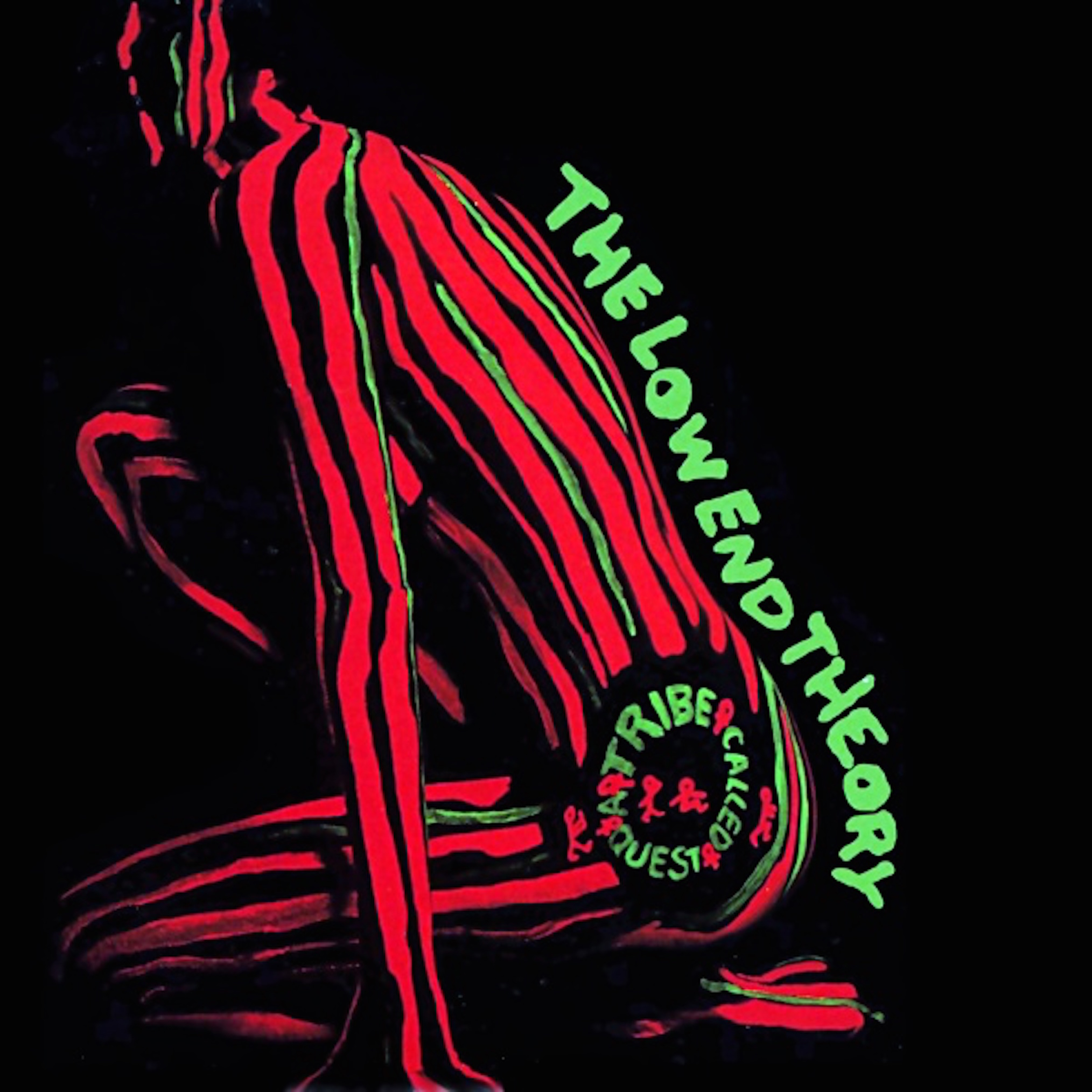
A TRIBE CALLED QUEST - The Low End Theory (1991)

Review by: Nina A.
Album assigned by: Dinar Khayrutdinov


I was teen-ager too, you know. And pagers were truly hip for a while but the world has changed so drastically since the time I went to school and was vaguely aware of that thing called "hip hop" (I knew it involved baggy pants) that I am not even sure it happened in the same life anymore. So I listen to this Tribe called Quest in hopes to get, you know, reminded of the glorious 90s. Or possibly even understand what was happening in the world when I was too young to understand anything.

A Tribe Called Quest are cool. They have a really cool name. They have cool verses. They have cool beats. They have a cool flow. They fuse jazz atmosphere with hip-hop attitude in a real cool way, if you are to believe the allmusic take on this record. They are just all-around cool.

So remember that comment about baggy pants before? Yeah, most of my peers grew on diet export hip-hop and some local examples. I kinda didn't. I didn't even suspect it qualified as music. I thought it was just for the kids with baggy pants who wanna act tough, yo! So in a way it is delightful for me to hear just how cool and even demanding respect a bunch of former teenagers without pagers can actually get.

What I am trying to say is that you can treat this record as a cool backdrop for your evening, something to jam to or even treat it as a research-worthy artefact of another time (and in my case another culture). If you want a more insightful take, I suggest you go read yourself some real reviews but really, why on earth would you reading about this thing instead of listening to it? The product is dope, I promise.

[Note: This album was assigned to me way back in February because I betted incorrectly that Leo will get no Oscar this year either]

Saturday, 11 June 2016

OPETH - Pale Communion (2014)

Review by: Nina A.
Album assigned by: Graham Warnken


The appeal of metal music to the wide audience (all of its many subgenres seem to have a sizable enough fanbase) I have always found has to do a lot more with the psychology of the fans than the merits of the actual music. Not that I mean to say all metal music is bad because it is metal music. Nope, I actually mean to say that all metal music is not that special... because it is metal music. See, for some unspoken reason, metal music has to abide by the various metal music clichés and tropes, and that I find, is the thing that severely limits it and also cripples it somewhat. I was going to go on with more thoughts on the metal-loving community and their chosen genre of adoration but I feel that you folks will stop taking me seriously if I say “metal” one more time. So the reason I am bringing this up is because Pale Communion here (really, could you have picked a cheesier title) is a textbook example of my main problem with the genre: it's just trying too hard. To be badass and important, I imagine. 

Any review of this album will probably go on about propulsive drumming, anthemic electric guitars, dynamic textural passages or I don't know about its prog goodness or Middle Eastern whatever melodies but the truth is that none of this matters because ultimately the whole exercise is kinda soulless. They probably talk about friendship, betrayal, doom, hell, treason, hate, wisdom and other stuff from the high fantasy handbook of epic but it all just comes across as items off a checklist. A checklist I feel I've seen so many times already even if I've listened to like 20 metal albums in my life. Even worse, the sound of it all, for all its intellectual approach and expertise and delving into different genres and influences also ends up being this processed generic slick metal sound. And this is even more so what makes it mind numbingly boring. What’s up, metalheads of the world? Will you be considered less metal if you stopped sounding like pseudo-angsty metronomes?

Now don't get me wrong, Pale Communion (oh, how about Brooding Aubergine or something) makes for some excellent background music, especially the more fusionish track “Goblin”, and I dig how they channeled Purple on the opener “Eternal Rains Will Come”. “River”, which I suppose is meant to be the more intimate offering in this album, also flows pretty nicely and showcases some amazing taste in arrangements and the skill of the bandmates. Truthfully, I'd probably find enough nice things to say about each of the tracks here, and I suppose it is for this reason that people feel good about praising such records very highly. Fair enough. Just don't pretend this stuff is supposed to resonate with you emotionally or blow your mind artistically because in the end it all boils down to the formulaic metal checklist.

PS: There is a harmonic minor tune towards the end of “Voice of Treason” that is almost verbatim out of a trashy 90s Bulgarian pop song, which is a fun coincidence.

PS2: I can't believe this came out as recently as 2014.

PS3: At least the cover art is somewhat imaginative.

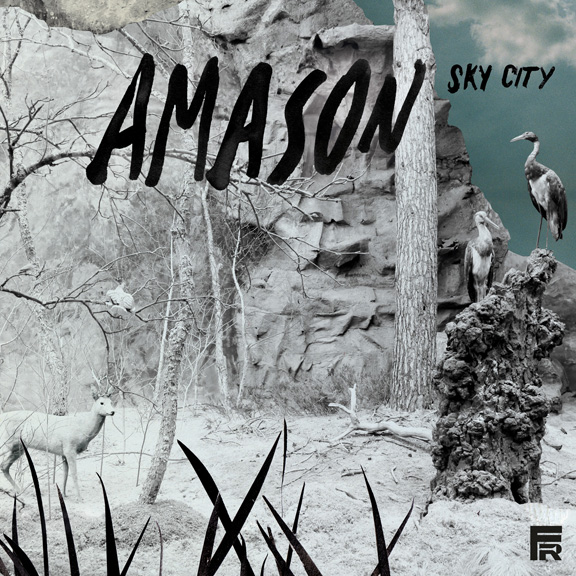
AMASON - Sky City (2015)

Review by: Victor Guimarães
Album assigned by: Nina A.


“Unity makes strength” is a common saying pretty much everywhere. In music, this concept could be easily applied for bands, finding one of its possible pinnacles in supergroups. If some random guys/gals from nowhere could gang up and create, say, the Beatles, what would happen if already acclaimed musicians gang up for a gig? Examples are everywhere, from Cream to Avantasia to O Grande Encontro and to Amason. This swedish supergroup features members of other prominent musical groups, such as: guitarist Gustav Ejstes (Dungen), keyboardist Pontus Winnberg (Miike Snow/Bloodshy and Avant), drummer Nils Törnqvist and bassist Petter Winnberg (both from Little Majorette) and vocalist Amanda Bergman (who seems to have an independent career herself, but performing with some other names).

It’s true that ABBA days are gone and Sweden is now known for exporting famous DJs, such as Swedish House Mafia or Avicii, but nevertheless, the viking-descendants, Odin-blessed norse people had never ceased to amaze us with great works and Sky City, Amason’s debut album is a very good example. The record, featuring lyrics in both English and Swedish, is an alternative, indie rock album who surely live up to its title as I believe the group’s intention was to make you trip higher and higher towards their sky city. Don’t get me wrong, they’re not the classical high, drug-induced vibe, but something ethereal and dreamy, with different moods, sometimes happy, sometimes sad or reflective. From a critical standpoint, the album is very good, with creative instrumentals and great melodies, with riffs, beats, bridges and choruses that fit perfectly together with great vocals (from both Bergman and Ejstes) to create their stratospheric vibes. When it comes to lyrics, it wasn’t uncommon for me to stop a song and think “have I heard it all right?" or "whaddahell do they mean?” Expect lots of metaphors and symbolism on the themes of love, depression, escaping, finding oneself, a bit of lunacy and even some criticism to capitalism. 

Formed in 2012, Amason is a young band - and a supergroup - composed of talented and experienced musicians who did a very good job in their first album working together. Sky City is the kind of record to listen to dream while awake and, while it’s probably not the best of the Swedes to rock a party (Avicii might be a better choice), it is definitely a great recommendation.

Sunday, 22 May 2016

A YEAR IN MUSIC: SPLIT ENZ - Time and Tide (1982)

A YEAR IN MUSIC: 1982
Review by: Nina A.


Split Enz are one of my most favourite bands ever but for the uninitiated they seem to be perceived as what Neil Finn was doing before he got himself a new band, wrote “Don't Dream It's Over” and thereby reserved an eternal spot on vh1's So 80's or One Hit Wonders playlists for himself. By the way, Split Enz also had a hit in the US with “I Got You” from the 1980 album True Colours (another Neil-penned track), and although it only reached #53 it went to #1 in both their native New Zealand and current residence of Australia and made them known to the world as this poppy new wave band. Need I say, they were saaaw maaahch moaar!!!!

By the time Time and Tide arrived in 1982, the band had arguably reached their creative peak (or at least their post-1977 lineup had): in a year or two, frontman Tim Finn would become enamoured with his solo projects and disinterested with the band's career enough to effectively break it up but for now he had a lot to say because he was going through a rough patch of his life. How do I know? Well...

Split Enz had always had “quirky” written on their business card, and the whimsical stage performances and elaborate costumes and stage make-up (courtesy to percussionist Noel Crombie) was what stood out about them but deep down they had enough charming personality to attract a devout fanbase – one that formed as an official fan club way back in 1976 and to this day spends time reminiscing about events, posting pictures and documenting every single detail of the band's career online. It is obvious that to them (and me) every Split Enz album is special in a different way but the real question here is, if you are not really invested in Tim Finn's nervous breakdown, or the story of Neil Finn meeting Sandy Allen ("the world's tallest woman", as the next line of the song proclaims likely because they had no Wikipedia back then) in New York, or how Noel took on the daunting drumming responsibilities after former drummer Mal Green left the band, does this album have anything to offer to you, listener, and is it really all that good?

In my opinion it is as good as the Enz (yes, fans and press really called them that) get. A significant chunk of the weirdness is gone here, and even the costumes and weird make up are severely toned down, consisting of fitting the subject naval attire, to make way for a somewhat more honest emotional journey. It is really the emotional arc of the three main compositions here - opener "Dirty Creature", the epic of "Pioneer/Six Months in a Leaky Boat", which is the centerpiece of this more or less conceptual album with a strong nautical undercurrent (he-he, puns), and Tim's own autobiography in song format "Haul Away" - that makes the strongest case for this record. The main songwriters of the band post the major lineup overhaul of 1977 have been Tim and Neil, of course, with occasional sweeping instrumental contributions by keyboardist Eddie Rayner but this album is all about Tim and his emotional journey, so much so that it was called "Tim and Tide" by critics at the time. (Neil gets the spotlight on the next one, as fate would have it, but with the very different narrative of loving your wife and bringing a new life into this wide and imperfect world, which would probably be better appreciated by people aware of the joys of family life.)

Another thing this album has going for it is the tight playing on it - Noel Crombie, following his promotion to a drummer, brings a lot of taste and cymbal action to his energetic but steady druming and with Nigel Griggs' super solid pulsating bass remaining a staple of the band's sound, the rhythm section carry this album on its naval journey across the seas (more puns!). While Neil still hasn't developed his trademark sensitive new-romantic vocal modulation that you can hear all over the Crowded House catalogue and his singing can get a bit flat at times, Tim does a fair bit of chewing the scenery on here and balances intimate and theatrical in a very entertaining way. Another good thing about Time and Tide is that despite this being the 80s and keyboard-wiz Eddie Rayner being still very much at the heart of the Enz's wall-of-soundy sound, the record doesn't sound dated or cheesy at all. The production and more specifically the arrangements bring out the best in each tune and succeeds in emphasizing the nautical theme - somehow achieving the sound of the sunset-lit sea on the cover. The final strength I wish to address is the pop sensibility, for despite the energy and wit and unconventional arrangements (well, for the world of pop) these are deep down straightforward catchy pop numbers. 

"Dirty Creature" opens here with its driving rhythm and a world of metaphors about er... um... psychological struggle? Panic attacks, to be more specific, which are personified by the mythical Māori beast Taniwha. Binding and gagging Tim's wits and doing other scary stuff. Next up is the gentler “Giant Heartbeat”, which was written on top of a bass line that Nigel Griggs had come up with, and I think it is here where Neil starts really developing his vague lyrical approach about whatever that somehow so sums up the human condition. Anyway, the song builds nicely and ends on a cool held vocal, leaving the floor for “Hello Sandy Allen”, a song about how we're all really beautiful or appearance doesn't really matter all that much or something that gets a pass here because it was written before this trope became widely abused, and also Neil seems to have been sincerely impressed by meeting Ms. Sandy Allen and really digested the event and come up with this conclusion on his own. Also, who cares, the song is so catchy and infectiously happy.

“Never Ceases to Amaze Me” is, on the other hand, super camp, and the video has become somewhat notorious with Tim wearing afro wig and the rest of the band dressed in Star Trek suits materialising in this... zoo… in which he apparently works and examining... these strange hu-man ways... yeah, I think the band have since said that this clip is somewhat embarrasing and they shouldn't have done it. Despite all this however, the track is not a waste at all with some over the top vocal delivery, energetic drums and ascending bass lines. The following track “Lost for Words”, as well as the album closer “Make Sense of It” are a good use of your Tim Finn and his energetic and frantic stage persona, while the more basic Green Aesop midtempo “Small World” is brought to life by the really effective contrast of driving rhythm and shimmery synths and guitars. 

This is followed “Take a Walk” - my favourite number on the album – which also rides an energy wave and delivers a coolish piano solo right after Neil shouts "Run. Boy. Forever AND EVEEEEEER". Now, I think this song is somewhat prone to word salad moments such as “Funny when we move ahead // Never worry what we leave behind // Remember what a friend of mine said // You gotta be kiiiiind”. And have courage perhaps, then? Is your friend really Cinderella's mom?

Slowly but surely we have made our way to the sweeping “Pioneer” - Eddie Rayner's only contribution on this album - which does its best to evoke the ocean at night and with its final elated chord even flash a lighthouse's welcoming flash of light. And then...
WHEN I WAS A YOOOOOUNG BOY!

This has to be indeed the centrepiece of this album, not only in its emotional sincerity and a strong motif of overcoming but also because it approaches musical epicness with the glorious introduction of “Pioneer” and the wonderfully trailing coda (not to mention a small sailor song-like break in the middle). Apart from resolving to conquer and set free, the song also explores somewhat remoteness and isolation of the antipodean lands, namedropping the history book on Australia “The Tyranny of Distance” as a way to illustrate psychological isolation, I am sure. An interesting fact is that “Six Months in a Leaky Boat” was banned during the Falklands war in the UK because talk of leaky boats was concerning. 

This epic is immediately followed by “Haul Away” in which Tim visits chapters of his life while the instrumentation builds from verse to verse. As an additional nice touch, right after he sings “ambition has lost me friends and time” there is a quick sample from "Split Ends" - one of the bands very first songs from way back when a bunch of friends in a quirky acoustic combo were trying to win some New Zealand tv contest for exposure. 

A turn to the darker follows on the penultimate “Log Cabin Fever” by Neil, in which a claustrophobic menacing atmosphere builds up until it is released with the line “Time to break away from my condition // Rejoin the human race, see what I'm missing”. And then the song proceeds to rock out.

It is left to the jangly guitars and somewhat drunk bass on Make Sense of It to conclude this album.

As for our conclusion, Time and Tide may not be a milestone in any sense of musical development but it is one of those complete package albums. The sound of it is as delightful as the cover art. It is fun and quirky but also resonates emotionally, and not one second of it is filler or boring. With themes of overcoming obstacles and asserting yourself, and some nice nods to seafaring and adventure, all brought out to shine with some tasteful arrangements, I'd say the record even verges on timeless. While Split Enz's debut Mental Notes is an exhibition artful quirk and offbeat music hall extravaganza, and the hit album True Colours brings you catchy shiny polished new wave, it is Time and Tide, in my opinion, that is the most complete offering in the Split Enz catalogue. But more than that, as I said in the beginning, the real charm of the Enz that won them over their cult following is perhaps not the whimsical presentation of their early days that must have so impressed people. No, I think the reason people still spin these songs and talk about the band fondly is that the Enz are deep down these straightforward kiwi lads, and while earlier albums painted them into this misfit deadpan snarker role, on Time and Tide they look much more like the protagonists of children novels who may have grown up a bit but still have not lost their thirst for adventure. And this is why I’d always recommend this album.

АКВАРИУМ (AQUARIUM) - Навигатор (Navigator) (1995)

Review by: Nina A.

Album assigned by: Dinar Khayrutdinov


Am I always glad to spend some more time in the philosophical company of the only Russian musician we have heard of on this blog - namely the great otherworldly bearded bardic guru Boris Borisovich Grebenshchikov. He certainly wasn't always bearded though and while I have no idea what the progress of his facial hair was by 1995, which is when Navigator got released, what I do know is that after the fall of the Berlin wall, Mr. Grebenshchikov had also already tried to use this new opportunity to export his creative efforts to the West. Here, Wikipedia tells us that he didn't quite make it and this could be partly attributed to the fact that Russian song tradition emphasizes lyrical complexity over hook and drive, which in the West earned him comparisons to Dylan and not much chart success, and I think it wouldn't be a stretch to imagine that his music was considered for one of the two primordial categories (has hooks: "ooh, Beatle-esque pop!!" vs. has an emphasis on lyrical content: "ooh, Dylan!!!"), as you do, in musical critique, with anything that is new.

Saddened with this new development, Mr. Grebenshchikov decided to go full-on Russian apparently and released the so-called Russian Album, a beautiful acoustic folk-rock affair that relies even more on Russian songwriting tradition, and later, in 1995 came Navigator, which continued in this unmistakably Russian bardic vein with some French chanson flavour and bluesy touches (fourth track “Не коси”'s blues guitar contributed by Mick Taylor stands out here) for good measure. The album was recorded in London, so it also featured contributions by Dave Pegg on the double bass and Dave Mattacks on drums. And since it made use of a bunch of additional instruments: strings, flute, recorder, harpsicord, accordion, mandolin, Tibetan drums, I was curious to look to a previous eclectic Aquarium effort, and nothing spells eclecticism quite like a Russian album named Radio Africa with some Chinese characters plastered on top of a photo taken at the Gulf of Finland, for comparison. While on 1988's Radio Africa the creative use of the additional instruments to drive the beat or make the texture of the music more complex can rock your socks off with delight, here on Navigator these instruments serve more of a background atmosphere role because it is the bardic narration that takes the front and centre. This is especially so on the title track “Навигатор”, which can really be used as a textbook example of a touching bardic ballad. Well, if you are touched by this type of thing, anyway.

And for all the talk of Dylan, I think that namedropping Mark Knopfler would also not be too out of reach here because didn't Mr. Knopfler also have a reputation for being a young man who writes good music for old people? (at around 40 at the time of Navigator’s release, Mr. Grebenshchikov was not even eligible for a midlife crisis yet). But more importantly, I feel that both Mr. Knopfler and Mr. Grebenshchikov have been able to pull of songs that are pretty much driven by a lyrical narration and have a comforting melancholy sound with remarkable ease. However, while the majority of Mark Knopfler’s narrations are concerned with ordinary life drama, with most of Boris Grebenshchikov’s composition aspire to levels of Byronic spleen and irony paired with incredible erudition, a combination that has over the years become somewhat of a staple for the model tortured soviet artist (and while soviet times are safely behind us, such artistic types still hang around, inexplicably, mostly in the sphere of fine arts and film education, proudly passing this refined tradition onto their students). Still, Boris Grebenshchikov was made to pull this archetype off and make it very likeable: let’s not forget his friendly melancholy voice of ancient wisdom, talent for lyrical detail and the aforementioned erudition that allows him to slip in the occasional religious or mythological detail for full impact. It is really comforting in a sense when he tackles this aesthetic in his music, and whatever the wry commentary in a particular song might be, you’d accept it with the “I know what you’re talking about” reserved for your closest friends with which you’ve suffered the blows of fate together for God knows how long… yeah, the 90s weren’t the most cheerful of eras in Eastern Europe.

Anyway, Navigator is a fine record put together with loving care and intelligence, featuring no less than two accordion-driven waltzy numbers, two bluesy tracks, a rousing folk epic (track 3 – “Кладбище”) and a whole lot of gentle intimate singing in the finest Russian bardic tradition. The reaction it got out of me was “aww, how cute and so very admirably authentic” but it might get some even more cathartic reactions from other listeners and truly cement Boris Borisovich Grebenshchikov's status of everyone’s favourite great otherworldly bearded bardic guru.

Tuesday, 10 May 2016

ТАНГРА (TANGRA) - Тангра II (Tangra II) (1986)

Review by: Victor Guimarães
Album assigned by: Nina A.


Music is known for having no boundaries. One good example is listening to Tangra (Тангра in the good cyrillic alphabet). A very popular band in the 80s and 90s, the band brings some of the Bulgarian rock and new wave scene. Their name, Tangra, is based on the sky god Tengri (spellings may vary), the main god of the old Turkic pantheon, also venerated by old Bulgar people.

This record, II, as the name implies, is their second album. In this easy-to-listen 10-track work, Tangra shows they can hold their own in the new wave scene, not being left behind by the genre big shots. In general, the record’s got a pop approach, intrinsic to the new wave movement, but it stands out due to good vocals, good guitar riffs, the fair share of electronic beats and lots of ooh-ooooohs.

With the help of modern-day wonders, such as translating tools, it was also possible to check the lyrics. While not a conceptual, philosophical album, the sky-god crew did a nice job as lyrics range from the love song and hit "До последен дъх" ("Till The Last Breath") to the modern-day routine critic "Делник" ("Workday"), to the metaphorical "Оловният войник" ("The Lead Soldier") and to a heavy break-up (that I hope it’s not a suicide) letter in "Така стоят нещата" ("That’s How Things Are").

This trip to Bulgaria was a very pleasant experience as Tangra made me listen again to 80s music. If you’re looking for a good new wave band that haven’t gone astray from rock, Тангра is more than worth a shot.

Saturday, 23 April 2016

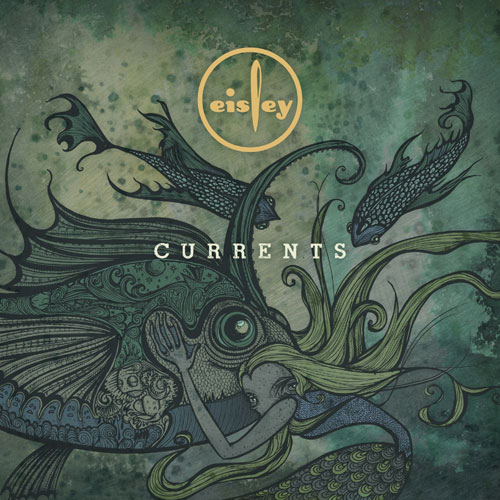
EISLEY - Currents (2013)

Review by: Alejandro Muñoz G
Album assigned by: Nina A.


Eisley is a Texan band formed by four siblings and their cousin. They seem to put a lot of effort upon each song’s textures, and that’s one of the strengths of the album. The overall sound strongly reminds me of Florence + The Machine, especially in songs like “Real World”.

There are some really delightful moments in the album. Take for example the superb opening track built upon different layers of acoustic and electric guitar lines; the melody of the “come lay under my wing” line in “Drink The Water”, mimicked by a piano all along the song; or the gorgeous piano arpeggios in “Shelter”.

I’m usually a big supporter of “albums” as integral works of art which should be listened from beginning to end to understand each song in its context. However, in this case the fact that most of the tracks share the same mood and tempo means that, when listened thoroughly, the album may appear quite unexciting at some point. This problem is accentuated by the limitations of the singing: while the lead singer (or are there more than one lead?) is a perfectly capable one, it’s not a particularly versatile or dynamic voice. For these reasons, I believe these songs are much better appreciated when listened apart from the album, isolated or alternated with other artists contrasting songs.

Overall, Currents is a beautifully crafted indie pop-folk-rock album; a nice listening experience, and I would surely return to some of its songs.

Wednesday, 20 April 2016

TEAGUE CHRYSTIE - Adventures in Faking This (2014)

Review by: Nina A.
Album assigned by: Graham Warnken


The Internet doesn’t seem to know a whole lot about Teague Chrystie, apart from the fact that he is a visual effects artist and that he has at some point written a musical of the name “Sad Max” with another guy, named Jim Frommeyer. But this scant information does indeed put the 5-track record “Adventures in Faking This” into perspective. It suddenly does make sense that the guy who’s written it has had experience with musicals because all these songs are textbook-crafted. They showcase expert knowledge of how to do your song in this or that style, to suggest this or that. (And probably not a ton of originality, if I have to be honest).

The opening track, with the visually concrete title of “Limp-Dick Christmas Lights”, already suggests that if we’re not dealing with full on comedy here, it is at least spoofing or self-aware irony. The singing on it I’ll assign to the self-aware irony column, aping very successfully the Elvis Costello school of setting your lyrics to the music, but the musical backdrop is probably more suited to the spoofing column: there are even the obligatory announcing-a-Christmas-number jingly bells in the intro. The bombastic horns and the boogie-woogie rhythm associated dashing sleighs (or zombified shopgoers) really drive the point home here. Unfortunately, while I thought this track is super fresh and funny on first listen, by the fourth I kinda hated it the way I hate every Christmas boogie-woogie, jingle bell rock or bluesy number ever.

Next up is a delicate waltz time ballad of the name “Blank Walls and Crowded Shelves”. Now the waltz signature is used widely for such purposes as depicting nostalgia or comfort or feelings you’ve sort of made peace with or... yeah... a vignette of ordinary people's life drama, which is the use it is put to here. The string accents emphasise the whole affair in just the right way and the corny lyrics are something I find no pleasure in listening to. But hey, I know for a fact that some people can have a cathartic experience on something like this.

I feel that “I Feel More Like a Leonard”, the third track here, is supposed to be this cultural reference or a sublime in-joke but I don’t know what it is about really. Again, the energy, passion and measured shredding are just as prescribed (textbook derivatives, remember) and the 6/8 meter is a nice touch that enables this song with a driving rhythm.

The penultimate “Writing a Letter” is a gentle piano ballad, equipped with a heartfelt vocal delivery and lyrical details such as “perfectly mature adult” and “can’t stand myself”. This sort of thing would work great in a musical actually — where you have to shed light on the internal character drama and his motivations. Outside this context though, again, it is something I have absolutely no interest in learning about.

The raunchiest track on here serves as a closer to this 5-part magnum opus and this time Mr. Chrystie puts on his best Gogol Bordello impression. “The Insidious Communist Propaganda of Steve” opens on a rhythm as heavy as a drunk dancing bear from Belarus and sports the correct amount of chaotic enthusiasm to make it work, although the chorus-like “la-da-da-da”s are not nearly as drunken and tobacco-hampered as those that can be found on a Gogol Bordello record. The lyrics are probably funny too, if you can take communism puns and jokes by people who have a super vague idea of communism, which I usually cannot. In fact, why don’t we ban the word “propaganda” altogether — it certainly would make most high-school assignments more pleasant to read, as students would no longer feel the urge to use it left and right to prove they have understood the topic. It would also be relieved of its duty of a go-to word for people who cannot be bothered to do their own thinking. Anyway, the song features the obligatory spoken (or rather boisterously shouted) word coda and even gains steam to finish on a beat worthy of a balkan brass band. It does not hold as long as a balkan band would have it hold though (’cause that’s when the most frantic dancing happens), as it derails into its quirky component sounds pretty quickly. Oh and there is a scream.

So in conclusion, I’d say that Adventures in Faking This can be a fun record for a couple of listens, but I wouldn’t exactly cry if I never heard from it again. Congrats to Mr. Teague Chrystie on being so impressively good at faking this, though. The professionalism shines on all of the tracks.

Top 6 Jukebox: THE BEATLES

By Fahad Khan, Nina A. and Francelino Prazeres de Azevedo Filho


Fahad Khan


6. All You Need is Love

It’s all about the sentiments, man: those excessively utopian sentiments. A modern day secular hymn, it leads off with a raucous, but not unstately, rendition of the Marseillaise, the emblem of godless optimism. The song goes on to become an instant sugary cliche, but I love it, every single minute, right down to those repeated brass refrains. Finally it all starts to spiral and swirl into a maelstrom of even gloopier emotion and well that bit at the end with she loves you yeah yeah yeah gets me everytime.

5. Hello Goodbye

Once again I’m going to cite the tension between the essentially ephemeral, and even intrinsically silly — silly when shorn of their musical context that is — sentiments evoked by the lyrics and the weightiness and artistic heft that is furnished by the music. Then there’s confusion and perplexity of the song, the not knowing whether you’re coming or going. Except that it’s a gentle and joyous confusion, the perplexity of true pioneers working at the bleeding edge of art and culture with a sensitivity and a surefootedness that were utterly beyond the dreams of most of their peers.

4. She Loves You

Utterly irresistible: two minute twenty two seconds of pure pop ecstasy. Listen to how completely impatient it sounds, how much of a headlong rush into the future it represents. It manages to capture -- with a supreme vitality and freshness that’s scarcely dimmed with the passage of the years -- the instant when a generation’s extreme intolerance for boredom and the black and white limitations of the postwar world finally managed to kick start the 60s and modern day youth culture into existence.

3. Lovely Rita

The best song on Sergeant Pepper by a country mile. For me, Lovely Rita’s full-on zaniness has always proven a refreshing antidote to the tendency towards turgidity and a lack of focus in some of the album’s preceding tracks. It is, in essence, a randy young lad’s paean to a voluptuous and military looking meter maid, the titular Rita, whom the narrator manages to invite out to take some tea, and even gets to share a couch with — but without alas ever quite “making it”. The song ends with a heavy panting that’s either shagging or (given this aforementioned inability to make it) a gasping sort of masturbation, but it sounds so much like a dog’s panting that you kind of don’t realise what it is, or might be, straight away. Lovely Rita’s charm derives largely from its brassiness and its chutzpah. The track represents an aural allusion to that cheeky, fringey, head shake you always see them doing in the footage from the beginning of their career: and of course it also serves as a fantastic showcase of Lennon and McCartney’s complete mastery of the songwriter’s craft.

2. Sexy Sadie

The Beatles seemingly at their most frivolous and inconsequential — but it’s precisely here that you can really appreciate just how genuinely superlative Lennon and McCartney’s songwriting talents actually were. Just listen to it a few times in a row, over and over, until it finally clicks into place, and takes up permanent residence in your head. The words sound kind of silly to start with, and yet the music is so compelling, overloading the lyrics with such colour and significance, that soon they begin to appear weighty in and of themselves. Now, at this point you could well begin to roll off all the usual detailed, technical musicological/textual-rhetorical explanations as to why their songs continue to inspire awe and devotion amongst music fans of all generations; but I maintain that in essence it was the combination of both the Beatles’ supreme talent for melody along with, rather crucially, the absolute open-endedness, that somehow gnomic, elusive aspect characteristic of their art, that ensured its immortality. Sexy Sadie has that elusiveness in spades and it’s a song that continues to intrigue listen after listen after listen. 

1. Strawberry Fields Forever

With Strawberry Fields Forever you feel like you’re getting the Fab Four at the absolute top of their game. They’ve reached the point where they can afford to goof around as much as they want and to make a decent stab at pushing whatever musical or cultural boundaries they felt like when they got up for breakfast that morning. All the same, it doesn’t have the self-consciousness and  that hint of pomposity that tends to mar their other more overtly experimental or psychedelic works (indeed for me it far surpasses other superficially similar tracks like Lucy in the Sky with Diamonds and in fact most of Sgt Peppers). Strawberry Fields has a languid and dreamy, opiate feel to it, across the which there wafts a certain air of ‘continental’ sophistication, and then there’s the insistent ‘primitive’ rhythms and finally a release into unreality and consequent bliss. The lyrics make little sense and yet they mean so much that, in the end, they manage to encapsulate the spiritual yearnings of an entire generation. When all is said and done, it’s a gorgeous, gorgeous mess. It seems to not want to go anywhere in particular but can’t really stand to stay still either: poised between a deep desire for an alice-in-wonderland style escape from the realities of everyday life, a reversion to a childlike state of simplicity, and the irresistible thrusts and promptings of personal ambition.

Nina A.


In 1980, Chocho Vladovski (of Tangra) wondered whether in time under the stars in the window there will be light, and whether he will still be listening to the Beatles and reading the timeless poets. He's sadly not around anymore but in a world where the beat, shortness and earwormy hooks are still pop songs’ main qualities under consideration, the Beatles are still the kings in the consciousness of many audiophiles, melomaniacs and casual music fans. Sadly, this most iconic of pop bands never touched my heart of hearts and never made my Balkan feet tap to the beat, but after some consideration, I had to concede that there are a couple of Beatles songs that are worthy of my love (or at least like) and here is the top 6 among them:

6. Eleanor Rigby

Have you seen that meme that All The Lonely People come from art college? Have you seen Paul Poirier and Vanessa Crone deliver a stunning performance on the ice to a version of this song in 2011? All I am saying is that this song had to take some helping to make it past my “ordinary people sob story” detectors, but still the strings provide the perfect backdrop and support for this piece and even the singing approaches genius emotiveness levels at points (something that is usually lacking with the Beatles).

5. Blackbird

You know, figure skaters luuurve the Beatles, and they are somehow generally seen as the intellectual skating kid’s path to greatness. Joshi Helgesson skated a cute routine to this Beatles song (or at least an elevator muzak blues cover, which is something else that skaters seem to love) in the 2014-2015 season. But I am best friends with this song from before - for example, the time when my sister would practice nothing else on the guitar for more than a year. Or the time when I stumbled upon the King’s Singer’s a cappella interpretation of it and it stuck to my brain like bubblegum sticks to hair. Ew. The bare bones arrangement and evocative lyrics do this song a massive service and its pretty melody is able to shine. Also it sounds perfect on a backdrop of rainy April evening noises, as I have just found out.

4. Revolution 1

Iconic British ice dancers Torvill and Dean skated to Revolution in the 1989-1990 season, actually (I don’t know why the skating routines keep happening in this list). However, I prefer Revolution 1 to Revolution, and it is mostly because of the beat, quite bluesy both times (major plus - I think the Beatles don’t do bluesy often enough) but I prefer the more laid-back and steady version here. Probably also because I am tired of hearing Revolution and Revolution 1 sounds like a refreshing rearrangement to my Beatles-unappreciative ear.

3. Because

Aaaaaah-aaah. This song is very pretty in an a cappella rendition but the harpsichord that underpins the whole thing is even better. Also the lyrics are rarely appealing and there is no English drama that can be found in the newspaper. Yes people, I think that the puns of blueness, etc. here work rather well here. Very well indeed.

2. Within You Without You

Someone told me that the lyrics to this are preachy. Well, what do you expect, it has sitars and is vaguely Indian and this is the 60s when New Age wisdom was released into the wild and even the title kinda ominously suggests what’s going to be going on here. I have no issue with that because for the most part I cannot make out what George is saying at all. His voice is just a part of this compelling oriental tapestry that’s being weaved before your very eyes. The whole thing is epically cool and like a hypnotised cobra, I want to rise out of my basket and do a little dance.

1. I Want You (She's So Heavy)

Finally, a Beatles love song I can actually believe. No pick up lines, wink wink, nudge nudge, romantic clichés and other superfluous detail. He wants you so bad and it is driving him mad. The rhythm is driving too. The guitars sound appropriately gritty and so does everything else about the production. Now this song goes from an highlight moment to a highlight moment but my favourite bits are the subdued parts, and especially how the guitar mimics the vocal, and especially especially how the second repetition of “it’s driving me mad” trails off (on the principle: tension on the first repetition, release tension on the second — always very effective). Love the drumming, love the bass, love the guitar, love the organ, love the singing, love the passion and the maturity of the delivery. Best Beatles song ever.

Francelino de Azevedo


The Beatles are my favourite band, and have been since I’ve been 8 or 9, I don’t even remember. There’s not a lot to say about them that hasn’t been said, but here are my favourite 6 songs, in no particular order.

With a Little Help From My Friends

What makes this song unique, not only in the Beatles’ catalogue, but in the whole world of music, is the combination of so many disparate elements, that mingle with each other so perfectly. Paul’s bass is insistent, pulsing, talking throughout the song, while the piano brings a note of longing. Ringo’s vocal delivery is perfect, laid-back and sympathetic, contrasting with the others’ backing, which is simply gorgeous. The sum of it all is simply undescribable, mood-wise. Is it a happy song? A sad one? Or is it one that englobes the whole myriad of human emotions in less than three minutes? Probably not as much, but if any song is close to this ideal, that’s “With a Little Help From My Friends”. Also, some people say they prefer Joe Cocker’s version, and I couldn’t disagree harder, as he made a normal song out of something so special.

I've Got a Feeling

This was recorded live on the famous 1969 rooftop concert, perhaps I wouldn’t consider I’ve Got a Feeling so special if it weren’t so. On the other hand, I think it’d still rate highly, no matter what. As it is, this song is a glimpse into a different reality where they never stopped touring during their creative peak. And what a reality would that be! It is believed that it was their mastery of the studio that brought the Beatles to true greatness, well, there’s “I’ve Got a Feeling” proving this belief at least partially wrong! Both Paul’s and John’s voices feel much different live, with a weariness that don’t just add to the song, but in fact makes it. George, Ringo and Billy Preston are also completely tuned to the two stars. Mood-wise this is also very ambivalent, Paul’s lyrics are supposed to be happy, while John’s were meant to be sad, but both singers somehow mixed their emotions, so it ends up sounding so very urgent! This is a song felt in the guts and in the heart, a huge chunk of what rock and roll is supposed to mean.

Cry Baby Cry

Music is above all melody, and in the traditional pop song, the strongest melodies are saved for the refrain. Of all the great refrains found in the Beatles’ discography, this one is perhaps the strongest. The melody is gorgeous, and sung by John at his softest, which is accentuated by the hammering of the piano, bubbling bass and occasional guitar scream. Even though the verses themselves are not bad, with their folkish melody and intriguing lyrics, they could be cut from the song to the point where it would be three minutes of “cry baby cry / make your mother sigh / she’s old enough to know better / so cry baby cry” and it would still be an excellent song. In fact it would gain a different meaning, more like a mantra, and might even had been better than the original.

Eleanor Rigby

The Beatles’ most influential song. In 1966 this changed the perception of what a ‘pop song’ was meant to be. The melodies were lusher and more “classical” than anything else on the charts, and the somber lyrics made it even more clear: Rock was Art! Even if not for it’s historic significance, this song would still be one of the greatest ballads ever written. The verses’ vocal melody is simply stunning, and the strings are likely to have been the most beautiful in Sir George Martin’s career.

Long, Long, Long

The quiet “Long, Long, Long” might be one of the most overlooked Beatles’ songs. However, it touches me in an unequaled way. The way it starts so silently, as if drawing you inwards, but then submerges you in gorgeous intensity, on the “so many tears” bridge, it’s a journey throughout George’s soul. The ambiguous lyrics were meant to symbolize a rapprochement with God, but really they can mean anything you feel the strongest about. It’s also one of Paul’s and Ringo’s best performances, and they do provide a huge depth to the song.

The Abbey Road “suite”: You Never Give Me Your Money / Sun King / Mean Mr. Mustard / Polythene Pam / She Came in Through the Bathroom Window / Golden Slumbers / Carry That Weight / The End

Yeah, I went there. I asked Fahad and Nina if they’d let me and they said yes, so I did it. But really, even if they had forbidden me I’d choose “You Never Give Me Your Money” by itself. Everything in there is perfect, the piano, the bass, the vocal melodies, but specially the most beautiful guitar sounds George has ever produced. Seriously, it’s like he simply doesn’t stop with amazing guitar lines, culminating in the gorgeous part that appears when Paul does “came true / today” and continues till the end. That line is so haunting, if I listen to it once, I’ll hum it for the rest of the day. But, after a short rest on the beginning of Sun King, the rest of the suite continues with musical magic. It was meant to be the Beatles’ swan song, and they showed off all their range, diversity of melodies and moods, and, why not, instrumental virtuosity. No other artist in history can claim to close their career with something so significant, with the possible exception of Mozart and his Requiem Mass, and that’s because he fucking died writing it!

Playlist: Spotify, Deezer