WELCOME TO OUR NEW SITE: tomymostalas.wordpress.com

You'll be automatically taken there in a second.. Change your bookmarks, thanks!

Showing posts with label A Year In Music. Show all posts

Sunday, 24 July 2016

A YEAR IN MUSIC: DEATH GRIPS - Niggas on the Moon (2014)

A YEAR IN MUSIC: 2014
Review by: Jonathan Moss


Man, Death Grips are such a good band. Some people give them shit for being edgy and to be fair they are edgy but in the 21st century they really are doing something new. MC Ride for one is a very original rapper. He gets typecast as an angry black man but I think there's a lot more to him than that. He can do a lot more than express anger and on niggas in the moon in particularly he displays moments of playfulness. I'm going to start a new paragraph now but i'll pick this thread back up later. 

Niggas on the Moon is somewhat overshadowed by Jenny Death but its a fantastic album by itself. It opens with Up My Sleeves which starts off with a female computer voice and car alarm (I think) after which Ride rapidly says the title of the song over zach hills cymbals. Then it goes into Bjorks vocal samples and this really interesting droning, fucked up synthesizer playing. I wont analyse Ride's lyrics or anything but they're really fantastic, including the simply GREAT PUN “quench my hearse”. The song continues along this line before going into a really creepy subdued bit with MC Ride monotonously saying “If I'm so necessary, blank blank obituary, at Broadway cemetery, at Broadway cemetery, was like I'll ever know, was like I even want to know, was like I never didn't know, was like I don't know I don't know, if I'm so necessary, blank blank obituary, at Broadway cemetery” then manically laughing before going back to the main, erm, hook of the song. This easily makes it for me one of my favourite Death Grips songs. 

It segues perfectly into the second track Billy Not Really which features more great Bjork vocal sampling and a strange almost paganistic, possibly synthesized flute line, or something that sounds like it. Either way it gives the song an almost night time woodsy vibe, despite being synthesized. Black Quarterback- the song that follows- is really fucking manic and has a very catchy chorus. The “Eddy's crazy, abrogate me” bit is hooktastic as well, containing an almost infectious bouncy, dancey synth line. Say Hey Kid is cool as well, featuring MC Ride delivering the line “dont it feel good to drive a bus? People need to get picked up” in a disconcertingly playful way. It's one of the creepiest songs on the album, with the synth line sounding almost sickly- and IDMish- and lyrics which contain references to overdosing and seem to be about vampires, though probably as a metaphor, idk. Have a Sad Cum BB is definitely the noisiest song on the album, with buzzing synth lines bobbing against each other, synthesized MC Ride vocals, really frazzled Bjork (i'm not even sure if its Bjork on this one) vocal samples and some female sing-shouting the title of the song. This gives it a very raucous seasick vibe, but hell, its danceable. Fuck Me Out is interesting lyrically, seeming to be about how sexual contact is preferable to love. Its got a catchy chorus as well. Voila is one of the weaker songs in my opinion but it still has some great high pitched screaming from MC Ride. Big Dipper is a strong closing song, with MC Ride rapping in the chorus “I'm a bullshitter, I'm a shitty stripper, I'm a silhouette lifter, I'm a struck stuck off kilter, I'm a bent bewildered, I'm a fucking downer, I'm a binge thinner, I'm a Big Dipper”, before repeating it again, but y'know, with more shouting. It's a very fun line to quote randomly at people on facebook messenger. The song features more strange sounding synth lines and is definitely the most abstract song on a pretty abstract album. 

Shit, that's all the songs on the album! So what can be said about it as a whole. Well, its one of Death Grips leanest albums, the jittery IDMish vibe of the album giving it the same thin, distorted image of MC Ride on the album cover. The Needle Drop critiqued Ride for sounding listless on it but I very much disagree, I think it has some of his most varied vocal performances and the parts TND found as being listless were I would wager intended that way for effect. 

So, to conclude, this is a very strong and somewhat overlooked Death Grips album, and one that helps to negate the image somewhat of Death Grips being a purely edge based band centred on shouting and profanity. Very much recommended.

A YEAR IN MUSIC: ANGRA - Secret Garden (2014)

A YEAR IN MUSIC: 2014
Review by: Victor Guimarães


OK, I reckon that if you’re not a metal enthusiast, it’s unlikely you know Angra. But let me give you a short intro to this Brazilian metal band. With a name inspired in the Goddess of Fire of Tupiniquim indigenous people, Angra is a power metal band, with traces of progressive rock and heavy metal, in a NWOBHM way. Like fellow brazilian death/thrash metal giant Sepultura, Angra constantly brings new, different sounds into their music, augmenting their musical depth as well as not limiting themselves from most rock and metal clichés. Inspiration for Angra’s music varies, ranging from classical music, strongly present in albums, such as Angels Cry and Rebirth, to sounds from traditional and popular Brazilian genres, as one can see in Holy Land and Temple of Shadows. Angra always seemed to follow a very parnassian style of making music, so expect strong technical performances in every instrument and vocals. So, acquaintances made? Alright?

Secret Garden is their seventh studio album, the first to feature vocalist Fabio Lione, who is originally from Italian power metal band, Rhapsody of Fire. This album was criticized by part of the fanbase, as it sounded quite differently from what Angra used to sound. Personally, I didn’t find it any worse than their previous works, only different in its essence. And what’s the issue? The normally strong but melodic metal, with heavy songs and some ballads here and there was turned into something a bit more experimental. Yes, Angra went on and experimented, resulting in a somewhat different sound, although not far from its roots. OK, it’s not like they were as bold, as alternative or even experimented as much as 70s art-rockers - Secret Garden is not the prince of metal innovation, but it’s a clear big push on traditional power metal boundaries. Apart from some classical-Angra songs full of speedy power metal, strong melodies, passages and riffs, expect a lot more of progressive traits, such as tempo-changing, and complex instrumentation and also other characteristics, such as some crescendos, ballads, use of percussion and classical themes. Another great feature were the mood changes from previious albums and take note of the amazing guest singing of Simone Simons (from Epica) and Doro Pesch (Warlock, solo).

Finally (and not wanting to make myself much longer), I had my reasons for liking Secret Garden. It’s true that I’m a long-time Angra fan and a strong metal enthusiast, but the key feature that really made me put this album over many other 2014 great albuns was the way it exceeded my expectations. Secret Garden was different from many new albums of long-loved bands, who were just newer versions of the same (Angra included). In this effort, while searching for something new, they were beyond their rational parnassian music-making: It was a creative, future-seeker effort, much more emotional and human than most of their previous works. Yes, it might be a bit difficult to digest sometimes, or even a little boring for non-metal listeners, but don’t doubt: it’s worth your time! Believe me, listen to it to its end, and then, listen again, focusing on its great instrumentals and imagine what kind of potential was unveiled from this experience. If this surprising album that made a pessimistic long-time fan replay the record over and over again doesn’t make you, rock/metal fan, interested or any music-lover curious, I’ll be surprised with what would make.

Friday, 22 July 2016

A YEAR IN MUSIC: PETER HAMMILL - ...All That Might Have Been... (2014)

A YEAR IN MUSIC: 2014
Review by: Andreas Georgi


Peter Hammill is a rare breed. Very few rock artists in their 60's are still producing top quality material that is not rehashing their old glory. This album is a welcome new addition to his work.

Peter Hammill's discography is long, convoluted, highly eclectic, and it must be said, rather erratic. After a long relative weak patch in the late 80's and 90's he's been on an upswing in the last 12 years or so. Starting with 2009's "Thin Air", he has released consistently challenging and rewarding music. His music is intense, dark, and defies categorization. His recent work incorporates a lot of avant-garde elements like sound treatments and dissonance. Hammill's work is never "easy listening", and his albums always take repeated listenings to reveal themselves to the listener. This certainly applies to this new album. I've been a big fan of his music, and of his recent work, so I am not coming at this new album as a novice. Nevertheless I have to say that it's taken time to grow on me over the last couple of months - more so that his previous albums. The first listening was underwhelming, to be honest. Ultimately, though, I have come to appreciate it as another high point in his career.

The album, comes in 3 formats. There are two versions of the CD release.  The "Cine" version is like a movie for the ears, with short segments moving in and out in a continuous sequence. This is the version PH considers the “primary” one. The format reminds me of his "Incoherence" album (2003), but this one is much more eclectic and certainly doesn't suffer from that album's monochromatic "sameyness". The release I have is a 3-CD set that has two further versions. The "Songs" version presents the material in a relatively conventional individual song format, although listening to this, it will be evident that there is nothing conventional about these songs. The third format are versions of the basic instrumental tracks. This version is very good, but ultimately not as impressive as the other two, although it does verify that the music has a definite cinematic feel to it. Listening to this disk, I am reminded a bit (although it shouldn't be overstated) of Peter Gabriel's movie music. Having 3 versions (2 with vocals) probably didn't help me absorb the material into my gray matter. Perhaps I should have familiarized myself with one version at a time.

As far as a "plot" for the "movie" goes - I have no idea what it is. PH rarely spells out his ideas in a didactic "message song" way. The only thing I can say is that it seems the characters get themselves in rather unpleasant circumstances. The whole album has a sense of ambiguity and precariousness throughout it. The musical elements are the ones that he has used in the recent past, and it sounds most similar to 2012's "Consequences". He uses overdubbed falsetto vocals as a counterpoint to the lead vocals' narration, which have been compared to a Greek chorus. The music itself tends to me mostly slow-paced with relatively sparse, often echoing instrumentation.

So, in a nutshell, this is another solid contribution to PH's discography, and fans who like his recent works will definitely want to pick it up, and won't be disappointed - just be prepared to give it time.

This review is also posted on Amazon here.

A YEAR IN MUSIC: ANAÏS MITCHELL - xoa (2014)

A YEAR IN MUSIC: 2014
Review by: Graham Warnken


Anaïs Mitchell can certainly never be accused of a lack of ambition. Her most well-known project is the folk opera Hadestown (currently playing as an acclaimed Off-Broadway show), which transplants the Greek myth of Orpheus and Eurydice into a Great Depression-type American dystopia and features guests such as Justin Vernon of Bon Iver (Orpheus) and Ani DiFranco (Persephone). The fact that that album is even coherent is an achievement—that it’s one of the best releases of its year is incredible.

Due to her fans’ desire to see many of the full-band numbers from Hadestown and its follow-up Young Man in America recorded solo, as well as Mitchell’s desire to release a few new songs and re-record earlier pieces she deemed unsatisfactory in their original form, 2014 saw the release of xoa. It’s an oddball fusion of a greatest-hits collection with an inverted demo reel, familiar numbers rendered new in their stripped-down format and new songs peeking their way through the sea of music from days gone by. Fortunately, what could have been a perfunctory toss-off ends up being a wonderful album in its own right, equalling and often outright improving upon the earlier material that gives it life.

As with each of Mitchell’s preceding records, xoa is a mix of the personal and the political. The former category includes the heartbreaking “Out of Pawn”, written as a letter from a Katrina survivor to an uncle who didn’t make it; “Come September”, the lament of a migrant picker jilted by her lover; and “Now You Know”, a quietly gorgeous fusion of lullaby and lovesong, among others. Each of these tracks elevates sentiments that could come across as maudlin, thanks to the craft with which Mitchell shapes her lyrics. Internal rhyme and alliteration are constant presences, but avoid calling undue attention to themselves; the sonic rhythms formed by these poetic devices are as natural as they are precise, drawing the listener in unawares. The same holds true for the record’s political half—the propagandic round “Why We Build the Wall” (written a decade before America’s current Trump problem), the barren climate-change panorama of “Any Way the Wind Blows”, the desperate hungry yowl of “Young Man in America”, rise above mere polemic due to the wit and intelligence with which their words are wrought.

Besides wordplay, another constant is emotion. Playful and joyful numbers are lifted up by the little-girl lilt of Mitchell’s tongue, which seems genuinely pleased to be here; desolate dirges are delivered with a grief that’s completely believable. Perhaps the most effective emotional moment on the record comes with its re-recorded version of “Your Fonder Heart”, originally present on Mitchell’s The Brightness. In its original version, the song is a warm, teasing greeting to someone who could be a friend come out to play or a lover with whom to wander under the stars, evoking memories of adolescent summer evenings in all their nostalgia-tinged glory. The xoa recording takes the exact same melody and lyrics and twists it into something entirely new—the arrangement, sparse and bare, summons a vision of a caffeine-insomniac awake at two in the morning with no idea how to sleep, and Mitchell’s voice is crushed and yearning. The juxtaposition of the two cuts is startling; it’s as if they’re bookends on a broken relationship, and in hindsight complete each other.

I don’t know that xoa is the album I would direct new listeners to as a starting point for Mitchell—a couple of the Hadestown cuts don’t make much sense out of context, and while there’s the cohesive sound of Mitchell alone on her guitar the subject matter is too varied to form a unified album. That said, it’s the record of hers I find myself listening to the most, and is easily in my top ten albums. In almost every step it takes it improves on material that was already incredibly good, intimate and perfectly constructed. It’s the latest in a long string of storytelling achievements from the current Queen of Folk Music.

Thursday, 21 July 2016

A YEAR IN MUSIC: PHISH - Fuego (2014)

A YEAR IN MUSIC: 2014
Review by: Roland Bruynesteyn


Phish started in the late 80’s but only got to be somewhat famous after 1995, when Jerry Garcia (of Grateful Dead fame) died, and Phish more or less became the new leaders of the jam band scene. They tour a lot and, not unlike the Grateful Dead, concerts and live cd’s are ‘where it’s at’. Although they never formally broke up, there are some hiatuses in their career and Fuego is their latest studio album (from a year, 2014, about which we’ll have to wait some time before we can pass a final judgment as to its musical quality).

Things I like about the album are the absolute virtuosity by all members on their respective instruments (Trey Anastasio, on guitar, lead vocals and main composer, gets most credits but they’re all masters of their instruments), the way they ooze musicianship, the variety in the songs, the non-sensical lyrics and even, sometimes the emotions they convey in their songs.

On this album, “The Line” and “Wombat” are the silly songs (to my ears) but all others rule, especially the title track, “Devotion To A Dream”, “Winterqueen”, “Sing Monica” and “Waiting All Night”. Be warned though, these versions are nowhere near their definitive renditions; you’ll have to download or buy one of their concerts. Check it out and discover how musicians can make a living and have fun at the same time!

Saturday, 9 July 2016

A YEAR IN MUSIC: KATE BUSH - The Dreaming (1982)

A YEAR IN MUSIC: 1982
Review by: Dinar Khayrutdinov


I LOVE Kate Bush. She is a unique artist that balances experimental approach and true talent with accessibility and pop hooks so well that I truly think all of her albums can be enjoyed by most music lovers. However, The Dreaming is still a very special offering in Kate’s catalogue, because this is where she REALLY sets her creativity and her typical brand of weirdness loose. So yes, this record definitely leans towards Kate’s experimental side, and that’s exactly what I love about it!
 
To be fair, “experimental” isn’t really the word here. This is still Kate Bush, not Nurse with Wound or Captain Beefheart or something. So most of the songs stay within “normal” and accessible melodic frames, except of course only Kate could actually come up with THESE melodies: they are perfectly accessible, but they are… unconventional, to put it mildly. On this album you really get the feeling she had a ton fun with them, letting herself do whatever she wanted.
 
Kate’s vocal range is another thing that’s totally let loose – hear that woman scream, pant, harmonize, sing in her normal voice, sing in an exaggerated theatrical manner, sing in a high-pitched voice, sing in a comically low “baritone”, whisper, record her vocals backwards and so on, and so on – sometimes within the same song!
 
The instruments and arrangements are VERY unpredictable too – sometimes you suddenly hear synths coming out of nowhere, sometimes gorgeous strings appear, or scary basslines, or murky percussion, or Irish violins, or a pounding drum-machine – welcome to Kate Bush’s flying circus!
 
Overall, this album is nowhere near as balanced and thought-through as Hounds of Love, not at all as melodic as The Kick Inside, not as mysteriously romantic as Never for Ever and not as… well, as sensual as The Sensual World. Instead, this is Kate’s “crazy” album, where you get all her split personalities at once in one package. That alone, for me, is worth naming this my favourite album of 1982.

Monday, 4 July 2016

A YEAR IN MUSIC: RICHARD & LINDA THOMPSON - Shoot Out The Lights (1982)

A YEAR IN MUSIC: 1982
Review by: Star Trek II: The Wrath of Khan


Whenever anyone asks me for my favourite guitar albums* - as in, “which of your favourite records are the best and most thrilling when it comes to the guitar playing” - I usually have very little hesitation in singling out one album in particular, that is Richard and Linda Thompson’s valedictory 1982 masterpiece Shoot out the Lights: a record borne of painful and acrimonious personal circumstances, but that, of all that duo’s fantastic run of 1970s-80s albums, is generally regarded as their absolute finest. 

Shoot out the Lights is an album that I find myself returning to over and over again and that has lost little of its freshness and its ability to startle for me, even after a full decade or so of intense listening. I single it out as a great guitar album because as brilliant, and in fact as sublime, as the songwriting, the lyrics and the singing are on Shoot out the Lights - and trust me both Linda and Richard are absolutely at the top of their game here - it is Richard Thompson’s guitar that ultimately ensures the record’s immortality. 

Thompson’s playing on Shoot out the Lights represents a true marriage of profound artistic inspiration with a remarkable instrumental virtuosity and technique that foreswears any hint of flashiness or trace of superfluity, but that instead is always supple and alive: the grace and fluidity of Thompson’s lines characterised by an extraordinary sense of precision and focus. Thomson’s guitar playing always lends a striking, palpable sensuality to the songs on this record: songs that trace the breakdown and disintegration of a marriage that was also a wildly successful artistic partnership, though in the end the ache seems to have been primarily a bodily/physico-emotional one. The guitar’s electric resonances hint closely at past intimacies, at feelings since buried over in a furious tide of acrimony and accusation - the instrument serves as an unforgettable, furiously effective complement to Linda’s yearning-but-distant vocals in songs like “Walking on a Wire” and Richard’s gruffly desperate turn on “Man in Need”: ultimately raising these songs to a level of emotional eloquence that is rare, even among the best of Thompson's folkish/singer songwriter peers.

Linda is dignified but broken throughout - weary beyond telling (“where’s the justice and where’s the sense?/when all the pain is on my side of the fence”) - her haunted vocals are a mixture of betrayal and utter resignation, while Richard’s vocals swing back and forth between bewilderment and rage (“Back Street Slide”). 

In the end, even though it’s the guitar that sets this album apart, the songwriting is just exceptional throughout - and if you’ve ever been curious as to why Richard Thompson is so often cited as one of our finest living songwriters then I really can’t think of a better place to start. 


*No-one’s ever actually asked me this, not yet anyway, but just humour me. 

Monday, 6 June 2016

A YEAR IN MUSIC: IRON MAIDEN - The Number of the Beast (1982)

A YEAR IN MUSIC: 1982
Review by: Victor Guimarães


It is widely known the importance of the eighties to music, specially to rock music. Ok, it was the age of the synthesizers, new age and electro-music, but also the decade who gave a great name to modern metal. Yeah, I know metal is from before the 80s with some heavier songs here and there and great bands already in the 70s, such as Led Zeppelin (which while one can argue about the metal label, they've been truly influential to the genre, one of its biggest progenitors), Black Sabbath and Judas Priest (those two are indeed metal), among others. The (arguably) loudest, most distorted and meanest derivation of rock music, metal was, in the 80s, getting independent from its blues and psychedelic origins while also drinking from the same cup as the punk movement. Those influences helped to create a new kind of intensity, fast and aggressive, which gave birth to the widely known and loved New Wave of British Heavy Metal (NWOBHM, for short), a movement whose most expressive and famous band is Iron Maiden.

The Number of the Beast is Maiden's third album, the first to feature vocalist Bruce Dickinson and a milestone for the band, as its commercial and critical success made the british headbangers soar as much as any metal band before them could. It was so famous that contributed for opening the market for the genre and spreading the movement around the world, inspiring other great names, such as Helloween and Metallica. And while the album's name, cover art and some of the lyrics inspired some rumors about the band being satanic (which was corroborated by some strange incidentes that happened while the band was recording), the inspiration for it was a nightmare bass player Steve Harris had after watching the film 'The Omen' (1976). A motion picture I'd recommend myself.

The record is remembered by Dickinson remarkable vocals, bringing Maiden music to a new dimension, and by maintaining the amazing instrumental level the band displayed in their two previous works: creative, catchy, talented guitar solos, captivating, rising drums and a strong, ever-present bass. Now, add that instrumental raw talent with great songwriting, clever melodies, riffs, bridges and choruses, all composed to draw the best these inspired musicians could do. Apart from all those compliments, The Number of the Beast is not without flaws as some songs can be a bit repetitive sometimes and the lyricism is quite simple, contemplating themes such as war and battles, desperation from facing death or the supernatural, and even contemplating the events around a brothel. For the tracks, the spotlight shines on Hallowed Be Thy Name, Run To The Hills and the title track, The Number Of The Beast.

A major success and undeniably famous - it's the reason why the band is also sometimes referred as "The Beast" - the album was the kickstart to Iron Maiden's legacy, which continues to this day. The year 1982 was way before my birth, and thus, I came to this work of art more than 20 years of its release. It might not be the best album of that year, or even Iron Maiden's best album, but, for me, it was a priceless experience to listen to The Number of the Beast, a classic of heavy metal that has been linking generations of old and young, experienced and rookie metalheads (and other music lovers) through time. 

An experience I'd like to pass on. Hope you get the link as well.

A YEAR IN MUSIC: ALICE COOPER - Zipper Catches Skin (1982)

A YEAR IN MUSIC: 1982
Review by: Jonathan Hopkins


It's hard for me to think of a more unjustly maligned album than Zipper Catches Skin. Almost everybody considers it the low point of Alice Cooper's career, and those that don't seem to have forgotten it exists. Even the few defenders these days seem to only offer lukewarm praise along the lines of “It's not as bad as people say.” While not quite a masterpiece, I do think this is a very good album that doesn't deserve anywhere near the hate it gets.

First, some background: This is the second of what Alice refers to as “the blackout trilogy.” His alcoholism had gotten so bad that he claims to have no recollection of this album or the two albums bookending it, although he does seem to at least have some memory of Special Forces given that he toured it and occasionally will resurrect a couple of songs from it. The same can't be said for this or DaDa. On that album, the picture we got was rather sad and tragic, but here, humor and irony rule the day. Also, while recording Zipper, he wasn't just plagued by alcohol abuse – he was also addicted to crack, and apparently during the sessions, he'd hit the pipe after any given take. That's really the key to understanding this album.

I don't want to give the impression that Zipper is about his addiction problems – it isn't “about” anything at all. But musically, crack is clearly the primary external influence. I don't even know how to classify this album. Most people shrug their shoulders and call it “New Wave,” but even as loose as that term is, it doesn't fit comfortably. The album doesn't have the herky-jerky Cars rhythms of Flush the Fashion, nor the Police guitar tones of Special Forces. There are barely any keyboards with the notable exception of “I Am The Future,” a slow sci-fi dirge which was recorded for a film soundtrack and thrown on here to fill up space. It doesn't belong on the album at all, but since Zipper's goal seems to be to make as little sense as possible, it ends up working. I suppose I'd call Zipper hyperactive post-punk as a descriptor, but even that doesn't feel adequate.

Zipper can't really be measured in individual songs. Alice barely sings, preferring instead to snarl and bark his way through in a half-speaking/half-singing manner, and the tracks don't feel so much composed as spewed out. However, the songs all have their own individual moments of intrigue. “Adaptable” is an undeniably catchy and well-constructed pop song, to the point where I'm amazed it wasn't chosen as the lead single. “Zorro's Ascent” and “Scrooge's Song” combine their slightly off-kilter guitar work with snappy choruses. The manic riffage and completely out of place, but effective, backing vocals of “I Better Be Good” are incredibly charming, as is the way the song essentially constructs itself from the ground up with each passing line. I'll never get the way Alice Cooper snarls out “I've got a Porsche and I'm leaving Grand Rapids” in front of what sounds like a twisted version of 50's rock music in “I Like Girls” out of my head. Every song has something good to say about it, but there's only so many ways I can pick out and phrase these moments.

It's the moments that make the concept work, and that concept is essentially a portrait of the complete collapse of a man's psyche, and that is why I find the album so fascinating. It starts off somewhat normally – composition wise, not in attitude or lyrics which are already off-kilter – and as it goes on, the tempos get more frenetic and the madness ratchets up very quickly. It's hard to think that the album could get crazier considering that it starts with “I AM THE FOX AND I GO WHERE I WANT!” until you find out it ends with “THAT WAS THE DAY MY DEAD PET RETURNED TO SAVE MY LIFE!”

Zipper certainly isn't perfect. I've already mentioned that the songs don't seem to have any thought put into them, and while the style works for me for the 30 minutes it's given to us, I could see how it could get annoying to some, and if it went on any longer, it probably would to me as well.

But those weaknesses don't detract from what I consider to be a very intriguing and idiosyncratic experience. I think the backlash comes down to two things: what people expect from Alice and whether the style and hyper-self-effacement endears itself to the listener or aggravates them. The second point is subjective, but as to the first, I'll say that while it may be stylistically nothing like one would expect from Alice, the spirit is there 100%. There are many albums and songs out there which depict something like a slow descent into madness – Syd Barrett and Skip Spence's albums, parts of Peter Gabriel's III, a whole bunch of stuff by Pink Floyd – but this is the only album I can think of which depicts not a slow descent, but a rapid plunge, and does so entirely without its creator's consent, with the tongue-in-cheek sarcasm and irony Alice Cooper is known for on overdrive. Whether you like Zipper or not, there has never been anything else quite like it.

Thursday, 2 June 2016

A YEAR IN MUSIC: THE CLASH - Combat Rock (1982)

A YEAR IN MUSIC: 1982
Review by: James Hodgkiss


Combat Rock, the last album by the Clash*, is an interesting album, taking the experiment that was Sandinista! and refining it, making it more coherent and blending it with their established sound to create something that really defies any attempt at categorisation other than “a work of genius”. I've not tried to properly review anything before, and doing it in the middle of the night like this probably won't help, but whatever - the following is written, track by track, as I'm listening.

“Know Your Rights” as an opener sets the tone for the whole album, really: angry shouting and guitars in the name of social justice as you'd expect from the Clash, but a ska beat with the piano behind it and vocals that follow their own idea of what the song sounds like, utterly fantastic and at the same time unusual.

“Car Jamming” is even more unusual, I have no idea how to make any kind of examination of it other than that it's great. I'm trying to think of more to say because it needs more than one sentence, but honestly I can't describe it, it's a Combat Rock song and immediately recognisable as such. Echoes of Joe's later stuff, certainly, but unmistakably a Clash song nonetheless.

“Should I Stay Or Should I Go?” is the most normal song on the album, and again it's just fantastic. Easily the most accessible, the bass tone is a tad strange, that's not at all a bad thing, just a reminder that it's still Combat Rock. Come on, who doesn't love it?

“Rock The Casbah” now, following genius with genius. All the music written by Topper Headon, and the piano at the start played by him too (and the bass, or so I read somewhere), as if his drumming wasn't enough to make us remember how great a musician he is. This is the Combat Rock sound at its most accessible, definitely not the regular Clash sound but just as glorious, as I'm sure anyone could hear, not just people who already like them.

“Red Angel Dragnet” - Paul and Topper providing a weird, massively cool beat with occasional stabs of guitar while Joe...fuck knows, I have no idea what he's talking about, but it's got the ineffable essence of the Clash that makes it great anyway.

“Straight To Hell” is an incredibly powerful song, it might take you a while to realise it but when you do it'll hit you like a punch in the stomach. Just listen to the frustration, anger and pain in Joe's voice, and I don't know how to describe the music accompanying it in a way that's not repeating what I've said about other songs already and that's not good enough because it is different, there's a different feeling to it and it compliments the vocals perfectly, like I said I don't know how to describe it but just fucking listen to it, really listen to it, and you'll see what I mean.

“Overpowered By Funk”... despite what the title claims this is actually the exact amount of funk to be cool as fuck rather than overpowering, though that is helped a lot by it being The Clash playing it because let's be honest, it's hard for them not to sound cool as fuck. I still have shit all idea what Joe's talking about but it doesn't matter because it's him saying it.

“Atom Tan”. This just sounds great, again it's unmistakably a Combat Rock song, I can only get vague scraps of meaning from it but as with Joe's later stuff, I know there's a meaning there even if I can't work it out.

“Sean Flynn” is definitely reminiscent of Joe's later stuff (can you be reminiscent of the future?) in feeling, though perhaps not as much in instrumentation. It's Joe making a point in the obscure way he does, you might not get it as a song if you don't really try, but if you do you'll find it's bloody good. It knows what it's doing and where it's going, even if you don't.

“Ghetto Defendant” now, a weird song that again you probably won't get unless you try, and again I don't really know what it means but I know it has a meaning, Joe is trying to tell us something important in a way he understands but nobody else ever could.

“Inoculated City” is far more easily understood, and not as weird either (by Combat Rock standards), it's an underrated song. Not sure what else to say, everything I could write about it could be gained just as easily by listening to it.

“Death Is A Star”... part song, part spoken word, none of it understandable, but still with that gripping Clash sound. Again I'm not sure what else to say, but that's because it defies description really, it's unlike anything else and no other band could do it.

All in all it's a truly sublime album, unlike anything else, a fitting note for the band to end on and what I've said obviously hasn't done it justice because no words ever could. It's the Clash, how could they?

*Yes, absolutely definitely the last album. There most certainly wasn't an album under their name released called Cut The Crap, that did not ever happen.

Sunday, 22 May 2016

A YEAR IN MUSIC: SPLIT ENZ - Time and Tide (1982)

A YEAR IN MUSIC: 1982
Review by: Nina A.


Split Enz are one of my most favourite bands ever but for the uninitiated they seem to be perceived as what Neil Finn was doing before he got himself a new band, wrote “Don't Dream It's Over” and thereby reserved an eternal spot on vh1's So 80's or One Hit Wonders playlists for himself. By the way, Split Enz also had a hit in the US with “I Got You” from the 1980 album True Colours (another Neil-penned track), and although it only reached #53 it went to #1 in both their native New Zealand and current residence of Australia and made them known to the world as this poppy new wave band. Need I say, they were saaaw maaahch moaar!!!!

By the time Time and Tide arrived in 1982, the band had arguably reached their creative peak (or at least their post-1977 lineup had): in a year or two, frontman Tim Finn would become enamoured with his solo projects and disinterested with the band's career enough to effectively break it up but for now he had a lot to say because he was going through a rough patch of his life. How do I know? Well...

Split Enz had always had “quirky” written on their business card, and the whimsical stage performances and elaborate costumes and stage make-up (courtesy to percussionist Noel Crombie) was what stood out about them but deep down they had enough charming personality to attract a devout fanbase – one that formed as an official fan club way back in 1976 and to this day spends time reminiscing about events, posting pictures and documenting every single detail of the band's career online. It is obvious that to them (and me) every Split Enz album is special in a different way but the real question here is, if you are not really invested in Tim Finn's nervous breakdown, or the story of Neil Finn meeting Sandy Allen ("the world's tallest woman", as the next line of the song proclaims likely because they had no Wikipedia back then) in New York, or how Noel took on the daunting drumming responsibilities after former drummer Mal Green left the band, does this album have anything to offer to you, listener, and is it really all that good?

In my opinion it is as good as the Enz (yes, fans and press really called them that) get. A significant chunk of the weirdness is gone here, and even the costumes and weird make up are severely toned down, consisting of fitting the subject naval attire, to make way for a somewhat more honest emotional journey. It is really the emotional arc of the three main compositions here - opener "Dirty Creature", the epic of "Pioneer/Six Months in a Leaky Boat", which is the centerpiece of this more or less conceptual album with a strong nautical undercurrent (he-he, puns), and Tim's own autobiography in song format "Haul Away" - that makes the strongest case for this record. The main songwriters of the band post the major lineup overhaul of 1977 have been Tim and Neil, of course, with occasional sweeping instrumental contributions by keyboardist Eddie Rayner but this album is all about Tim and his emotional journey, so much so that it was called "Tim and Tide" by critics at the time. (Neil gets the spotlight on the next one, as fate would have it, but with the very different narrative of loving your wife and bringing a new life into this wide and imperfect world, which would probably be better appreciated by people aware of the joys of family life.)

Another thing this album has going for it is the tight playing on it - Noel Crombie, following his promotion to a drummer, brings a lot of taste and cymbal action to his energetic but steady druming and with Nigel Griggs' super solid pulsating bass remaining a staple of the band's sound, the rhythm section carry this album on its naval journey across the seas (more puns!). While Neil still hasn't developed his trademark sensitive new-romantic vocal modulation that you can hear all over the Crowded House catalogue and his singing can get a bit flat at times, Tim does a fair bit of chewing the scenery on here and balances intimate and theatrical in a very entertaining way. Another good thing about Time and Tide is that despite this being the 80s and keyboard-wiz Eddie Rayner being still very much at the heart of the Enz's wall-of-soundy sound, the record doesn't sound dated or cheesy at all. The production and more specifically the arrangements bring out the best in each tune and succeeds in emphasizing the nautical theme - somehow achieving the sound of the sunset-lit sea on the cover. The final strength I wish to address is the pop sensibility, for despite the energy and wit and unconventional arrangements (well, for the world of pop) these are deep down straightforward catchy pop numbers. 

"Dirty Creature" opens here with its driving rhythm and a world of metaphors about er... um... psychological struggle? Panic attacks, to be more specific, which are personified by the mythical Māori beast Taniwha. Binding and gagging Tim's wits and doing other scary stuff. Next up is the gentler “Giant Heartbeat”, which was written on top of a bass line that Nigel Griggs had come up with, and I think it is here where Neil starts really developing his vague lyrical approach about whatever that somehow so sums up the human condition. Anyway, the song builds nicely and ends on a cool held vocal, leaving the floor for “Hello Sandy Allen”, a song about how we're all really beautiful or appearance doesn't really matter all that much or something that gets a pass here because it was written before this trope became widely abused, and also Neil seems to have been sincerely impressed by meeting Ms. Sandy Allen and really digested the event and come up with this conclusion on his own. Also, who cares, the song is so catchy and infectiously happy.

“Never Ceases to Amaze Me” is, on the other hand, super camp, and the video has become somewhat notorious with Tim wearing afro wig and the rest of the band dressed in Star Trek suits materialising in this... zoo… in which he apparently works and examining... these strange hu-man ways... yeah, I think the band have since said that this clip is somewhat embarrasing and they shouldn't have done it. Despite all this however, the track is not a waste at all with some over the top vocal delivery, energetic drums and ascending bass lines. The following track “Lost for Words”, as well as the album closer “Make Sense of It” are a good use of your Tim Finn and his energetic and frantic stage persona, while the more basic Green Aesop midtempo “Small World” is brought to life by the really effective contrast of driving rhythm and shimmery synths and guitars. 

This is followed “Take a Walk” - my favourite number on the album – which also rides an energy wave and delivers a coolish piano solo right after Neil shouts "Run. Boy. Forever AND EVEEEEEER". Now, I think this song is somewhat prone to word salad moments such as “Funny when we move ahead // Never worry what we leave behind // Remember what a friend of mine said // You gotta be kiiiiind”. And have courage perhaps, then? Is your friend really Cinderella's mom?

Slowly but surely we have made our way to the sweeping “Pioneer” - Eddie Rayner's only contribution on this album - which does its best to evoke the ocean at night and with its final elated chord even flash a lighthouse's welcoming flash of light. And then...
WHEN I WAS A YOOOOOUNG BOY!

This has to be indeed the centrepiece of this album, not only in its emotional sincerity and a strong motif of overcoming but also because it approaches musical epicness with the glorious introduction of “Pioneer” and the wonderfully trailing coda (not to mention a small sailor song-like break in the middle). Apart from resolving to conquer and set free, the song also explores somewhat remoteness and isolation of the antipodean lands, namedropping the history book on Australia “The Tyranny of Distance” as a way to illustrate psychological isolation, I am sure. An interesting fact is that “Six Months in a Leaky Boat” was banned during the Falklands war in the UK because talk of leaky boats was concerning. 

This epic is immediately followed by “Haul Away” in which Tim visits chapters of his life while the instrumentation builds from verse to verse. As an additional nice touch, right after he sings “ambition has lost me friends and time” there is a quick sample from "Split Ends" - one of the bands very first songs from way back when a bunch of friends in a quirky acoustic combo were trying to win some New Zealand tv contest for exposure. 

A turn to the darker follows on the penultimate “Log Cabin Fever” by Neil, in which a claustrophobic menacing atmosphere builds up until it is released with the line “Time to break away from my condition // Rejoin the human race, see what I'm missing”. And then the song proceeds to rock out.

It is left to the jangly guitars and somewhat drunk bass on “Make Sense of It” to conclude this album.

As for our conclusion, Time and Tide may not be a milestone in any sense of musical development but it is one of those complete package albums. The sound of it is as delightful as the cover art. It is fun and quirky but also resonates emotionally, and not one second of it is filler or boring. With themes of overcoming obstacles and asserting yourself, and some nice nods to seafaring and adventure, all brought out to shine with some tasteful arrangements, I'd say the record even verges on timeless. While Split Enz's debut Mental Notes is an exhibition artful quirk and offbeat music hall extravaganza, and the hit album True Colours brings you catchy shiny polished new wave, it is Time and Tide, in my opinion, that is the most complete offering in the Split Enz catalogue. But more than that, as I said in the beginning, the real charm of the Enz that won them over their cult following is perhaps not the whimsical presentation of their early days that must have so impressed people. No, I think the reason people still spin these songs and talk about the band fondly is that the Enz are deep down these straightforward kiwi lads, and while earlier albums painted them into this misfit deadpan snarker role, on Time and Tide they look much more like the protagonists of children novels who may have grown up a bit but still have not lost their thirst for adventure. And this is why I’d always recommend this album.

Saturday, 14 May 2016

A YEAR IN MUSIC: THE JAM - The Gift (1982)

A YEAR IN MUSIC: 1982
Review by: Charly Saenz


Some people have their faith, their religions and Bibles. Some other try to explain their fancy philosophy out there so they feel more alive, and thus make each day count (in Springsteen's words "At the end of every hard day, people find some reason to believe"). Well, we all do that in fact, sometimes putting those words in reviews. 

But when you're a kid, those things have little sense, and for me (as for many others) what did have sense was Music. So, The Jam were my religion, my little unknown cult with no other known followers, in a little town in South America, without Internet, some mixtapes borrowed or stolen and a few ragged lyrics books bought in dark places. Only The Who and The Kinks belonged in that same category for me, and I wore all their badges with honor in my handmade T-Shirts (and in my school folders, and in 1982 down here those British flags could get you in trouble, you know).

So, this is not another FLAC/MP3 album you will stream from your cool Tidal account, geezer, be respectful, this is The Jam's last album, no less. 

To start off the record, "Happy Together" deceptively sounds like we're on familiar ground, but it's quite obvious instead that they're moving in a more soulful direction. Great vocal harmonies, a galloping bass by Foxton. And a suspicious love song.. almost saying goodbye to their fans? "But I've got no wish to ever cause you pain/Cause there's enough in this world of sorrow/I've no wish to add some more to it"

"Ghosts" is a minimalistic gem, based on a thunderous bass (really, try this on some speakers at higher volume and they will distort heavily), and some horns slowly growing in the distance, leading another "call to arms" from Weller. But by now, Paul is such a mature man (and he was just 24!!) that he'll choose to talk about your demons inside, mate. And if there's a prayer I'll never forget, this is it: "One day you'll walk right out of this life/And then you'll wonder why you didn't try". 

In "Precious" you finally see where The Jam (Paul) is going. This music was more into the soul side, danceable, far away from punk and even Beatles influences. So we have those 70s R&B guitars, and horns! And man, do they sound fine. Though at the time, the song was heavily criticized, "Precious" was a great single, but sadly, anticipates that The Jam was not the group that Paul envisioned in his head for his future adventures..

"Just Who Is The 5 O'Clock Hero" is one of those slightly (and unjustly) forgotten singles by The Jam. "Running On The Spot" is another highlight with its psychedelic atmosphere which seems like a leftover from "Sounds Affects" to stress Paul's social message, managing to merge in with the new sound of the band. "Carnation", one of Paul Weller's greatest classics, bears some stylized lyrics to talk those (horrible!) human emotions that are so easy to find in your own mirror. The middle part is gorgeous, acoustic, as is the piano part which always leads the melody. 

Now imagine you're living a dull life in your little neighborhood, being a housewife who's missing her teens, or the guy trapped in his office rut. Come listen to The Jam, and they'll put a gold lining around it to create an anthem about you (us): "Town Called Malice" and probably the greatest song about the simple life in the little town (if you don't count the magnificent Shangri-La of course).  And those words: "Better stop dreaming of the quiet life/'Cos it's the one we'll never know/And quit running for that runaway bus/'Cos rosey days are few/And stop apologizing for the things you've never done/'Cos time is short and life is cruel/But it's up to us to change/This Town Called Malice"

And to wrap things up, the title track, a simple statement for the last song in an album by The Jam; there would be singles after that but the message would somehow remain: Keep moving, and avoid "All the time that gets wasted hating".

I don't have much to say about "Trans Global Express" (too long), "Circus" (instrumental filler, mostly, nothing remarkable) and "The Planner Dream Goes Wrong" (a caribbean vibe? Come on!) but the rest is Prime Jam, which is something to say. Add some fantastic singles from the time, and you get a perfect lot. We're talking about a band with somewhat flawed albums, but hey, that's the case with many other bands (The Police!) and the best proof is their singles collection (A and B sides!) which goes to show these guys wrote and performed some of the best songs of their time. 

Kudos, Paul, for being one of the few who left the race when you were winning, to start from scratch (taking a big risk, which didn't always pay off by the way). And remember, you've got The Gift Of Life! Don't waste it! Keep movin'!

Friday, 13 May 2016

A YEAR IN MUSIC: SIOUXSIE AND THE BANSHEES - A Kiss in the Dreamhouse (1982)

A YEAR IN MUSIC: 1982
Review by: Andreas Georgi


A Kiss in the Dreamhouse is Siouxsie and the Banshees’s fifth album. It follows their two most acclaimed albums. Kaleidoscope (1980) and Juju (1981). Those two albums are rightfully regarded as excellent & innovative works that have been very influential and need to be heard. A Kiss in the Dreamhouse, on the other hand, is often given short shrift in comparison. In contrast to Juju’s harder sound, this album has a lusher feel to it. Strings are used on a number of songs, and Siouxsie’s vocals are more melodic. It also employs a lot of overdubs and studio treatment that give it a psychedelic feel that matches the Klimt inspired album cover. Apparently Siouxsie commented at some point that she had been experimenting with LSD or some other psychedelic drug at the time. Many of the songs, like “Cascade”, “Melt”  have trance-like grooves, especially “Circles”, which is almost like a repeated mantra. “Obsession” is at the same time sexy and creepy, very successfully creates a dark atmosphere with minimal instrumentation. “Slowdive” is a dancey number that got some play in clubs in the day, and has a good groove, though it’s not as good as their other efforts in that vein, like “Cities in Dust” or “Peek-a-Boo”. “Cocoon” mixes the dark vibe with a bopping jazz-like bass line. It’s a fun if not entirely successful attempt. The bass player is a bit clunky and out of his league here, unfortunately, but it’s enjoyable nonetheless. The lush “Melt” is another highlight, but it’s all good, actually.

This album would be the end of their peak period, IMO. They would continue to make very interesting music, and reach other high points, but future albums would be much more erratic than their best work. The crucial ones are The Scream, Kaleidoscope, Juju and this one.

This review is also posted on Amazon here.

A YEAR IN MUSIC: ELOY - Time to Turn (1982)

A YEAR IN MUSIC: 1982
Review by: Alex Alex


Time to Turn released by a German band Eloy in 1982 is the last “true” Eloy album. Indeed, the last song on it, noticeably named “Say, Is It Really True?”, gives an impression of someone awakening from a long dream, so sad and completely un-Eloyish it sounds.

Never reaching the magic of the previous year’s Planets, Time to Turn though works perfectly as the continuation of it. The songs are much shorter, much lighter, much poppier, yet they are all unmistakably Eloy, brewed by the secret recipe which even the band itself completely lost the following year and was never able to find again.

The title song “Time to Turn” is one of a better-known Eloy hits. It can remind somewhat of Pink Floyd, as many other Eloy numbers do. However, as Eloy themselves once put it, there is nothing especially bad in that comparison – Eloy sounding like Pink Floyd is perfectly fine for Pink Floyd could never sound like Eloy.

Overall, for those preferring the “space-rock” Eloy era this album is indispensable. It is best listened right after the “Planets” and knowing the two might be enough for an occasional passer-by. You may then travel back in time and listen to, perhaps more majestic, “Dawn” and “Ocean” or to, somewhat untypical, “Colours”, but those would be very different. Or, out of curiosity you may listen to the 1983’s “Performance” and become speechless seeing how the group inexplicably lost everything in just one year.

A YEAR IN MUSIC: ULTRAVOX - Quartet (1982)

A YEAR IN MUSIC: 1982
Review by: Julien Mansencal


1982 belongs to the vast category of years that came before my birth, and Quartet belongs to the vast category of albums I discovered a long while after their release. Actually, my discovery of Ultravox's "classic four," from Vienna to Lament, happened across a short period of time, so much so that I still have trouble distinguishing them: to me, they are more like four consecutive chapters in a novel, and I would be hard pressed to choose a favourite among them.

Of course, I can hear the way George Martin (yes, *that* George Martin) gave a different twist to their sound here when compared with Conny Plank's production on Vienna and Rage in Eden, but I do not feel the result is substantially weaker: more accessible and "poppy," that's undeniable, but the songs are just as interesting.

On my first listen, I spent an entire evening replaying "Reap the Wild Wind" again and again, always getting the same kicks from the crashing opening. A brilliant first track, maybe too much: nothing else on the album comes close to it. A few songs actually leave me cold, especially "Visions in Blue," which aims too hard for Beauty with a capital B and fails. But I usually have an easy time resonating with Midge Ure's passionate delivery and Quartet is no exception, be it the nervousness of "Cut and Run," the grandiose faith of "Hymn" (what an apt title) or the vibrant nostalgia of "Reap the Wild Wind." When the whistle fades away at the end of "The Song (We Go)", I am always left wanting for more, so I usually follow it up with Lament. (As far as final chapters go, this is a really bleak one, but that’s a story for another round of reviews.)

So, maybe Quartet is the weaker chapter in the Ultravox novel. Still, it fits so well the overall narrative that skipping it would be a shame. "Hear the words of the syncopated rhythms; welcome to the song."

A YEAR IN MUSIC: DIRE STRAITS - Love Over Gold (1982)

A YEAR IN MUSIC: 1982
Review by: Roland Bruynesteyn


Is it really the best album of 1982?
In all genres?
Is it still the best after more than 30 years?
How about a sell-out to the CD buying public?
Jumping the video clip wagon?
Isn’t it just an OK singer-songwriter, fronting a very, very mediocre band?
Yes, Mr. Knopfler has a nice guitar sound (only one, though) but isn’t his voice rather poor?
The Phil Collins of guitar playing?
Pathetic lyrics, so simple they’re basically insulting?
Silly instrumental passages that try to suggest a cinematic quality but fail utterly?
Doesn’t the production date it terribly, with the cheesy synthesizer sounds (organ synthesizers, string synthesizers and the like).
Would anyone really ever listen to this nowadays?
 
Questions, questions, questions…
 
I do not have the answers to all these questions, I wonder who made them up. All I can say is that for me this was by far the best album of 1982, in 1982.
 
At the young, impressionable age of 18, still somewhat developing my musical tastes (actually being quite elitist about it), I loved music, but more or less hated all music that was played on the radio. I was deeply into Queen (since "Killer Queen", at the tender age of 9 in 1973), Pink Floyd, Genesis, Camel, Meat Loaf and Paul McCartney, but they were old by 1982, and Queen had actually stopped making good music after QLK.
 
I loved the first three albums by Dire Straits (albums I remember having as LPs, with Love Over Gold, before I switched to CD in 1984). Making Movies was already promising something new, but this was it: good music, well performed, atmospheric and still amazingly popular, especially in the Netherlands (partly because they went totally CD, in touring sponsorships with Philips at the time).
 
I felt slightly ashamed that my musical tastes coincided with popular taste, but I put aside my snobbery and enjoyed it immensely. In 1985 I went to a concert in Leiden in a hall where I had exams during my studies at the University (and where they apparently sold pigs two days previously…). The hall has been demolished.
 
I listened to this album for the first time in more than 10 years today, and it made me cry and laugh at the same time. It brought back memories of that year that I wanted to forget, and it brought back memories that shaped me into what I’ve become. It was the right album at the right time for me. I’ve since moved on musically; it will probably be another 10 years before I listen to it again, if at all, but I will never part with it.

Thursday, 31 March 2016

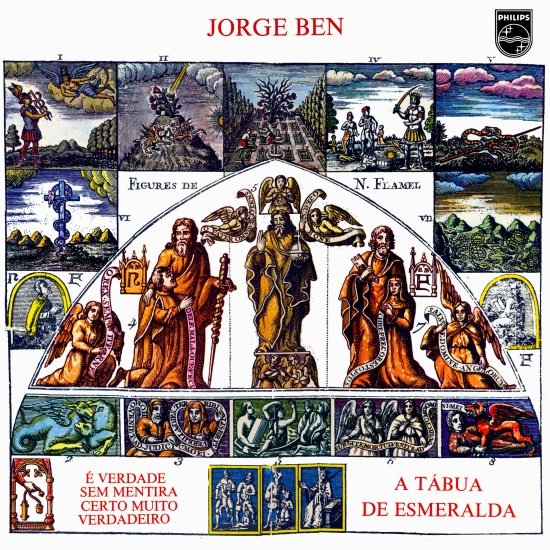
A YEAR IN MUSIC: JORGE BEN - A Tábua de Esmeralda (1974)

A YEAR IN MUSIC: 1974
Review by: Star Trek II: The Wrath of Khan


Choosing one single album from 1974 was always going to be a difficult one; I mean ferchrissakes this was the year of John Cale’s Fear and Kraftwerk’s Autobahn, Red by King Crimson and Neil Young’s On the Beach. It also saw the release of other heavyweight classics from as I Want to See the Bright Lights Tonight by Richard and Linda Thompson to Bowie’s magisterial Diamond Dogs and… need I go on? What a coup it would be if 2016 could lay claim to even just one record of the stature of the aforementioned, and yet 1974 was able to boast something of an abundance, a surfeit. So that being the fruitful year that it was, the task of narrowing 1974 down to one defining record seemed a little bit of an exercise in futility, the warped practise of excessively anal and emotionally frigid fanboys. And yet there is something to be said for such an exercise if it forces you to ask yourself what it is that made you fall in love with an album in the first place, and can you rationalise it, and isolate at least some of those emotions and feelings that the music can evoke in you? And all that in turn usually provokes a deeper appreciation of the album itself, at least that’s how it’s gone for me in the past.  

In the end, the choice of record turned out to be fairly straightforward. For, casting my eye down the length of RYM’s highest rated chart for 1974 (at least the part from 1-100), I found myself inextricably drawn to one single record in particular, the album in question exerting its massive gravitational pull from near the top of the chart at an impressive seventh place. Not bad for a record that hardly anyone outside of the Lusophone has ever heard of and that you’ll have a hard time tracking down at your local record store. I’m talking about Jorge Ben’s remarkable A Tábua de Esmeralda.

I only discovered A Tábua de Esmeralda last year, shortly before Christmas, thanks to a very felicitous recommendation by fellow music fan and genuine Brazilian, Francelino de Azevedo. It’s an album that began to weave its spell on me almost immediately. At first the allure was all in its very understated, very delicate, almost spectral beauty — and in the beginning that beauty was all that I could hear. A Tábua de Esmeralda has so much of that innate joy and optimism that I associate with Tropicalia — as if it was always being sung through a smile. I am especially in awe at how Tropicalia, at its very best like A Tábua de Esmeralda, can manage to convey so much of the joy and optimism of a perfect, shimmering dawn: the soft, diaphanous and blissful quality of the music. Being up in Glasgow at the beginning of January, back when my obsession with the album had really started in earnest, I was in dire need of some reflected warmth and sunshine, I can tell you. 

Because I do not have much of a grasp of the language, the meaning of the words and the cultural references on the record were pretty much lost on me. Certainly the fact that the language in question is Brazilian Portuguese — a language justly renowned and justly famous for its richness and innate musicality — made it eminently easy to only focus on how the words sounded, how freely and joyfully they rolled off the singer’s tongue, rather than on what it is that they might actually signify. But gradually my superficial and purely aesthetic appreciation of Tabu began to trouble me. I started to get the impression that ignoring as I had been the whole socio-political-historical dimension to the album, I really wasn’t doing it proper justice; that I was in effect just projecting my exotic Brazilian-Tropicalia fantasies onto the music. It was more than just self-doubting right-on liberal guilt on my part though: the music kept on drawing me in further and further, and after I got over the initial impact that the grace and the dizzying beauty of Jorge’s music had had on me, then my mind became much more attuned to the more complex emotional palette of the songs. The centerpiece of the album — the song that convinced me beyond all doubt of A Tábua de Esmeralda’s status as a masterpiece, and that also never fails to give me goosebumps whenever I listen to it — is called Zumbi. It’s a song that is as close to perfection as it gets, at least to my ears. I would have it rolling on a loop in my head for days upon end and at night when I got up to go to the toilet I’d be thinking ‘What is this fucking song that’s still echoing away in my head? I have to listen to that Jorge Ben album straight away when I get up’. Zumbi though was clearly more than just a bunch of pretty words strung together in a charming and colourful arrangement. Part of what made it so compelling was that it sounded like it was about something horrifying, some kind of terrible event and that in the end was rendered into something beautiful and sublime and hopeful, without sacrificing that sense of sheer, fiery indignation, and all through the true songwriter-alchemist’s art. It tugged so powerfully at the heart and guts that you felt positively obliged to ask what it was all about, just what was the story behind it? -- once the song got at you, you couldn’t just leave it at that. I went and checked online for a translation of the text and found out that it was about the leader of a slave uprising, the titular Zumbi, and learned the whole story thanks to Wikipedia; the translation of the lyrics with a brief explanation of the background of the song can be found here. 

But that’s just the one song. In the end, like any of the other great album masterworks in the popular music canon — Forever Changes, Blood on the Tracks, Pet Sounds, Astral Weeks — A Tábua de Esmeralda has its own rigorous internal logic, with nothing, not even a note, out of place. And like all those other albums it has its own distinctive magic, and that special exhilaration you feel whenever you hear the opening bars of the first song, and you already know what it is that you’re in for.