WELCOME TO OUR NEW SITE: tomymostalas.wordpress.com

You'll be automatically taken there in a second.. Change your bookmarks, thanks!

Showing posts with label A A. Show all posts

Tuesday, 26 July 2016

VIRGINIA ASTLEY - From Gardens Where We Feel Secure (1983)

Review by: A. A.
Album assigned by: Julien Mansencal


This is an ambient album that evokes nostalgia, and does it better than some but not all similar albums. Mostly pianos and soundscapes and samples/field-recordings comprise the sound. I do not have a lot to say about it, but I'm somewhere between appreciating it and liking it. On the whole, I think most people would be positive toward it than negative.

Wednesday, 20 July 2016

RAGNARÖK - Ragnarök (1976)

Review by: B. B. Fultz
Album assigned by: A. A.


Ragnarök is a Swedish band from the seventies. A number of sources list them as "progressive folk" in the vein of Jethro Tull. For me, this distinction is clear for Tull because I'm familiar with the textures of medieval English folk music, but I have little idea how Swedish folk/traditional music sounds, so I'll have to take their word for it. From what I remember of Nordic mythology, Ragnarök roughly translates to "Twilight of the Gods" -- the final war that heralds the end of the old gods and the old world. The album cover does indeed depict a Twilight sky, but no apocalyptic battles ... just a shadowy figure on a bicycle riding down a winding country road toward an oncoming bus. I do not know who is riding the bike or who is driving the bus, and there is no clear indication whether the two will pass one another or collide head on, so the message is unclear. On the cover, the umlaut-dots in "Ragnarök" look like two more stars in the night sky. Who knows, maybe they are? In stark contrast to the name, the cover is very pastoral, almost idyllic. The looming black cloud seems to be the only hint that something ominous could be on the way.

The reason I've tried to decipher the album cover is because the music itself has no lyrics, so it doesn't explain what any of this has to do with the end of the world. Maybe they just thought it would be a cool name for a band?

The music itself is essentially an acoustic tapestry of different moods and textures. The "progressive folk" label is misleading because it has none of the trademark elements of Prog. No futuristic sound effects or Keith Emerson synth solos here. In fact I don't think there ARE any synthesizers on this album, and very little keyboards. About the only real connection to Prog is an occasional jazz influence on the guitar solos and some tricky drum syncopations. It's a lot closer to Pink Floyd and Jethro Tull than it is to ELP or Yes. The song titles are in Swedish, but I listened to the songs before I deciphered the titles, to absorb the various moods neutrally. The album mostly follows a folk pattern, yet there are a variety of subtle nuances here. 

Färval Köpenhamn (translated to "Father Choice in Dubai?" ... I split up Farval syllabically, so I'm not sure of the accuracy here) begins the album on a simple folk pattern of interwoven acoustic guitars in the style of David Gilmour (both the early and latter days of Pink Floyd) crossed with something else I can't recall. It's wistful sounding in that way a good Gilmour acoustic track is. This Pink Floydish quality recurs in several songs, including the very next song, called Promenader ("Walks") ... a longer and more complex song with an attractive guitar melody and spacey/dreamy solos laid atop a mellow jazzy background. Stoner rock of sorts, but of very high quality.
Nybakat bröd ("Freshly Baked Bread") shifts gears into a mid-tempo medieval ballad. As soon as I heard the opening notes, I thought Jethro Tull ... amusingly, a few seconds later a flute made its first appearance on the album, and I had to smile (did I call it, or what?). If you heard this without knowing all of Tull's back catalogue you could easily confuse it for one of Ian Anderson's Elizabethan forays. Purposeful and meticulous minstrel-strumming with a sense of forward motion. Yet ere you climb on your steed and make haste, it is over, and we're falling into the Dagarnas Skum ("Days of Foam") and another Pink Floydian fugue state. The longest song on the album, it begins almost too softly to be heard, climbing out of the gloom in a way reminiscent of "Echoes." It has some VERY Gilmour-sounding guitar playing, and all of these surreal little background chirps and chimes that make the whole thing sound somewhere halfway between dreaming and waking. When the flute comes in, it sounds so right it seems almost preordained. Soft sibilant percussion appears and intertwines with the rest, sometimes steadily, sometimes in convoluted little syncopations. The whole thing is amazing -- if I didn't know the band I would swear I was listening to early 70s Pink Floyd at the top of their game. I can only assume the Foam in the title is sea-foam ... it's a dreamy undersea world, like Echoes, where "everything is green and submarine." The finale of Side One, beautiful and sad and deep, a song where everything flows together just so, like some fable that gets better with each retelling. Simply a great piece of music. 

Side Two begins with a return to the land of Tull, and Ragnarök's answer to Bouree' ... a super-short (44 seconds) flute solo called Polska fran Kalmar ("Polish From Kalmar") and essentially the prelude Fabriksfunky ("Factory Funky?" Not sure on this one). Fabriksfunky is an interesting one, another smooth jazz-rocker reminiscent of Robin Trower. The rhythm section as well as the tone of the guitar solos all remind me of the Trower song "Somebody's Calling" -- one of his best, by the way. Then things slow down a little again with Tatanga mani ("Walking Buffalo" and the only non-Swedish title, apparently it's borrowed from Amerindian dialects). This is the one that most reminds me of a Yes song, at least in the beginning. The tumbling acoustic runs are reminiscent of Steve Howe's better moments. The first half of the song consists of these noodling little acoustic fingerings, almost like it's looking for direction. Partway through it turns into something quite different, a kind of Flamenco lounge number on the acoustic with nifty little bass runs. Somehow they bring the flute into it toward the end. And somehow it works. Don't ask me how though. It's really more like "aimlessly wandering buffalo" or maybe "schizophrenic buffalo looking for its medication" because it never sounds like the same song for long. It gets a little disorienting at times, but at least it's never dull.

The last few songs don't cover much new ground -- Fjottot (no idea what it means) brings us back to ELP. It has a bouncy circus-like sound with an almost hurdy-gurdy style background, like you caught Keith Emerson in a playful mood and then he realized you were there and abruptly stopped playing after a minute and a half of noodling around. It's a little too short, but it's fun while it lasts. Stiltje-uppbrott ("Lull Breakup") returns to a solemn introspective mood, at least at first, then breaks into a rousing medieval-esque acoustic barrage complete with a very emphatic flute (back to Tull again). I'm guessing it's about the lonely period after a romantic break-up (the "lull" between partners) where one is in a numb lethargy and then suddenly snaps out of it. The closing song Vattenpussar ("Water Kisses") starts very softly with wistful sounding little chiming keyboard notes weaving with a lonely and bluesy electric guitar, building into a strange kind of jazz-rock-blues thing that I can't exactly describe, with a horns section (at least they sound like horns) that verges on something from Frank Zappa's Hot Rats album, or almost ... then dwindles back to its soft beginnings ... then ends. It was a good song to end the album on because somehow it just SOUNDS like a coda. But don't ask me exactly how or why.

For an album where most of the songs follow a similar theme, I'm a little surprised this review turned out so long. These are all basically guitar-based folk songs, aside from the one flute solo (which was basically a prologue to a guitar song). But there's so much going on, so many different moods and textures and shadings of meaning, that it seems impossible to do it justice with a brief review. George might be able to pull that off, but I don't think I can. This music was nothing totally new or unique, not even back in 1976, and they seem to borrow from a lot of other, more famous bands. Yet they mix these elements in a novel way, making it all somehow greater than the sum of its parts. I have no idea what freshly-baked bread or sea foam or buffalos have to do with the end of the world, but even if I don't understand it, I still feel like I "get" it. This is not an album of certainties, it's an album of nuances. In fact it's so nuanced I think adding lyrics would just have been a distraction. It's an amazing rainbow of moods and emotions and whimseys, and an ideal example of what a few competent musicians are capable of when they stop trying to explain life and the world and everything, and simply concentrate on making good music. This is an album of contemporary folk rock and that's about it, so I suppose it's nothing special. But not being special is what makes it so special. Thumbs up, 4 or 5 stars, whatever ... just go listen to it. This is an album that should be heard, and heard often.

Sunday, 12 June 2016

ONDATRÓPICA - Ondatrópica (2012)

Review by: A. A.
Album assigned by: Nicolás Martínez


I am afraid before attempting to truly review this album I (and the reader alike in time) will have to go through a crash course in Latin music genres :-) … Just look at its RYM page: Cumbia, Vallenato, Afro-Cuban Jazz, Latin Rap, Champeta... I could say this is the kind of music they call “exotic” and leave it at that, losing an ounce of self-respect for being so clueless. Though still, while being no expert, I’d have to content myself describing it very generally, hopefully actually doing the similarly-novice among the readers a small service...

The album starter “Tiene Sabor, Tiene Sazón“ is a jaunty, bouncing tune extremely well-suited for kicking off whatever festivities they have over in the Latin world (and I hear they have many), the feel and vibe naturally segueing into “Punkero Sonidero”.

“I Ron Man” is where I was suddenly taken aback: despite the name I could not divine aforehand it was a Latin music cover of Black Sabbath’s namesake track. Suffice it to say it works, and works well. Probably quite as well as a surreptitious slip into party people’s diet regimen to slowly prepare them for end-of-the-world doominess of the original, if they can’t take it firsthand.

“A female rapper rapping over the Latin equivalent of a klezmer” were my first impressions of “Suena”, the follow up track. “Locomotora Borracha” which literally translates into Spanish as “drunk locomotive” does indeed sound like a drunken motorcade through decorated streets in a Latin funland. Ignore the kind of electronic music the term IDM actually stands for today; “Remando” is what I’d describe as truly “intelligent dance music”: it’s easy on the ears yet still quite cerebral.

“Linda Mañana“ is another festive number with a bit of a dramatic flair, featuring vocals by someone anonymous, not a single word uttered by whom I can understand (well, I can understand “La Madonna”...) but can sense the dexterity of his wordplay.

“Ska Fuentes” is, as the name indicates, a ska – embellished with horns and reminiscent somewhat of classical-era Bollywood music (that being the only point of comparison I have). “3 Reyes de la Terapia” is the odd one out – throaty vocal effects over intermittent doses of... some kind of lambada music (a la Sun City Girls’ “The Shining Path”)? It seems that way to me, lol. “A creeping beat-box fever dream wreathed in dubby echo,” is what another site describes it as, and I don’t think I can top that description.

Epic horns reappear in “Bomba Trópica” and “Descarga Trópica” is replete with a Caribbean island feel. “Libya” features some exotic kind of horns/wind instruments. “Gaita Trópica” is back into happy-go-lucky party dance territory; “Curro Fuentes” is, from what I understand, a “big-band cumbia” … to my naive ears it just sounds like a soaring melange of a large number of Latin musicians doing their thing, and very competently.

“Rap Maya” is again a strange kind of rap over some exotic accordions or maybe reed-pipes that has a very “snake-charming” feel to it. Up next is “Dos Lucecitas”, Latin-jazzy with female vocals, followed by “Cumbia Especial”, a beautiful piece (cumbia again, but no big-band setting this time) which reminds me a bit of Cat Mother & The All Night Newsboys' “Marie”.

“Donde Suena el Bombo” made me feel proud because I could immediately detect one of the the main instruments – a marimba. It has a marching rhythm and the dance vibes that are ubiquitous on the album. The album ends with “Swing de Gillian”, a somewhat sombre piece that sounds like an elegy to more an end of a good party than a human being, given its setting and sound.

Because all good things must eventually come to an end. Unless the next time arrives for popping out this charming piece of Latin exotica and having some fun again.

KAKI KING - ...Until We Felt Red (2006)

Review by: A. A.
Album assigned by: Nicolás Martínez


Pretty music with pretty vocals, some of which is really touching, if a bit commonplace.

Much of the album is acoustic folk with ethereal vocals, like a less apocalyptic Marissa Nadler, with varying amounts of post-rock.

Standout tracks for me (that stand out from the rest because they try to be something different) are …Until We Felt Red, jazzy instrumental post-rock with the unusual time signatures and sludgy guitars with weird scratchy textures; “These Are The Armies Of The Tyrannized”, that actually goes into a hard rock groove midway; the beautifully atmospheric “Soft Shoulder”, which could be something taken straight from Opeth’s Damnation album; and “Gay Sons Of Lesbian Mothers”, which, strange title aside, is like the album highlight on Spotify, being the most streamed track off this album — it sounds like she tried to made a chill-dance track while remaining within the sensibilities of atmospheric folk.

From what I understand, this album has something of a lack of critical clout, but there’s certainly nothing dislikable here for me. In fact, when this album get evocative, it gets remarkable and conjures lush, beautiful moods on a deeply sensitive level. The only real problem is that it contains glowing embers of beauty smouldering amidst more passable material.

Saturday, 4 June 2016

YEZDA URFA - Sacred Baboon (1989)

Review by: Eric Pember

Assigned by: A. A.


This feels like some sort of Frank Zappa-style parody of prog. The vocalist sounds like a less-distinguished Jon Anderson. The songwriting is unstable to the point where the songs feel randomly assembled. There is a heavy use of vibraphones and similar unconventional instruments that have been traditionally beloved by prog. It’s so whacked that it should work just from that alone, and actually kinda does.

However, from what I can tell these guys were completely serious about the music they were making, and from there, you start to notice all the problems. While I honestly quite like Anderson and consider him kinda underrated, this vocalist doesn’t really add any spice at all. The weak songwriting undercuts any emotion they could elicit from the listener. Most of the instruments don’t really add anything to the songs. 

It’s worth a listen just to know how whacked-out prog can get under the right circumstances, but you probably won’t want to come back to this again.

[Note: this album was recorded in 1976]

Friday, 13 May 2016

Wednesday, 11 May 2016

ROKY ERICKSON AND THE ALIENS - The Evil One (1981)

Review by: Irfan Hidayatullah
Album assigned by: A. A.


To this date, I haven't really acquaintanced with the 13th Floor Elevators' work, apart from the Nuggets-made-famous "You're Gonna Miss Me", so I can't really compare Roky Erickson's style with his new 'band' with that one. Based on the description of his previous works, however, this could not be a hell of a stylistic change, there are still traces of garage rock sounds, coupled with typical seventies hard rock/roots rock style.

Despite being released in 1980, a quick listen to the album’s sound shows that this record still belongs to the seventies: just a typical garage band with guitar-bass-drums and minimal amount of electronic keyboards. To go with the new sound, apparently Roky made himself a formula: typical mid-tempo/fast hard rock with loud riffs, powerful screaming and a couple special effects thrown in for a good measure. The melodies are not really memorable; even if there's an attempt to catch the listeners in, be it by a couple vocal hooks, sometimes going for different grooves, different tempos, etc., yet I have a hard time telling the songs from one to another. Okay, so "Two Headed Dog" may be one of the most memorable here, underpinned by a riff similar to the one found at the Kinks' "Set Me Free". There's also an unexpected shifts in moods, to the cheerier one, like the CCR-esque "I Walked With a Zombie" (I wonder if the sound has got anything to do with Stu Cook producing?), or the more upbeat "Mine Mine Mind".

The rest of the album, however, are rather difficult to go in one sitting, at least for me. There's nothing really offensive to be found--yet it sounds way too formulaic to catch my attention throughout. I guess repeated listening will do the trick, as I haven't subjected this to more than one proper listen; in the end, this could be recommended to any Elevators' fan looking for more products, or any typical seventies garage/hard rock fans. Don't expect a mind-blowing masterpiece, though.

Monday, 18 April 2016

EYELESS IN GAZA - Rust Red September (1983)

Review by: Ed Luo
Album assigned by: A. A.


Now this is an album whose exact sound I don’t think I’ve heard before much, if at all. All of the songs overall are essentially moody, ethereal pieces that, although very melodic, very guitar-based and easy on the ear, are still kind of secondary to the atmosphere of it all. That said I’m not quite sure what to make of the vocalist, whose vocal style really reminds me of someone who I can’t recall at the moment. Out of all the songs I would go for “Pale and Pearl” as a highlight, but really I think the tracks work best as a cohesive whole. Would definitely recommend this to others just for the atmosphere, and need to give this another listen when I have more free time :p

Wednesday, 13 April 2016

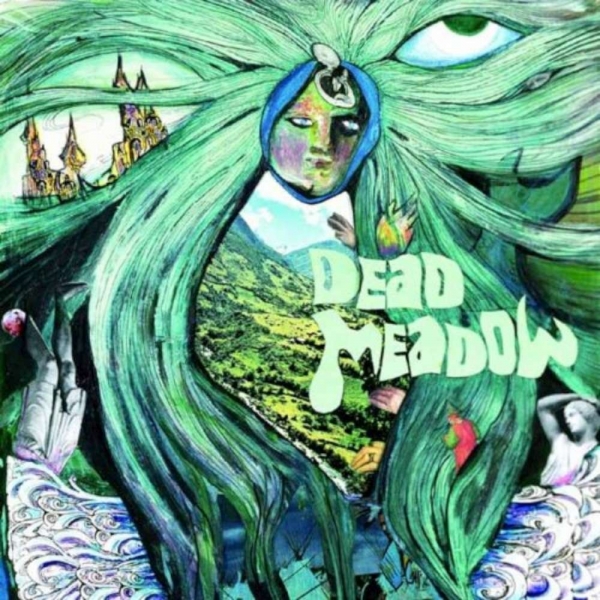
DEAD MEADOW - Dead Meadow (2005)

Review by: A. A.
Album assigned by: Syd Spence


Dirty stoner rock riffs; dazed, far-out, almost wispy vocals drowned in the haze and standing in contrast to all the mucky fuzz; and slow, loosened up drumming. This is the formula Dead Meadow keep using on their eponymous opus. Now, stoner rock and doom metal are the kind of music I used to be hugely into in my youth and evaluating this album for the review brings back old memories of being a Seeker of the Riff ™, though this is hardly the kind of music I listen to anymore.

We start off with a quiet buzz on “Sleepy Silver Door” that leads into a monstrous riff and eventually progresses into one hell of a slow jam, whereas “Indian Bones”' heavy psych indulgences evoke in me images of a stoned out shaman doing his voodoo in front of a fire and inhaling as much the pot smoke as the noxious fire smoke. “Dragonfly” has a somewhat post-rocky ambiance backed by repetitive drum beats.

The next track, “Lady”, reminds me a bit of Manfred Mann Chapter 3's “Travelling Lady”, except that, of course, there are no trumpets or jazz influences here. “Greensky Greenslade” is full of slow doomy blues playing and conjures an atmosphere of early morning rain. “Beyond the Fields We Know” is probably the standout track for me. If the album is soundtrack to a rolling-out-the-joints session (as stoner albums usually are), this might well be the high point of the whole trip. “At The Edge of the Wood” has folksy acoustic beginnings, and pretty much qualifies for a troubadour ballad. “Rocky Mountain High” features some kind of spacey synths towards an end that gets kind of slightly terrifying at least the first time you listen to it. The ending track simply named “Untitled” is mostly an anthemic guitar tune and clocks a short two minutes span, ending quietly without making any fuss.

There's variation, certainly, although the overall sound does not go through any drastic changes. The riffs are interesting and the blues excursions quite lively. The drumming is laid back and relaxedly precise. In fact, the entire album is permeated with certain tranquility, as if not especially or excessively concerned about breaking any new ground but simply about doing a good job at recreating the good old stoner psych formulae with some indications of an individualistic sound. Hey, this is stoner rock after all!

Friday, 25 March 2016

KLAUS SCHULZE & ANDREAS GROSSER - Babel (1987)

Review by: A. A.
Album assigned by: Alex Alex


“Well, hi there, unknown reader of this stone tablet! It's a good sign you're reading this, 'cause it means all this cumbersome scribing of mine isn't going to be a total waste. Life's a bitch already without having one's message being lost in total oblivion, what with all the slave labor for this megalomanic construction project and all.

I'm writing this under moonlight of course. I'd be mad to do anything else than lifting stones and laying bricks all day long... Working my posterior off for the whims of the vagarious King of men. Without wages, too. Soon it would be daybreak. Another godless G-R-I-N-D-I-N-G day of drudgery. Oh well.

What construction work, you say? The ziggurat thingie, of course. See, ol' Nebopolassar's always been a crackpot, but this thing is – how do you say? – a whole new level. I know, I know. 'Scuse the horrible pun; lame dark humor just comes with the job description here. Especially since there's no other entertainment to be had after work.

Speaking of which, I could really do with some music. What kind, though?

The other day I managed to have a brief chat with our seeress. About music and future and futuristic forms of capitalistic endeavour. She says she has visions of future instruments sometimes. That our lowly wood and metal instruments would survive, but there will be new, very different monoliths musicians would manipulate to cajole a variety of sounds out from. Even the sounds of those instruments that already exist. What a rip-off. Massive behemoths with more levers and dials than the stairs this tower's going to have. People think she's nuts.

Hey, I'm not asking for a masterpiece of epicness that mirrors the not-so-proverbial blood, sweat and tears of the workers nor the vainglory of tyrannical swellheads. Just a nice background soundtrack with a cool, tense but not quite grim motif repeating now and again that reflects the nature of my humdrum toil. And maybe commiserates with it, in an odd way. A little something that makes your daily work a bit less of a drag. And when it's over, you're just a little bit sturdier to endure the next day of hard manual labor.

A monument to neither the grandeur nor the pathos of the whole frivolous enterprise. Only a synopsis, like this tablet.

Ooops, oughta be off now! I see the warden's approaching…”

Monday, 21 March 2016

SEMIRAMIS - Dedicato a Frazz (1973)

Review by: Charly Saenz
Album assigned by: A. A.


Not only Semiramis was a prog rock band (genre that we associate with 30+ years old music virtuosos), but it also it was a teenager band. 15 year-old kids! See Backstreet Boys? You could have done better, no more excuses, go somewhere and get blisters on your fingers instead... Too late.

But well, back then in the early 70s you did this kind of thing. And they only released an album, talk about “Better to burn out”: One album may be enough if you do it good. And this is a darn fine album, with great vocals, Early Genesis winks ("La Bottega del Rigattiere”, gorgeous), circuses touches (Geez it's so good), cute jazz flourishes and power chords: Early Crimson? Early Deep Purple? Not sure, this band is quite unique in the end.

"Luna Park" has those breaks with acoustic guitar, bits of pure melodic hard rock, and then it turns into a mighty keyboard attack like a million rabid mosquitos. "Uno Zoo di Vetro" becomes a movie soundtrack piece out of nowhere, then disappears. "Dietro una porta di carta" has a beautiful melody, "Clown" betrays the Circus inspiration of this album.

It all works fantastic, it’s a fun, engaging record clearly made by enthusiasts, and it deserves to be listened many times, so go and hunt for the vinyl, in Italy some 23u$s (Geez), that album cover is so fantastic that you may want a second one to hang from a wall. A Prog minor (because they were teens?) masterpiece. A pleasure indeed.

Time to listen to some Premiata Forneria Marconi, I think.

Peace and Out!

Monday, 7 March 2016

THE SOFT BOYS - Underwater Moonlight (1980)

Review by: A. A.
Album assigned by: Jaime Vargas Sánchez


The Soft Boys' Underwater Moonlight is a jangly post-punk record inspired in equal parts by The Byrds-style folk rock and whimsical psychedelia. Before listening to this album, I had the most passing familiarity with Robyn Hitchcock's solo work, whom I consider, succinctly put, a character.

The album, considered today an influence on the neo-psychedelia movement, has poppish stylings but the punk attitude is certainly not lost. The lyrics are drenched in surreal, sardonic imagery and mostly a biting take on the concept of love from the point of view of misfits who can't get any. Like on "Insanely Jealous", where Hitchcock sings:

The night is black and thick
I wander past your window
And I catch a cigarette thrown from a jewel encrusted hand
It comes on pretty quick
Exactly like a crocodile
In search of a mirage across the undulating sand
But I'm insanely jealous of you
Yeah, I'm insanely jealous of you

I don't know why the people want to meet
When all they know is that they'll breed like rabbits in the end
Cause ordinary people on the street
They never know
But if they can't be rabbits they'll be friends

Other tracks of interest are the ebullient "Positive Vibrations" (which throws in sitars for an interesting effect), the garage-rocky "Old Pervert", and the title track "Underwater Moonlight" with a jamming coda that in parts reminds me of The Cure's "Killing An Arab".

It is a relatively short album and, for the verdict, one I do not find awe-inspiringly meritorious, but certainly interesting, and maybe one to put occasionally on when I'm reading The Chants of Maldoror and need an extra dose of caustic surrealism.

Sunday, 6 March 2016

THE YOUNG GODS - L'Eau Rouge (1989)

Review by: Mark Maria Ahsmann
Album assigned by: A. A.


The Young Gods are an industrial rock band from Switzerland that was formed in 1987. In 1989 they released “L’Eau Rouge”. Which is a delicious album. A rock album. 'Rock' as in 'Adrenaline Music for the Young, Courageous and Romantic’. And it kicks ass, as the saying goes.

Though not revolutionary in any sense it offers it’s very own and well balanced mixture of elements already known in industrial music.

The album is stitched together from samples. Sampled metal guitars (Motörhead meets Killing Joke meets Anthrax), Front 242 style pulsating beats, samples of various styles of classical music and, most uniquely, samples of fairground organs and accordeons as used in musette, middle European cabaret music and french chansons.

The album is extremely tastefully produced by fellow switzer Roli Mosimann, collaborator with Foetus in his cockrock-parody Wiseblood project and former drummer of the Swans. Both influences are quite obvious in their music. From Foetus they borrowed the samples of classical music, - in the vein of Stravinsky and Wagner & horror movie soundtracks strings. From the Swans the extremely heavy drum sound and sonic clarity. Traces of vintage NDW acts like Grauzone (also from Switzerland) and Palais Schaumburg can be heard too. And Laibach, by the way, a band that has the use of classical samples in common with Foetus. Also a band that never eschewed a martial drum beat when one was called for.

But The Young Gods didn't inherit the brutality and atonality that made the industrial predecessors mentioned at times so harsh and to some ears unlistenable. L'Eau Rouge is a very accessible album in which the various elements come together in a logical and organic manner. It is true that none of the elements mentioned are unique. The Beatles sampled fairground organs on “Being for the Benefit of Mr. Kite” and Foetus did the same on “Finely Honed Machine”. Pig also used that sound on Hildelinde. Ah, and not to mention Tom Waits. Samples from classical music and horror movie soundtracks were, by the 1980's, all over the place of course. What sets the Young Gods apart though is the effectivity with which the band uses these elements in a heavy rock context. Without sounding overwrought or willfully experimental. And pretty much sounding like a missing link between Laibach and Rammstein, come to think of it.

Without sounding morbid too. Though I can't comment on the lyrics. My french is not good enough for that. I read somewhere that the title “L'Eau Rouge” refers to menstruation and I think that the track “Charlotte” is about female masturbation. But that's as far is my interpretation of the lyrics goes. However, “L'Eau Rouge” does not sound like it was created by a bunch of sickos. It just sounds too light, too accessible for that (but not quite Right Said Fred yet).

The album is consistent all the way. But there are some favorite tracks: the first track; the title song “L'Eau Rouge” opens in waltz time signature with the fairground organs and chansonesque vocals in place. Then it gets sprinkled with drops of classical sounding strings and just when you think it'll explode in a relentless 4/4 beat something completely different happens. That's a perfect opener. The second song, “Rue des Tempêtes” is a breakneck speed metal song, the best Ministry song the Ministry never did. “Charlotte” too uses the fairground organs in 2/4 time signature and with bits of accordeon actually develops into a very pretty song. And on “Les Enfants” the band uses the classical samples in an oragstic manner and to such a great effect that it has Laibach flat on it's back.

I have one complaint. The singer, Franz Treichler, is trying very hard to bellow and growl in the customary Foetus/Michael Gira/Nick Cave-in-his-Birthday-Suit manner and his voice is just not forceful and expressive enough to pull it off. So he relies on layers of echo but still doesn't really convince me that he's not a nice college-educated boy. Roli Mosimann should have advised him to develop his own style.

But all in all it was a pleasure to meet “L'Eau Rouge”.

Monday, 22 February 2016

HAIL SPIRIT NOIR - Pneuma (2012)

Review by: Jonathan Birch
Album assigned by: A. A.


My first impressions of this album were along the lines of "Dear Lord! What is this horrendous cacophony?!" You see, I have an aversion to generally all things black or thrash metal. My impression of those genres is something involving endless, repetitive guitar riffs, tinker tonker / whizz bang drum solos, bass work that shakes the very foundations of buildings, and a sweaty long haired man doing his best to make his voice go hoarse. But off this album, only the latter is really present in any magnitude. 

The record starts off as one would expect, with a track titled “Mountain of Horror”. From the cover, it's apparent that the subject matter involves some degree of satanic witchcraft and masonry, and what little I could make of the growled lyrics certainly pertains to this idea. However, I had an inkling that this Greek outfit didn't take themselves too seriously, as there is a slight tongue in cheek inflection to some of it, as though they are purposefully going over the top (or at least I hope). I'd be inclined to believe progressive death metal and Devilry have gone hand in hand long enough that any more releases are to be treated flippantly/ironically by the artist. 

While the subject matter is about what I expected, it's the music and production that surprised me the most. There is enough variety added in the form of keyboards (mostly organ or mellotron) that is atypical of most modern rock/metal, but is probably the norm for progressive style. It gives the music a nice layered effect, and each track likes to change things up with some added acoustic guitar codas or tasteful solos. And when the singer isn't doing his best impression of a werewolf, he turns out to possess a pretty melodic and pleasing voice. The closest comparison I could make would be if you combined King Crimson, Van Der Graaf Generator and Cannibal Corse. It's the band's willingness to incorporate classic Prog aesthetics that makes the album most enjoyable.

One of the longer tracks, "When All is Black", begins heavily enough, before morphing halfway through into an almost folksy metal ballad that brings to mind early 70s Genesis, with lyrical ideas that also ring of The Stones's "Paint it Black." With the singer even having a Peter Gabriel-ish inflection in his voice, one could almost imagine Genesis performing this if their music revolved around rotting sores, matricide and summoning the spirit of Beezlebub, instead of Carpet Crawlers and Watchers of Skies. In fact, the second track "Let Your Devil Come Inside" even has a xylophone solo, which added plenty of needed charm to counter balance the imagery of killing one's own mother while inside the womb.

The biggest surprise for me though was the opening of “Into the Gates of Time.” The gentle plucking of an acoustic guitar, with the sinisterly lush orchestral backing of a mellotron, is so jarring in its tranquility that it jerks me into a happy place of sunshine and rainbows. This lasts but a few seconds before the rest of the band comes in with heavy psychedelic guitar and relentless drums shattering the harmony into oblivion. Right away I am whisked off through “the pale gates of time” to someplace not far removed from the Court of the Crimson King… only this place is far, far darker and less inviting. The song continues in a languid, hypnotic fashion, before morphing into this brief jazzey interlude, with a funky Weather Report-ish bass, that lasts oh so briefly. It’s the small moments that are like small slices of delight, to alleviate the relentlessness of “stepping into the darkest gates… amid the strings of time in the candelight”. And yet just when you think it’s over, the track continues with these amazing sounding moog-synthesizer effects amid the crashing instruments, and the song hasn’t even really taken off yet. More strange time signatures and polyrhythms occur, jerking you around until everything is engulfed in the nighttime sounds of crickets and cicadas, with the gentle strumming of a six string to send me peacefully off to sleep; my ears still ringing from the demented lullaby that just ensued.

The last song has a funereal feel to it due to what sounds like a pipe organ, although it’s still a headbanger of a number where the band gets to namecheck themselves in the lyrics a few times. It acts as a nice resolution to the near forty minutes of utter mayhem that has transpired. It ends with the singer whispering “Hail spirit, spirit NOiiiiiir” in your ear a few extra times for effect, before it comes to a close, leaving you with the feeling that someone, somewhere, is busy slaughtering a lamb in a pentagram while listening to this same album. I consider myself a pretty level-headed individual, but the music certainly put the fear of the occult within me, which I guess means the band were successful in their objective.

And that’s the story of my experience with Hail Spirit Noir’s Pneuma. I certainly got the impression that this group were seeking to do things with the genre that most other bands are too lame to even attempt. The variety in instruments, the technical skill and stylings of their playing, the sheer ballsiness of combining 70s avant-garde with no-holds-barred Satanism is what kept my interest for the relatively brief running time. It’s a real adrenaline rush of a record that leaves me feeling a little bit unclean and unholy, which means I couldn’t recommend this enough for black metal fans who are also interested in a bit more complexity.

Now if you’ll excuse me, I’m going to listen to some Enya for a bit.

Friday, 29 January 2016

THE CRAINIUM - A New Music for a New Kitchen (1998)

Review by: A. A.
Album assigned by: Tristan Peterson


16:22

Nurse With Wound.

Trout Mask Replica era Beefheart.

Flowers of Romance era Public Image Ltd.

Hints of avant-prog and free jazz and perhaps musique concrète.

And dins of noisy cacophony.

Still fails to be more than mildly interesting for most of its duration.

Haha, the last track won't even scrobble. Only 0:24.


17:19

I have a slight headache.

And a slighly sore throat.

* slightly

And power failures have twice interrupted my writing flow.

But I must go on and finish the review.

Thankfully the second time I had remembered to save.

For rethinking is tedious today.


18:01

When I was a child I spent many a lonely afternoon playing in the quiet upper storey of our house where no one lived.

(Save the ghost that lived in the ventilation duct.)

And so imagination had free sway.

Once it suited my fickle fancy to try and make tea using sunlight.

(Maybe herbal tea would help with my throat today.)

So I went down and pilfered some sugar. And milk. And tea leaves. And sneaked them upstairs.

And combining them all put the cup beneath the window of the vast dusty anteroom before The Room With The Toys and The Dark Locked Room With The Books and The Room With The Boiler.

(I remember it was the same year two airplanes would crash into two tall towers and I would be deprived of my cartoon-watching TV time for many subsequent days.)

(And the same year my father bought me a PC ­­­­­--­ I was overjoyed seeing it when I came back from an evening at Pizza Hut, recently become a thing in my country.)

The curious concoction, when I returned to it in an hour ­­­­­-- about the duration of "A New Music For A New Kitchen" -- certainly looked like tea. And smelled like tea. And was also warm like tea.

But was not tea.


[tl;dr: I would like this album if it were not both so spastic AND so cacophonous at the same time. As it is, however, I shall probably not be returning to it anytime soon!]

Wednesday, 20 January 2016

XHOL CARAVAN - Electrip (1969)

Review by: Mark Maria Ahsmann
Album assigned by: A. A.


You have to listen to it four times.

Some days ago I listened to this album three times and after that I had pretty much figured out what to write about it:

  • That it's supposed to be krautrock though I wouldn't know what's so kraut about it. Except for the fact that it’s German.
  • That to my ears it sounded more like generic early 70's jazzy and proggy rock with touches of canterbury style psychedelica.
  • That I'm not qualified to make comments on the quality of the album is this is the genre I have the least affinity with.
  • That all in all it sounds competent and original enough for a recommendation to those that love the genre.
  • Just not for me.

But tonight I happened to listen to the damn thing for a fourth time on my bike on the way from work and heard quite a few pleasant and groovy instrumental passages. I don't have the time nor the patience to go for a fifth helping of Electrip though.

So you have to listen to it yourself. Me, I'm all confused. I'm not gonna listen to any music for at least a week.

Sunday, 17 January 2016

STEVE VAI - Flex-Able (1984)

Review by: A. A.
Album assigned by: Dinar Khayrutdinov


This sounds like a heavier, slightly kitschier 80s take on Hot Rats - with an interesting backstory to boot! From the horse's mouth himself:

“This was my first real solo album. I saved up all the money I earned working for Frank [Zappa] [...] and put a down payment on a house on Fellows Avenue in Sylmar, California. [...]

There was never less than 5 people living in the house on a given day and we were all as close as friends could be. Having all those people live there allowed me to play the guitar and build the studio while they paid the mortgage. [...]

I bought this book called The Audio Cyclopedia. [...] I studied this book and rebuilt the tool shed into a 2 room recording haven completely by myself. [...] I christened the place "Stucco Blue Studio" and commenced with all the nonsense.

Everything and anybody was recorded if they got too close. There is a vault full of tapes from that period. I took a handful of this stuff and put it together for release on an Evatone Flexi-disk. After it was completed it sounded like it could make a quirky yet entertaining record. I thought... "Who’s it gonna hurt?" [...]

No record company in their right mind would want to release this stuff, it was too eclectic. So I industriously got to work with my then manager at the time and dear friend, Laurel Fishman. We started a label called Akashic Records that was later changed to Light Without Heat Records. It was quite easy to start the label. It cost $10.00.”

So Flex-Able is basically an experimental metal/rock outing influenced by Zappa-esque techniques and humor. Quite an unusual start for the guitar-shred-virtuoso figure Vai would go on to become famous as, though a substantial amount of guitar virtuosity is still visibly propped in its place here too.

Interspersed with whimsical metaphysical tales (Little Green Men) about alien munchkins invading and mating (Vai was into Eastern mysticism and UFOlogy around the time), odes lamenting surreal junk addiction scenarios (Junkie), and maudlin love duets (Lovers Are Crazy, The Boy/Girl Song) are several instrumentals that showcase young Vai's instrumental prowess (Viv Woman, Salamander in the Sun, The Attitude Song, Call It Sleep, There's Something Dead In Here - that last one sounding like something a horror-prog band like Shub-Niggurath would come up with had they been more metal). Indian classical music influences, weird sound bites, exotic quasi-prog-jazzy instrumental arrangements (long-time mentor Zappa loaned a lot of his gear for the sessions) and a silly sense of humor add to the record's freak-experimental vibe.

Musically the record encompasses crazy sonic experimentation antics, metal riffage, smooth or wailing guitar solos and technical shredding. The bonus tracks version of the record comes with four additional tracks in the same capricious vein as the rest of this odd yet not unentertaining 80s curiosity.

The downsides to this release? Some of it exudes a fair amount of cheesiness, and though it seems to aspire, it does not quite hit the endearing Zappa-level zaniness. Also for me as a reviewer the record does not resonate highly on a personal, subjective level in part because I'm not really big on virtuoso guitar-fests.

Oh, and Vai provides occasional vocals here but these duties are more prominently shared by the duo of Bob and Suzannah Harris (aka Irney Rantin and Ursula Rayven), two of the several vagabond friends-musicians inhabiting with Vai in the makeshift studio dwelling during the eight or so months it took to setup studio and record this almost-accidental album. A whirlwind experience, I'm sure, and as Vai fondly recalls it, quite the time of his life. He says an occasional spin of this does not fail to remind him of a more blithe, naïve era back in his early-twenties!

60 / 100

Tuesday, 5 January 2016

EINSTÜRZENDE NEUBAUTEN - Perpetuum Mobile (2004)

Review by: A. A.
Album assigned by: Mark Maria Ahsmann


For the ever-adventurous (and the occasionally-unsettling – but I'd say that depends more on your constitution) Einstürzende Neubauten, air compressors, car tyres and dried leaves are as good instruments as any to feature on an album. And 2004's Perpetuum Mobile – released almost a quarter century since the band's formation – certainly features a diverse range of them. A mere look at the album credits shows, in addition to the usual rock music mundanities, such delights as Hammond organ, clavichord, pianos of various varieties, radios, loops, plastic tubes, metal sheets, pedal steel guitar, accordion, vibraphone, euphonium, trombone, tuba (played by one Natascha Zickerick – totally digging that name), viola, violin, cello, and bells & whistles (literally). And yes, compressed air, tyres and the crunchy sonic textures produced using dried leaves certainly have their place too in the whole scheme of things here.

Intrigued as you are, you hit the Play button, to be instantaneously greeted by lethargic drones coaxed out of the aforementioned air compressor against a chugging rhythm with Blixa Bargeld's distinctive later-era half-raconteur, half-hypnotist vocals. So it's been decades since the days of stealing construction site equipment to craft dissonant punk-industrial pieces fraught with searing vocal angst à la Kollaps, and we now have a sophisticated, clinically charming storyteller backed by a post-postmodern orchestra. But what story are they trying to tell? Lyrically the album offers us some cues, though the details are sketchy: cold, permafrost, planets, air travel & intergalactic journeys, tsunamis, tornadoes, storms and floods. Often it seems to be about the very real struggles and experiences faced by the refugees to an unknown planet. Maybe the album name Perpetuum Mobile (meaning "continuous motion", but also the continuous rapid succession of notes in a piece of music) is a reference to this continuous struggle as well? Indeed the first track Iche gehe jetzt though heavy on drones and percussions, has also subtle clavichord and organ touches (a technique also used on some other tracks with various keyboard instruments for a similar effect); another allusion to that bittersweet struggle for life on remote galactic habitats perhaps?

The namesake title track is where Einstürzende Neubauten pay homage to their more primal past with metal-sheet banging and a raucous shrill leading to blips and beeps of a possibly last transmission by people trapped inside a space shuttle going awry. And right next up is the Ein leichtes leises Säuseln, which could – with its melancholic pianos, sombre autumn vibe produced using crunching dried leaves, and gentle vocals – very well be an obituary of the previous track's demised as a storm slowly gathers around the lonely survivor-narrator (role-played by Blixa) on the run from an unseen menace. Easily the most heart-touching track on the album.

Selbstportrait mit Kater continues lyrically with the ordeal of the protagonist, with its nonchalant play of bass and rattles (as if the intergalactic gods don't care what becomes of poor Blixa), some Kraftwerk-reminiscent moments, and a hard percussion pattern recurring now and again – and here's when Blixa candidly admits: "Life on other planets is difficult!". Though things look bleak, a glimmer of hope is on the galactic horizon with Boreas. Maybe the other survivors have eventually reunited with Blixa, and now they travel across an icy wasteland looking for the asteroid that will take them to a safer haven. The cold Arctic ambiance and Blixa's semi-hopeful vocals convey this desperation well. Ein seltener Vogel follows with its drony backdrop and cymbal percussion and seems to be about a rare bird – perhaps a phoenix – a sign of some hope to the weary narrator after his comrades seem to have disappeared in the wake of a torrential downpour.

Ozean und Brandung is the nondescript odd-one-out here. It just drones on and on for almost four minutes with seemingly no other purpose than to callously induce in the mind of the listener the empathy for the suffering and uncertainly faced by our friend the protagonist. Thankfully its successor Paradiesseits is aglow with an almost cheery Alpine beauty. Also Blixa seems happy at the relief he's found from his troubles in some kind of a paradise or oasis and is finally enjoying the warmth of the sun by the water and feasting on fishes while his mentor the bird offers him instruction and advice in his dreams about the course he should pursue to describe his experiences in form of the very album we have before us. Lyrics I must admit I never expected to find on an industrial album!

The lyrical gears shift into English for Youme & Meyou (oh, did I mention they were predominantly German except for an English line here and there till now?) So the survivors have come together and cultivated an urban civilization modeled as best they could after Earth – with such familiar things as Starbucks, hotels, laptops and tangerines, though there's some danger from radioactivity and natural calamities. And as Blixa says, if the future isn't bright at least it's colorful. Musically, however, the track is rather plain and lackluster with drawn-out synth passages over subdued tribal rhythms.

I would venture on to describe Der Weg ins Freie as an octane-fueled EBM (Electro Body Music) track reminiscent somewhat of Front 242. But the piano flourishes give it a rather gravely soulful touch – a counterpoint to the catchy beats and blithe vocals. The lyrics seemingly allude to the routine experiences of exploration and travels conducted by the now-settled narrator. Perhaps this is what these settlers dance to on the galactic electro-industrial clubs on their alien planet when they get bored with the rut. For me, easily a standout track.

Though their colony is firmly established, they haven't yet found a sure, complete remedy for death and consequently Dead Friends (Around the Corner) is about venturing into some sort of technological limbo where your dead friends are preserved and maybe even artificially reanimated. Musically the track is not anything out of the ordinary, though it does have some moments of interesting percussion work. The album comes to an end with Grundstück – an almost clockwork-like piece chronicling some mechanized Buddhist ritual in a strange temple on our alien planet, with lyrical themes of putting up with a hazy, distant past.

Earlier I mentioned the sheer amount and diversity of the instrumentation but the band manages to successfully combine them organically and thankfully it does not lead to a tasteless sonic hotchpotch. And so ends this review bidding farewell to our alien colonist friends with some lines from the album:

Ich treibe Inzest mit den Sternen!
Life on other planets is difficult!

68 / 100