WELCOME TO OUR NEW SITE: tomymostalas.wordpress.com

You'll be automatically taken there in a second.. Change your bookmarks, thanks!

Saturday, 11 June 2016

BIRTH CONTROL - Operation (1971)

Review by: Victor Guimarães
Album assigned by: Roland Bruynesteyn


Birth Control was the kind of band that simply refused to give up, always stubborn and persistent - just like a baby who comes in although all contraceptive methods you try to use. (Hahaha. Really?) And why am I saying that? Formed by the union of two other bands whose titles hail from high-society, the Earls and the Gents, the band initially had seven members who, curiously, were all out within five years. The band managed to survive due to the work of two replacement members, Bernd Noske (drums, later vocals) and Bruno Frenzel (guitars), who built the german prog band’s legacy. Frenzel died in 83, and the group disbanded afterwards, but it came back 10 years later, with only Noske remaining from the previous formation. Birth Control kept playing, recording and touring until Noske’s death in 2014. Dunno about you, but for me, that’s great tenacity.

Recorded in 1971, Operation is Birth Control’s second studio album, and it brought more of the good old progressive rock from the 70s. It originally consisted of six tracks, but when it was re-released in 1997, five more tracks from related singles were added. I’m quite honest when I say that the very first time I listened to Birth Control, I was caught completely off guard. The first song, “Stop, Little Lady”, overwhelmed me with sound, and the album kept its high-level progressive, bluesy, aggressive vibe the whole time. Sometimes it looked like something from a blues king from the past, in other moments, it looked like some lost in time, never recorded Yes song. Maybe a reinvented Led Zeppelin? Or a King Crimson from Berlin? Maybe a slower, more progressive Deep Purple? Needless to say, the instrumentals are amazing - Frenzel’s guitar is impeccable in its riffs and solos, bass and drums are taken more than seriously, giving all that prog tempo we love and add majestic keyboards as well. It’s worth mentioning the good use of synthesizers, too. Now cook it all together and serve with the great melodies they picked and we’ve got the recipe for success. The vocals don’t fall behind either, although the singer’s timbre reminds me of something punkier. Still haven’t found why.

As for themes, just when reading the tracklist, I thought it was a big concept album about some random dude who got a girl pregnant (by the first four tracks) and they went in to have an abortion (tracks 5 and 6). Adding the ‘97 release tracks, it even looked like the Operation had gone wrong (tracks 7, 8), but they somehow fixed everything (tracks 9 and 10) and in the end, the coupled started using a Birth Control method (final track). Check and see if you agree: 

Original tracks (1971):
Stop, Little Lady
Just Before the Sun Will Rise
The Work Is Done
Flesh and Blood
Pandemonium
Let Us Do It Now

Bonus Tracks on the Repertoire release 1997:
Hope (Single A-Side 1970)
Rollin' (Single B-Side 1970)
The Work Is Done (Single A-Side 1971)
What's Your Name (Single A-Side 1972)
Believe in the Pill (Single B-Side 1972)

This time, I got disappointed: no concept. Was I expecting too much from a 70s progressive rock band?? Nevertheless, the lyrics are nice, covering topics like changes, hopes, confusions and problems in life, some love songs, the heavy feeling of guilt of someone who killed a child in Vietnam war and last (in both tracklist and in this enumeration) but definitely not least, a song about BIRTH CONTROL! Literally! 

For spotlights, I dare say the album as whole is a spotlight. But being a bit less (or a bit more?) partial, I’d put a star on “The Work Is Done” and “Let Us Do It Now”.

Yeah, Birth Control really caught me. A lot more than when it was introduced in sex ed classes. (Hahaha. Again?! Really?) Really. If you’re fan of progressive rock, or of 70s rock, or if you’re looking for something new or if you just like good music, Operation is your call. 

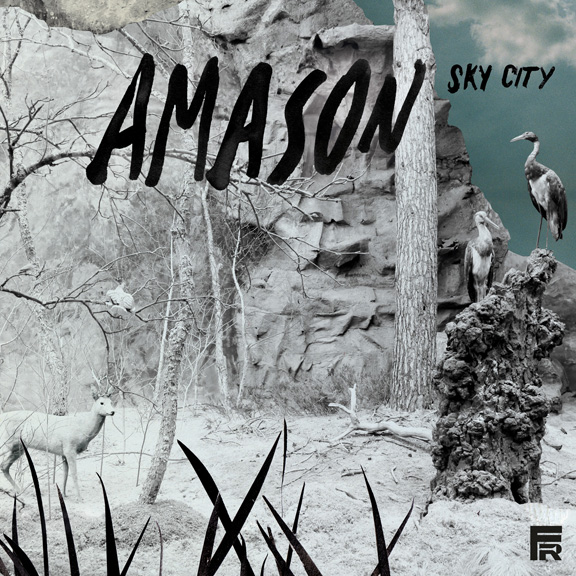
AMASON - Sky City (2015)

Review by: Victor Guimarães
Album assigned by: Nina A.


“Unity makes strength” is a common saying pretty much everywhere. In music, this concept could be easily applied for bands, finding one of its possible pinnacles in supergroups. If some random guys/gals from nowhere could gang up and create, say, the Beatles, what would happen if already acclaimed musicians gang up for a gig? Examples are everywhere, from Cream to Avantasia to O Grande Encontro and to Amason. This swedish supergroup features members of other prominent musical groups, such as: guitarist Gustav Ejstes (Dungen), keyboardist Pontus Winnberg (Miike Snow/Bloodshy and Avant), drummer Nils Törnqvist and bassist Petter Winnberg (both from Little Majorette) and vocalist Amanda Bergman (who seems to have an independent career herself, but performing with some other names).

It’s true that ABBA days are gone and Sweden is now known for exporting famous DJs, such as Swedish House Mafia or Avicii, but nevertheless, the viking-descendants, Odin-blessed norse people had never ceased to amaze us with great works and Sky City, Amason’s debut album is a very good example. The record, featuring lyrics in both English and Swedish, is an alternative, indie rock album who surely live up to its title as I believe the group’s intention was to make you trip higher and higher towards their sky city. Don’t get me wrong, they’re not the classical high, drug-induced vibe, but something ethereal and dreamy, with different moods, sometimes happy, sometimes sad or reflective. From a critical standpoint, the album is very good, with creative instrumentals and great melodies, with riffs, beats, bridges and choruses that fit perfectly together with great vocals (from both Bergman and Ejstes) to create their stratospheric vibes. When it comes to lyrics, it wasn’t uncommon for me to stop a song and think “have I heard it all right?" or "whaddahell do they mean?” Expect lots of metaphors and symbolism on the themes of love, depression, escaping, finding oneself, a bit of lunacy and even some criticism to capitalism. 

Formed in 2012, Amason is a young band - and a supergroup - composed of talented and experienced musicians who did a very good job in their first album working together. Sky City is the kind of record to listen to dream while awake and, while it’s probably not the best of the Swedes to rock a party (Avicii might be a better choice), it is definitely a great recommendation.

Thursday, 9 June 2016

MUNDO LIVRE S/A - O Outro Mundo de Manuela Rosário (2004)

Review by: Roland Bruynesteyn
Album assigned by: Victor Guimarães


Completely new to me, so Wikipedia to the rescue: “The mangue bit or manguebeat movement is a cultural movement created circa 1991 in the city of Recife in Northeast Brazil in reaction to the cultural and economical stagnation of the city. The movement largely focuses on music, mixing regional rhythms of Brazilian Northeast, such as maracatu, frevo, coco and forró, with rock, hip hop, funk and electronic music”.

Now technically this may be correct, who knows, but this particular album sounds way more traditional to me. Not bad, as I like Brazilian music, whether it’s easy listening bossa nova (Bonfá / Jobim / Gilberto) or somewhat more challenging (Os Mutantes to Milton Nascimiento).

On first hearing there is a slightly fusionish quality, mainly because the bass is played rhythmically somewhat simpler (or American/European) and the percussion a bit more complex (and sometimes synthetic). Also, there are indeed some hip hop elements in the percussion, and in little repetitive elements (often just a few bars) in the music. A good example is the fourth song, “Azia Amazônica”: the acoustic guitar and the vocals have this generic Brazilian relaxed vibe, but the percussion is not traditional. A minute in, an electric guitar joins and the singing changes into something more chanting like. All in all, the song is not totally unlike recent Mutantes work, like Full Metal Jack.

The next song, “E A Vida Se Fez De Louca”, on the other hand starts with almost scratching percussion, before the acoustic guitars and vocal and the “monkeys in the jungle” (don’t know that instrument, but it appears a lot in Latin music). This song is nice, but rather generic, updated bossa nova to my ears. The same goes for “Caiu A Ficha”, although the talking part and the overly pathetic singing are somewhat overdone. Talking seems their preferred way of singing as it returns in some other songs as well.

“Embustation (atitude de C...é R...)” works very nicely with a dobro-like guitar and a marching bass line. “O Outro Mundo De Xicão Xucuru” sounds like an updated Gal Costa song, albeit sung/spoken by a man. A nice song!

The other songs are generally in the same vein: some bossa nova type ballads and some up tempo songs with watered down Brazilian feel and sometimes quite aggressive guitar or synthetic percussion. It IS quite long, and if you’re not into Brazilian music of any type, stay away. For me it’s a revelation in a way, and I’m sure to acquire some music by this group!

Wednesday, 8 June 2016

SATURNUS - Paradise Belongs to You (1996)

Review by: Alex Alex
Album assigned by: Syd Spence


Melodic death metal is Chinese food. Expectantly despised by the would-have-been-there French aristocracy, infinitely delayed at the virtual reality airports, chased by the steampunks for the non-compliance to The Outdated, it stays to satisfy the capitalistic black-hole-like greed. Manufactured as everything Made in China - impossible to have been manufactured if we didn’t dimly know the ‘true’ China history. But dimly only.

As long as there are two slices of bread, anything in between is welcomed to join the already created sandwich. There is no real criticism or, rather, it exists in the unimportant only. The dichotomy, known since none of us remembers when, serves as the cement – denying itself in the process – simplifying in the false way. Young creatures see the world in double, as if drunk from having consumed too much of what does not really belong to them, which is their own youth.

Hamburgers are made by the older for the younger. But not Vincent Price old, young enough to despise whatever the fillings are – the “true” seafood, the “greek” cheese, even simpler, the “village” chicken. That never denies the chicken so they are always present on farms, ready to be consumed. Or, without an object at all, “as if back in those years”. Sad, melodic. As if “back then, don’t remember when”. As if Paradise.

Then growl. Sweet and spicy. When we are in the opera we, unlike our grand grand grand grand grand grand not really that grand but grand grand fathers, never believe we are. But in dichotomy we do believe as in any telephone number. The solos are empty, the “contrast” is non-existent except for the contrast between 1 and 0. A melodic death metal ends immediately. It is not a premature ending. It is the things which do not immediately end, those thing end prematurely.

This album lasts long enough to be able to pretend that it says something about Paradise. It’s an outright lie. Paradise is an instant and that instant lies in the past. You are very lucky if you believe any Paradise stories. It means you are yet to see the Paradise itself.

Monday, 6 June 2016

PRINCE - N.E.W.S. (2003)

Review by: Tristan Peterson
Assigned by: Dinar Khayrutdinov


Songs About Fucking... wait

It’s awfully weird listening to a dead man’s sex tape. On top of that, it’s weirder that this dead guy doesn’t have just one sex tape. He has over 55. All of which are graphic in their own way. Whether that way is wonderful or not depends on just how saucy you might be feeling this particular evening. I recommend you feel at least a Ragu before continuing.

Now, I’m assuming that everyone knows just who and what Prince (or whatever you want to fucking call him at this point) is. But in case you don’t know who he is, this is the lowdown:
Prince, born (and presumably died) Prince Rogers Nelson, is effectively the epitome of sex and all sexual things. For all intents and purposes, sex did not exist until the face of this grey Earth was graced with his time here, and we reproduced as if we were some sort of amoebous mass of glop previously. Although his first album, For You, didn’t exactly lead to him exploding onto the scene-it was more a dribble-he was able to cream the r&b/funk/soul/whatever you want to call his music scene with his sophomore self-titled effort.   At this point the tale becomes too nuanced for me to really care to tell you what happened, so I’ll skip to the record in question.

Okay, so the album here is N.E.W.S., which stands for North East West South, and, although this album’s cover features the planet Earth, there are no environmental undertones to be found.  In fact, this album is entirely instrumental. Also, it is his lowest selling album ever (approximately 30,000 copies sold). Also, there’s the greatest invention in the entire existence of the human race making great features all throughout the album: low quality midi instruments.  With all these factors, it just sounds like a total crapshoot, right?
Funnily enough, this album isn’t as much of a crapshoot as you might think.  Given, it isn’t the best thing since sliced bread, but it certainly isn’t awful. A big part of the reason behind why this album didn’t sell particularly well is because it is an instrumental record, and who wants to buy a record by a sex god if he doesn’t even vocalize himself in the bed of the music? Certainly not most people. Who wants to bed down for an hour with someone who doesn’t even make a sound, even if they finish?  

All joking aside, the real problem is the quality of the instrumentals.  In fits and starts, there are quite excellent moments instrumentally. It’s an early 2000s record (specifically 2003), and surprisingly it has the sort of uncomfortable production style I find common with most artists from the era, as if they aren’t quite sure where to go and put it in (the production, that is). So seeing Prince hit this trapfall is not a very good sign for the record at all. The atmospherics on the songs are good, they have a weird iciness to them, which is especially prevalent on the first track, “North.”  The instrumentals range from sex music to really interesting atonal jazz fusion breakdowns to really cool and funky jams to more sex music. Now, on those atonal fusion bits, they’re not technically “atonal,” but I don’t want to get into theory discussion very much.  

Basically the largest problem with this album is that it’s instrumental. Now, when it gets really interesting and mixed up in those instrumentals, as with the groovefests and the atonal jazz breakdowns, it’s really engaging. But so much of it is just a shitty porn soundtrack, honestly I swear I’ve heard excerpts from these songs before. And no, you can’t ask where and why, I discussed that the last time I reviewed something and it did not exactly go over very well.

Honestly, the worst part of the album is the fact that at points, it is REALLY fucking good! It’s got absolutely stellar musicianship and really can groove as intensely as Prince is known to be able to. But the droll sections of the album (a majority) fall that much harder because of it. It’s more than a little irritating to have some cool groove to become overwashed with those early aughts synths and have it return to the shitty porn soundtrack it-for some reason-so badly wants to be. This weird drift from sublime to subpar leads the album to be more than just a bland disappointment and it becomes just plain bad.

So is it worth actually listening to? I mean, for completists, of course it is.  And for those who are willing to give it a good honest chance because “maybe it’s not as bad as he says it is.” Or of course maybe you, the reader, have quite the affinity for porn soundtracks. Or maybe you are so tantalized by the concept of fusion jazz that you are willing to sit through ANYTHING to get another taste.

Otherwise, stay away.

Best track: I’m not listing out different timestamps for the goddamn songs.
Worst track: East

3/10

Strait to the Point: JAPAN - Obscure Alternatives (1978)

Review by: Michael Strait


Rated: 4/5
Slower, weirder and with deconstructionist ambitions - yeah, this is the Japan I know and love.

"Sylvian has gone on record saying that Obscure Alternatives should have been their debut album.[citation needed]"

Citation or no citation, I'm willing to believe the veracity of this quote I found on Wikipedia. There's a sense of artistic dissatisfaction permeating this record, made manifest in a stylistic diversity which some might call incoherent and which I will call delightful. The various styles here are all in service of a coherent enough mood that their presence feels natural, and anyway, the lines between post-punk, funk and dub have always been vague enough that the shifts here are scarcely noticeable. So don't complain - this record is by and large an excellent, ambitious effort that deserves your attention. Don't listen to anyone (and that includes Allmusic!) who tries to tell you that this is inferior to their debut - it's better, and it only hints at better things to come.

See, this is where Japan acquire the weirdness that has characterised them in my mind since I first heard Tin Drum. Clearly being dissatisfied with the conventionality of their debut, here Japan sets about deconstructing it, rebuilding it with half the parts in the wrong places and with all sorts of sharp edges left where they shouldn't be. Take the song "Deviation", for instance; it's this weird, jittery-jumpy funk-rock song that sounds kinda like it could be the evil twin of any of the songs off Adolescent Sex, with its sandpapery rhythm guitar strokes and its spiky four-note lead riff. Sylvian's smooth, silken croon (the style that'd end up becoming his primary method of vocal delivery from their next album onwards) only adds to the general sense that something is off somehow, even if the corny spaceship-taking-off synths at the end kinda spoil the atmosphere. And then there's the immediately preceding song, the title track, which veers into outright creepy territory with its woozy, drugged-out chorus; a bunch of syrupy, vaguely unnatural-sounding vocals all harmonize in this drawn-out drawl, and I'm checking my drink to see if I've accidentally been consuming sizzurp this whole time by mistake. The song goes on for seven hazy minutes, with soft rhythm guitars jangling and crackling in the foreground as Sylvian presides over the whole scene from the shadows like a particularly sexually frustrated Sith lord, and I love pretty much all of it. 

I'm also a big fan of "Love Is Infectious", a post-punk number that sounds oddly slanted somehow, like some song from their debut viewed through a distorting prism. It's got an angular, loud riff worthy of Gang of Four and a steady, creeping bassline worthy of Joy Division (though, naturally, better played and more complex than anything Peter Hook could come up with), and a pleasingly skeezy set of lyrics about female masturbation from a way-too-interested Sylvian. There's also a guitar solo that's accompanied by a lot of cacophonous rhythm guitar stabbing and drum smashing, the end result being that the solo sounds good even though, for all I know, it may not be - context is everything, after all, and these guys have learned how to apply themselves just right. Just take a look at "...Rhodesia", which has a formula that for many other bands would spell disaster. I don't need to tell you just how low the success rate is for white reggae, let alone white rock bands taking brief excursions into reggae in the midst of otherwise fully rockin' albums, but this song actually works pretty well. That might be because it is, specifically, dub rather than straight-up reggae, and the jump from funk to dub really isn't such an intimidating one, but truth be told I think it might just be that all the other white rock bands to try their hands at reggae (outside of the post-punk sphere, mind you) were idiots who didn't understand it; Japan are most assuredly not idiots, and they understand that there's more to reggae than a repeated rhythm guitar pluck and a positive set of lyrics. What we get this time is, instead, nearly seven minutes of reserved disaffection, with Sylvian drawling out lyrics about Nazis "burning niggers in a cotton field" while a downbeat, celestial atmosphere develops behind him, aided at one point by a fantastically-produced solo from Rob Dean that really does sound like a comet hurtling across the sun's magnetic field. It's not the best song on the album, but it's lovely and welcome. I've just been going through a dub phase lately, too - imagine my surprise to discover a dub song on the new wave album I'd been planning to review this week, and imagine my further surprise when it turned out to be good!

In fact, this album is nicely consistent. Of the four remaining tracks, only one - the opener, "Automatic Gun" - is mediocre; it's a decent enough new wave song with a fairly good (if very conservative) rock n' roll riff, but it's not at all memorable and it opens the album on a dull note. But we've also got "Sometimes I Feel So Low", a title to which Sylvian fully commits by agonizingly drawing out every syllable in what sounds worrisomely like real desperation, and "Suburban Berlin", which is just gorgeous. It's got this reserved, effortlessly cool electric piano line for a main motif, with some scratchy rhythm guitars half-mimicking it, and there's this wonderful early instrumental break where the keys fade and the guitars louden into punkish monsters as they take over fully. I mistook it for an instrumental hook at first, but then after a minutes' more buildup the actual hook arrives and the song beautifully ascends into the realm of grandiosity, complete with string section synths and soaring arrogance from Sylvian. It's a contender for my favourite track on the album, and it's certainly the best hook he's written up to this point. 

Appropriately enough, he doesn't try to top it - the next and final track is an instrumental called "The Tenant", and it's a pretty good tone poem even if it ain't the best one I ever heard. There are plinky synths, quiet rainy-day pianos, and a really good, contemplative, vaguely metallic guitar solo that sounds a lot like something Wata'd come up with for one of Boris' more conventional rock songs, particularly in the way it settles on a lengthy one-note drone towards the end. It's a nice foreshadow of the stuff the band would end up doing later in their career, albeit not as good as some of the highs they'd eventually reach, and I hear tell Sylvian spent a lot of time exploring the sort of ideas covered in this song more fully in his solo career. All that may be true, but let's not let it lessen this album, which is a great slice of weirdo new wave of the sort I haven't really heard anywhere else. It's no wonder Sylvian thought this should have been their debut, considering that their actual debut merely sounded like a pretty good pastiche of Bowie, Roxy and Television. This thing, by contrast, has an identity and suggests a future - a future I'll be pleased to investigate myself in the coming weeks.

A YEAR IN MUSIC: IRON MAIDEN - The Number of the Beast (1982)

A YEAR IN MUSIC: 1982
Review by: Victor Guimarães


It is widely known the importance of the eighties to music, specially to rock music. Ok, it was the age of the synthesizers, new age and electro-music, but also the decade who gave a great name to modern metal. Yeah, I know metal is from before the 80s with some heavier songs here and there and great bands already in the 70s, such as Led Zeppelin (which while one can argue about the metal label, they've been truly influential to the genre, one of its biggest progenitors), Black Sabbath and Judas Priest (those two are indeed metal), among others. The (arguably) loudest, most distorted and meanest derivation of rock music, metal was, in the 80s, getting independent from its blues and psychedelic origins while also drinking from the same cup as the punk movement. Those influences helped to create a new kind of intensity, fast and aggressive, which gave birth to the widely known and loved New Wave of British Heavy Metal (NWOBHM, for short), a movement whose most expressive and famous band is Iron Maiden.

The Number of the Beast is Maiden's third album, the first to feature vocalist Bruce Dickinson and a milestone for the band, as its commercial and critical success made the british headbangers soar as much as any metal band before them could. It was so famous that contributed for opening the market for the genre and spreading the movement around the world, inspiring other great names, such as Helloween and Metallica. And while the album's name, cover art and some of the lyrics inspired some rumors about the band being satanic (which was corroborated by some strange incidentes that happened while the band was recording), the inspiration for it was a nightmare bass player Steve Harris had after watching the film 'The Omen' (1976). A motion picture I'd recommend myself.

The record is remembered by Dickinson remarkable vocals, bringing Maiden music to a new dimension, and by maintaining the amazing instrumental level the band displayed in their two previous works: creative, catchy, talented guitar solos, captivating, rising drums and a strong, ever-present bass. Now, add that instrumental raw talent with great songwriting, clever melodies, riffs, bridges and choruses, all composed to draw the best these inspired musicians could do. Apart from all those compliments, The Number of the Beast is not without flaws as some songs can be a bit repetitive sometimes and the lyricism is quite simple, contemplating themes such as war and battles, desperation from facing death or the supernatural, and even contemplating the events around a brothel. For the tracks, the spotlight shines on Hallowed Be Thy Name, Run To The Hills and the title track, The Number Of The Beast.

A major success and undeniably famous - it's the reason why the band is also sometimes referred as "The Beast" - the album was the kickstart to Iron Maiden's legacy, which continues to this day. The year 1982 was way before my birth, and thus, I came to this work of art more than 20 years of its release. It might not be the best album of that year, or even Iron Maiden's best album, but, for me, it was a priceless experience to listen to The Number of the Beast, a classic of heavy metal that has been linking generations of old and young, experienced and rookie metalheads (and other music lovers) through time. 

An experience I'd like to pass on. Hope you get the link as well.